
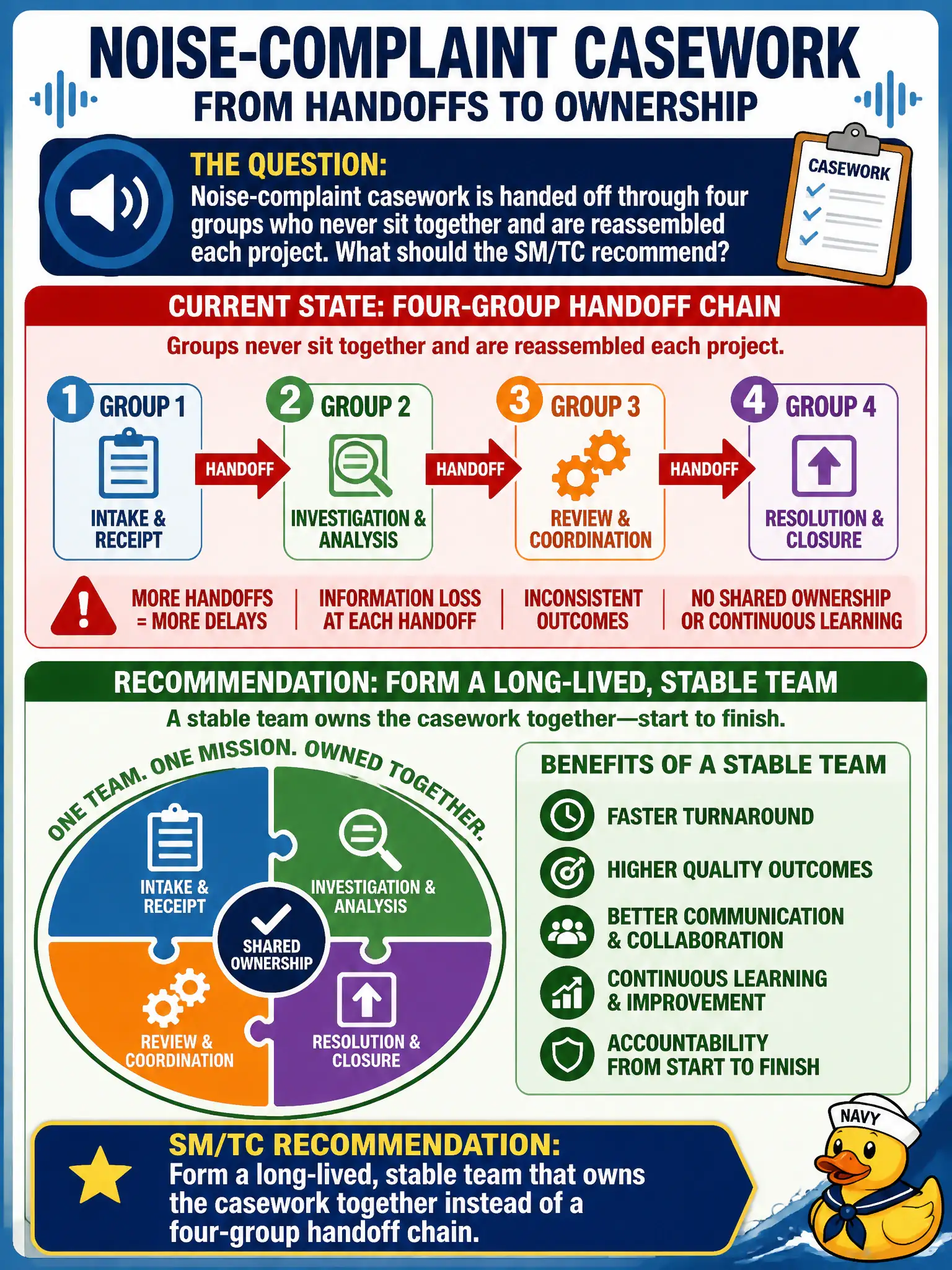
Noise-complaint casework is handed off through four groups who never sit together and are reassembled each project. What should the SM/TC recommend?
Select an answer to reveal the explanation.
Short Explanation
Four groups tossing a noise complaint like a hot potato never become a band—they barely rehearse together. Stable, long-lived teams learn the neighborhood and finish cases. Constant remixes just restart the first week forever.
Full Explanation
Long-lived, stable teams outperform temporary handoff chains. Noise-complaint casework passed through four groups who never sit together and reassemble each project recreates project silos and waiting for residents seeking quieter streets. The Scrum Master/Team Coach should recommend a durable team that owns the casework end-to-end so knowledge, WIP, and outcomes stay together.
Keeping reforming project groups so specialists stay in home departments fails by concept: perpetual re-forming destroys team norms and flow. Adding a fifth group to integrate the other four fails by concept by inserting another handoff layer. Rotating membership every two weeks fails by concept because forced churn prevents the trust and skill growth high-performing teams need.
Exam caveat: SAFe Agile Teams are long-lived and cross-functional; assembling and disbanding project groups around civic casework is a classic anti-pattern. Stability does not forbid thoughtful growth—it rejects constant tear-down of the delivering unit.
Operational check: charter a stable noise-complaint casework team with the skills to finish resident outcomes, retire the four-group handoff path for that value stream, measure flow time and rework, and protect membership stability across PIs.