
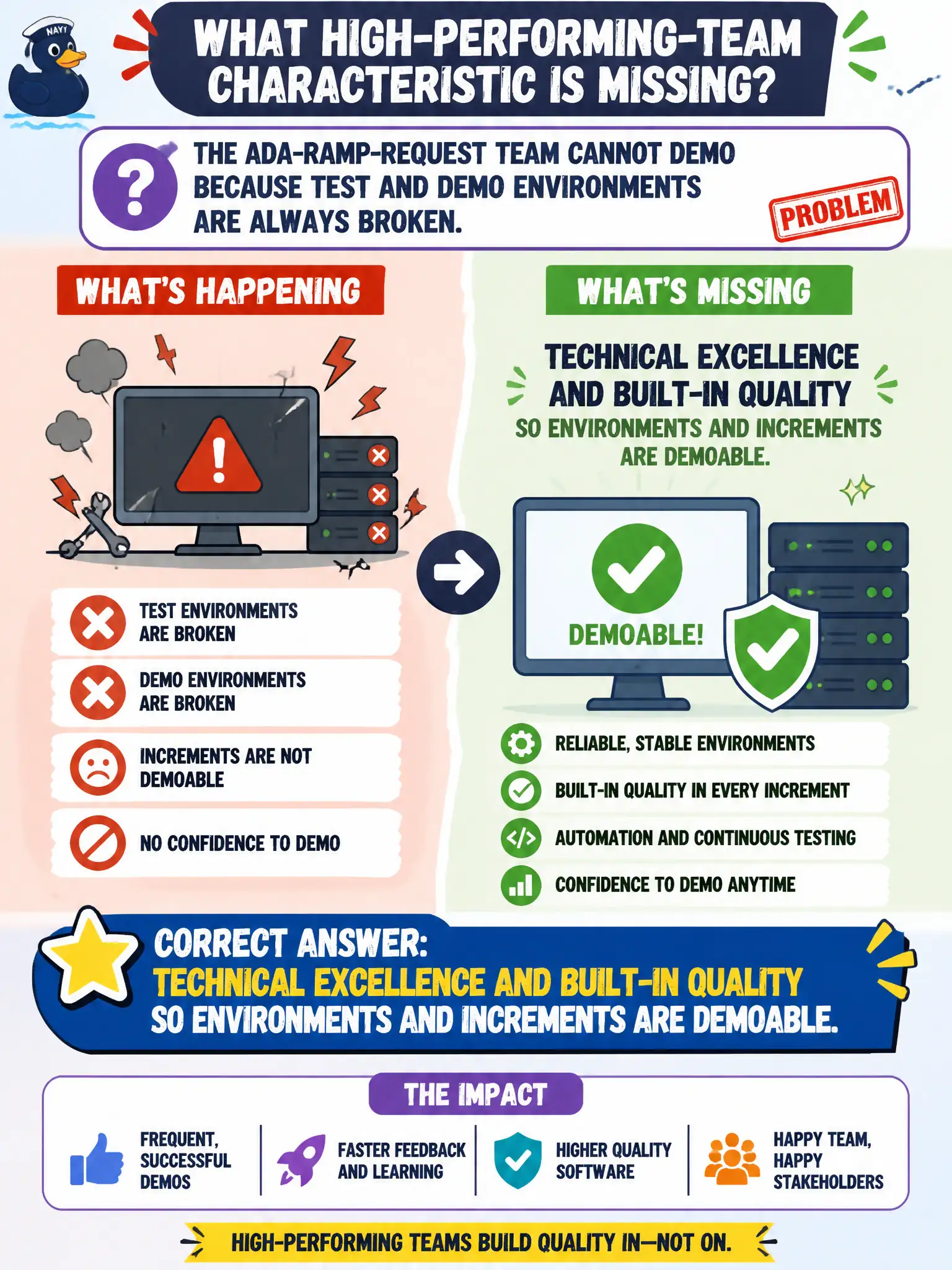
The ADA-ramp-request team cannot demo because test and demo environments are always broken. What high-performing-team characteristic is missing?
Select an answer to reveal the explanation.
Short Explanation
A ramp-request demo with a dead environment is a ribbon-cutting on a closed sidewalk. High-performing teams keep the stage working so residents can see the increment. Fix the quality of the environment; do not replace the demo with slides.
Full Explanation
Technical excellence and built-in quality include demoable environments and increments. When the ADA-ramp-request team cannot demo because test and demo environments are always broken, a high-performing-team characteristic is missing—stakeholders cannot inspect working civic accessibility workflows. The Scrum Master/Team Coach should elevate environment reliability and quality practices so demos show real increments.
Substituting more status slides when environments fail fails by concept: slides are not working software for ramp requests. Making demos optional when environments fail fails by concept by normalizing inability to inspect the increment. Outsourcing the demo to a vendor slideshow fails by concept because it avoids proving the team’s integrated civic solution.
Exam caveat: SAFe team performance and built-in quality assume increments can be demonstrated; chronically broken environments are an impediment to high performance, not an excuse to skip empiricism. Environment work is legitimate team/ART improvement work.
Operational check: add environment health to the improvement backlog, stabilize a demo path for ADA-ramp requests, verify Iteration/System Demo runs on working environments, and stop accepting slide-only substitutes as Done evidence.