
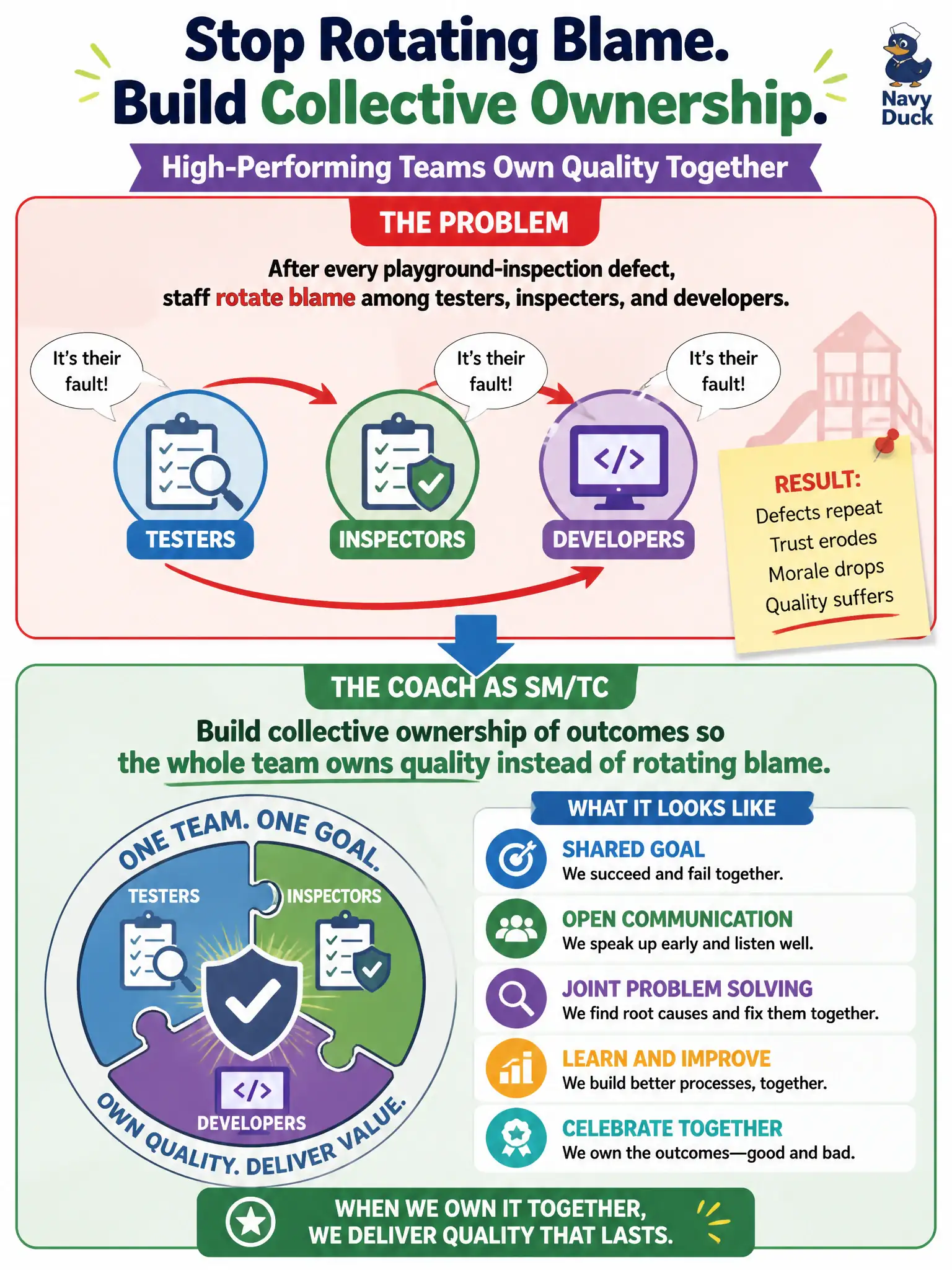
After every playground-inspection defect, staff rotate blame among testers, inspectors, and developers. What should the SM/TC coach as a high-performing-team characteristic?
Select an answer to reveal the explanation.
Short Explanation
Passing the hot potato after a playground defect does not fix the swing. High-performing teams own the outcome together—testers, inspectors, and developers on the same side of the fence. Blame rotation is just a slower way to keep kids at risk.
Full Explanation
Collective ownership of outcomes means the whole team owns quality instead of rotating blame. After playground-inspection defects, rotating blame among testers, inspectors, and developers fractures learning and slows fixes residents notice in park safety workflows. The Scrum Master/Team Coach should coach shared ownership so defects drive system improvement, not scapegoating.
Naming a single scapegoat each iteration fails by concept: fear and local optimization replace root-cause work. Separating inspection from development permanently so blame is easier to assign fails by concept by designing the org for blame rather than for quality flow. Hiding defects from the board until an individual confesses fails by concept because it suppresses visibility required for improvement.
Exam caveat: High-performing SAFe teams exhibit shared responsibility for Done and quality; blame rotation is the opposite of built-in quality culture. Collective ownership still allows clear roles—it rejects weaponized blame as the operating system for civic inspection software.
Operational check: visualize playground-inspection defects as team quality signals, run blameless cause analysis, update DoD/tests jointly across roles, and track whether escaped defects fall without naming scapegoats.