
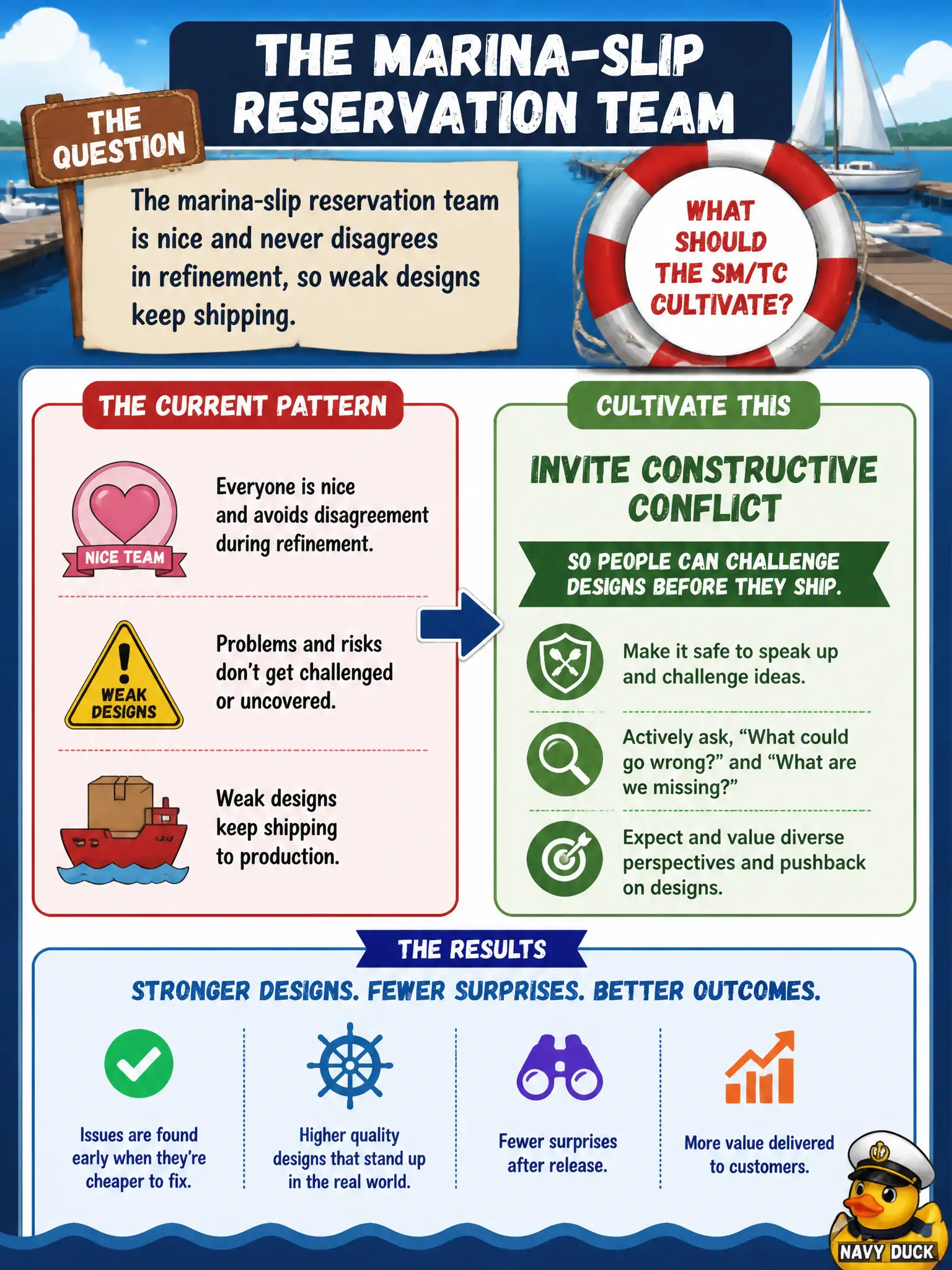
The marina-slip reservation team is nice and never disagrees in refinement, so weak designs keep shipping. What should the SM/TC cultivate?
Select an answer to reveal the explanation.
Short Explanation
A marina team that never argues is a dock with no bumpers—quiet until a hull hits. Niceness that buries a bad reservation design just lets residents find the crash. Constructive disagreement is the bumper; use it in refinement.
Full Explanation
Constructive conflict improves designs before they ship. A marina-slip reservation team that is merely nice and never disagrees in refinement lets weak designs reach boaters and staff. The Scrum Master/Team Coach should cultivate respectful challenge—evidence, alternatives, and dissent—so harmony does not equal silent agreement with poor civic UX or rules.
Enforcing silence in refinement so harmony scores stay high fails by concept: suppressed dissent ships defects. Moving design decisions to email so disagreement stays private fails by concept by removing shared learning and transparency. Treating any disagreement as a performance issue fails by concept because it punishes the very behavior high-performing teams need.
Exam caveat: SAFe and team-performance models distinguish destructive conflict from constructive conflict; coaches invite the latter in refinement and planning. Psychological safety enables constructive conflict—without safety, challenge becomes either silence or personal attack.
Operational check: facilitate refinement norms that require at least one alternative or risk challenge on marina reservation designs, model curiosity over defensiveness, and verify weaker assumptions are caught before implementation.