
The farmers-market SNAP team closes many stories each iteration, but the work stalls in legal review and residents still cannot apply. How should the SM/TC define team performance?
Select an answer to reveal the explanation.
Short Explanation
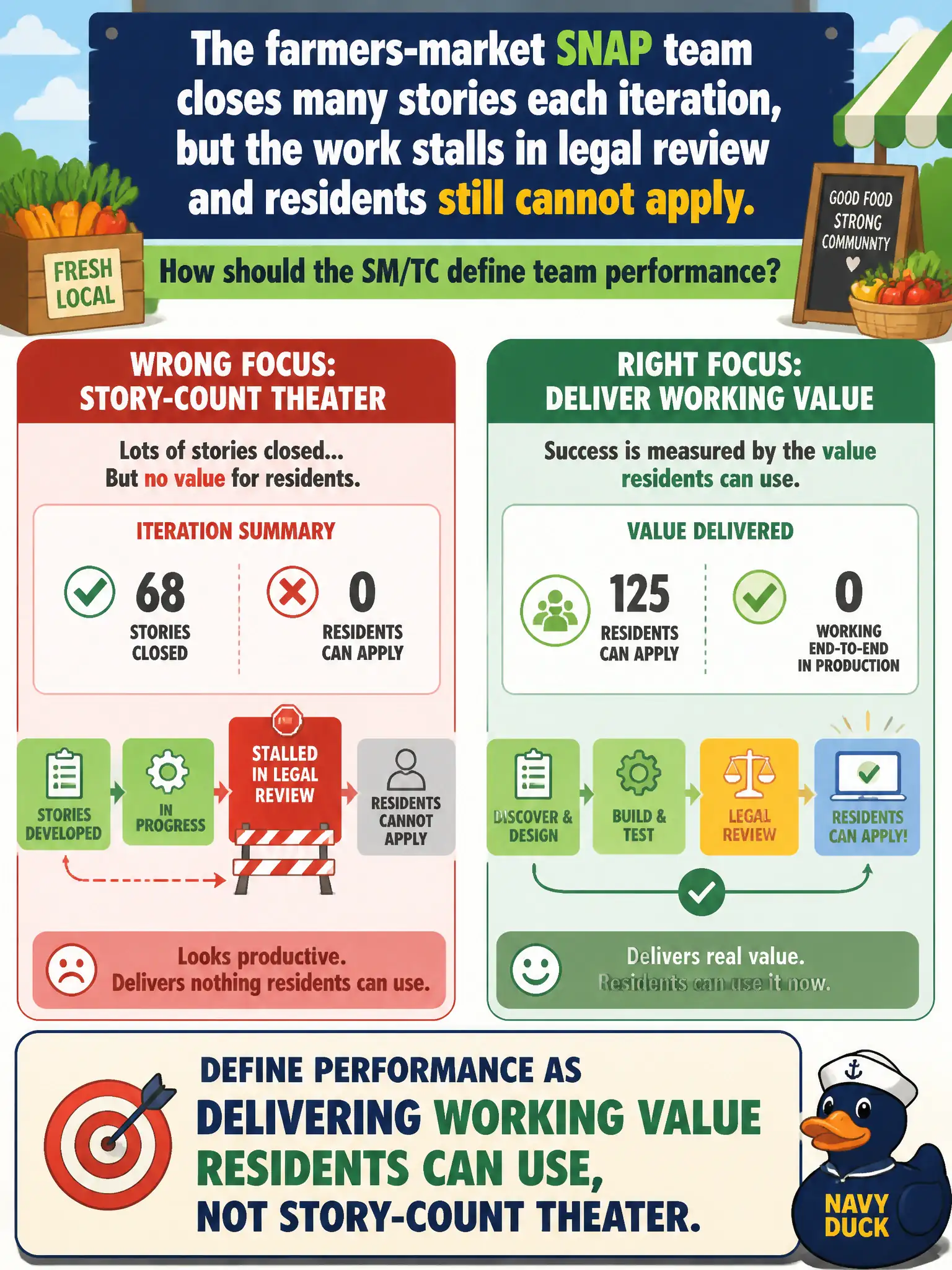
A SNAP team that "closes" stories stuck in legal is counting tickets, not feeding families. Performance is a resident who can actually apply at the market. Busy boards are theater if the increment never leaves the lawyers' in-box.
Full Explanation
Team performance is delivering working value residents can use, not story-count theater. The farmers-market SNAP team that closes many stories while work stalls in legal review leaves residents unable to apply—busy boards, no civic outcome. The Scrum Master/Team Coach should redefine performance around usable increments and end-to-end flow, including constraints like legal review that gate public access.
Celebrating story-point totals while legal holds the increment fails by concept: points without releasable resident value are vanity. Counting started stories as performance fails by concept by rewarding begins over finishes. Adding a second board for legal so the team board stays green fails by concept: splitting visibility hides the real delay applicants feel.
Exam caveat: SAFe measures outcomes and flow of value; local throughput metrics that ignore blocked Done criteria mislead coaches and stakeholders. Legal and compliance steps are part of the value stream for SNAP enrollment—not an external inconvenience to hide.
Operational check: include legal-review aging in team flow metrics, stop celebrating points on items residents cannot use, swarm or renegotiate legal bottleneck policies, and report performance as working application capability delivered.