
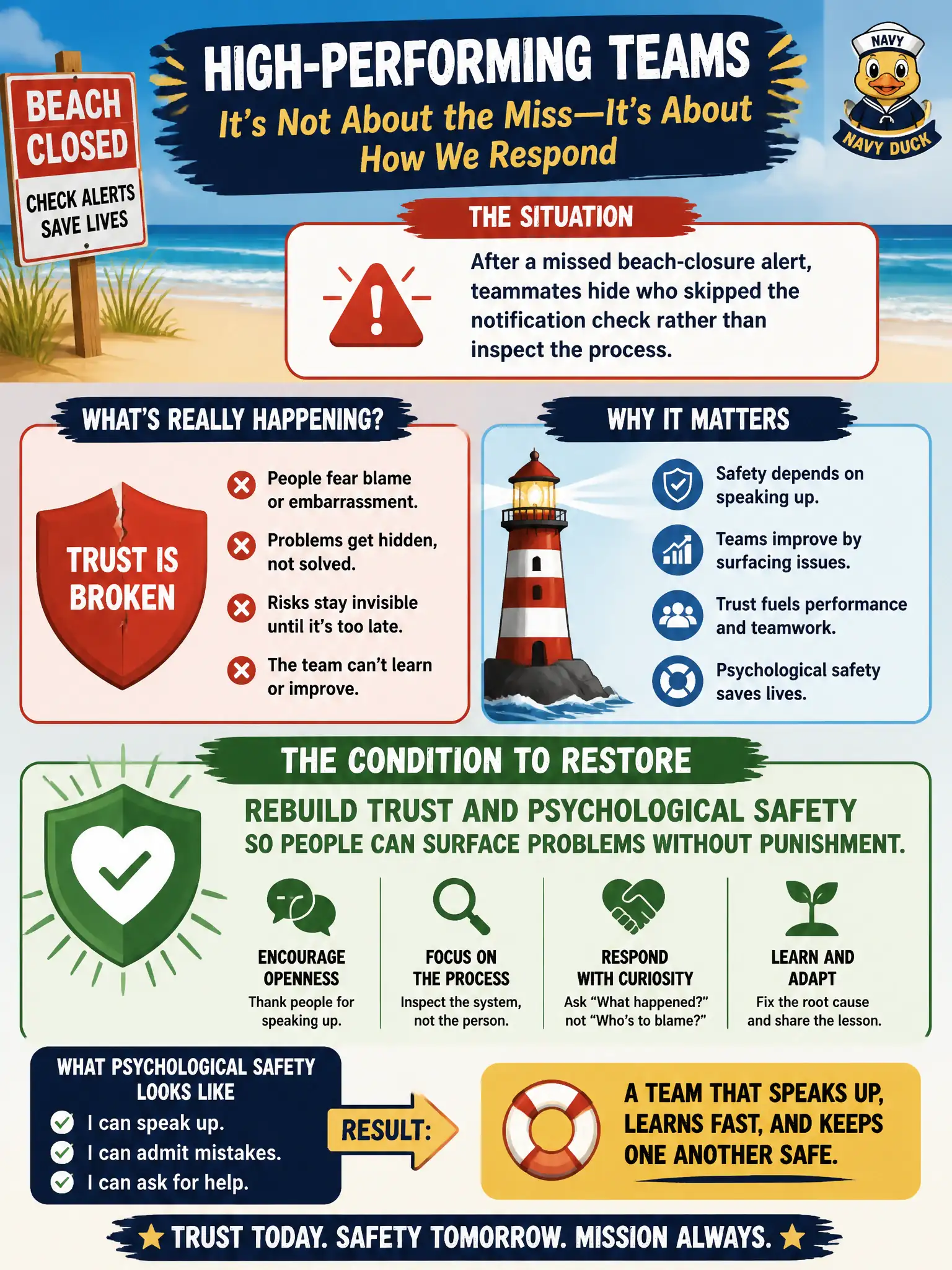
After a missed beach-closure alert, teammates hide who skipped the notification check rather than inspect the process. What high-performing-team condition should the SM/TC restore?
Select an answer to reveal the explanation.
Short Explanation
If people hide a missed beach alert, the next swimmer is the one who pays. High-performing teams can say "the check failed" without a public hanging. Safety is the flashlight—without it, the process stays dark.
Full Explanation
Trust and psychological safety let people surface problems without punishment—foundational for high-performing teams. After a missed beach-closure alert, hiding who skipped the notification check prevents learning and endangers public safety communication. The Scrum Master/Team Coach should restore safety so the team can inspect the process, fix the notification check, and tell the truth about what failed.
Publicly ranking individuals so mistakes become a deterrent fails by concept: fear suppresses reporting and learning. Assigning a silent Legal observer to every sync fails by concept by chilling conversation rather than building team safety. Replacing the team and restarting with a blame-free charter they never discuss fails by concept: personnel churn without practiced safety rituals does not create trust.
Exam caveat: SAFe and agile team performance literature treat psychological safety as a prerequisite for relentless improvement and quality; blame cultures create hidden risk especially on public-alert systems. Safety is not absence of standards—it is the ability to discuss misses against standards without humiliation.
Operational check: facilitate a blameless review of the missed beach-closure alert focused on process gaps, implement a visible notification-check working agreement, model non-punitive responses to raised issues, and verify teammates raise near-misses in subsequent syncs.