
The vacant-property registry team is composed entirely of GIS analysts and cannot ship a resident-facing slice without waiting on UX, testing, and a separate web group. What should the SM/TC advocate?
Select an answer to reveal the explanation.
Short Explanation
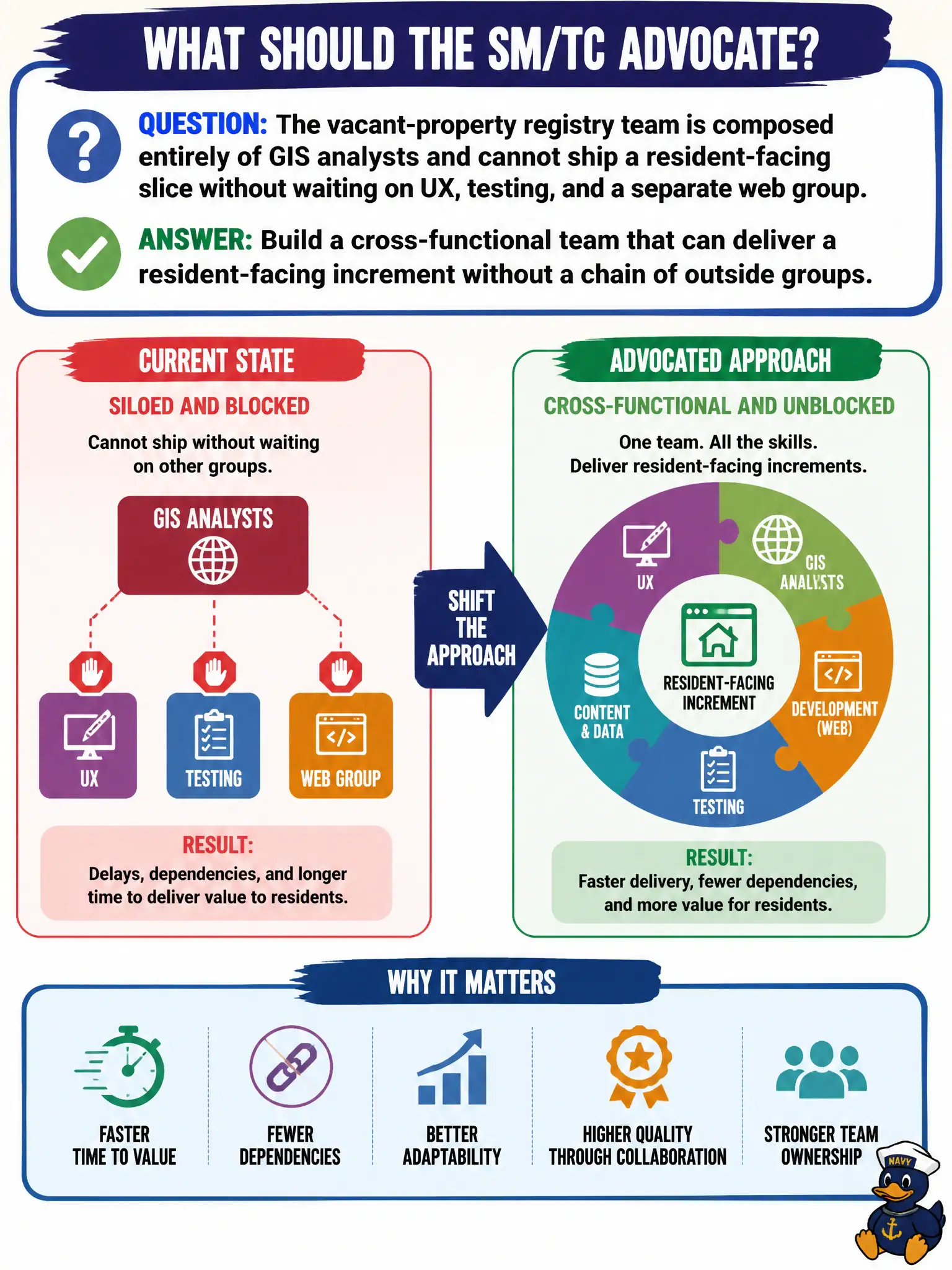
A registry team that is only GIS is a kitchen with only ovens—no one to plate the meal. Residents need a slice they can actually use, not another layer file sitting in a handoff. Mix the skills on one team so a working increment can leave the kitchen.
Full Explanation
Cross-functionality means a team can deliver a working resident-facing increment without a chain of outside groups. A vacant-property registry team composed only of GIS analysts that must wait on UX, testing, and a separate web group cannot ship end-to-end civic value. The Scrum Master/Team Coach should advocate staffing and skills so the team can deliver resident-facing slices—map plus usable interface and quality—inside the team system.
Keeping the specialist GIS pool and adding more handoff tickets fails by concept: more handoffs lengthen flow and deepen dependency. Waiting until next fiscal year for a project manager to coordinate fails by concept because coordination theater does not create cross-functional delivery capability. Demoing GIS layers only and calling that a resident value increment fails by concept: internal layers without a usable public path are not the outcome residents need.
Exam caveat: SAFe Agile Teams are cross-functional and can define, build, test, and deliver value; pure specialist pools with external chains are a classic anti-pattern. Growing cross-functionality can include embedding skills, pairing with other groups temporarily, or adjusting team design—not merely more tickets.
Operational check: identify the missing skills blocking a resident-facing registry slice, secure embedded or borrowed UX/test/web capacity on the team, deliver one thin vertical increment without the old handoff chain, and measure reduced external wait.