
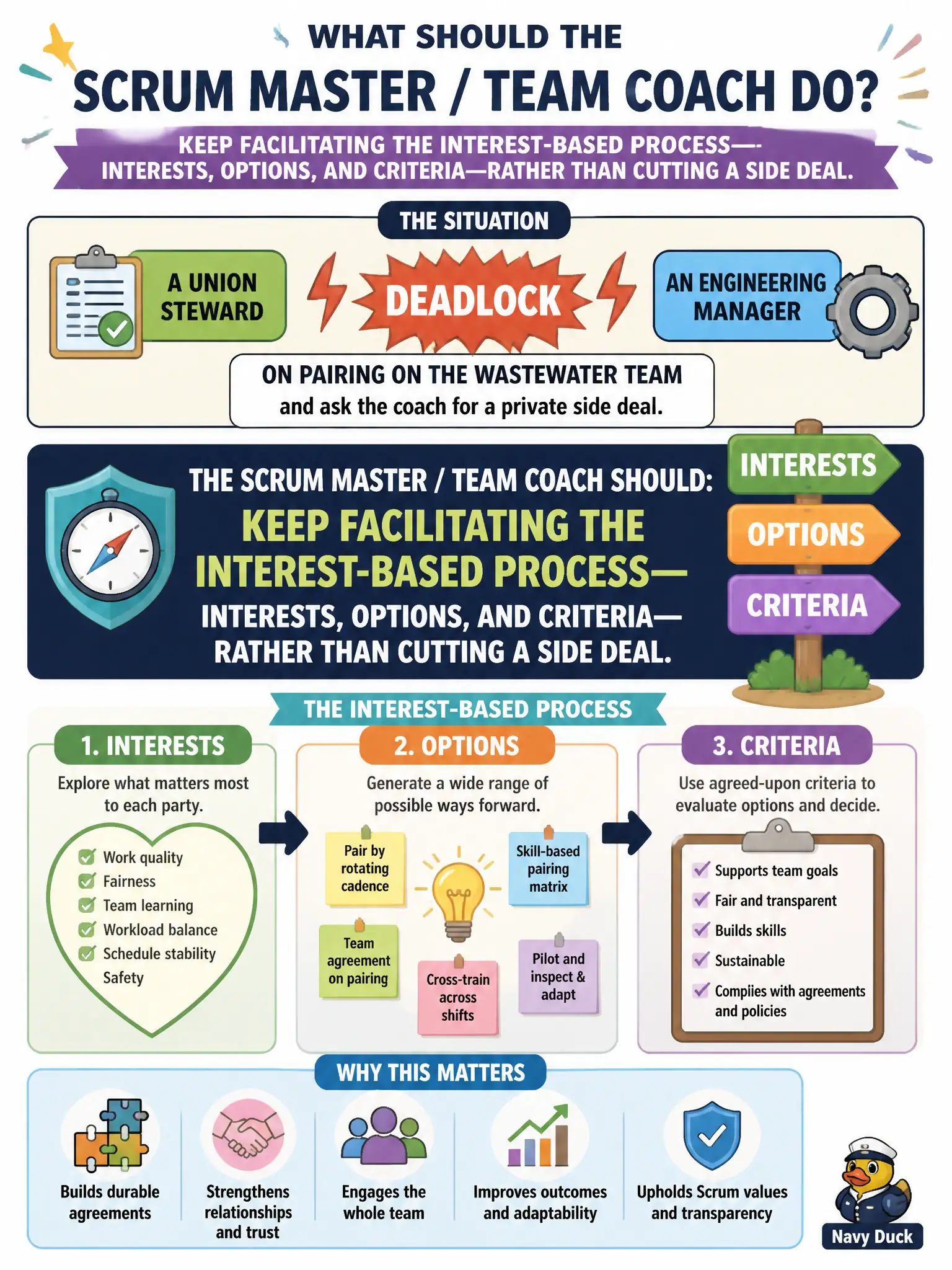
A union steward and an engineering manager deadlock on pairing on the wastewater team and ask the coach for a private side deal. What should the Scrum Master / Team Coach do?
Select an answer to reveal the explanation.
Short Explanation
A handshake in the boiler room is how the rest of the plant finds out later and explodes. Pairing on wastewater work needs interests, options, and criteria in the open. The coach holds the process, not a secret bargain.
Full Explanation
The Scrum Master / Team Coach facilitates interest-based problem-solving; the coach does not cut a private deal that replaces the process. When a union steward and an engineering manager deadlock on pairing on the wastewater team and ask for a private side deal, the coach should keep facilitating interests, options, and criteria rather than cutting a hallway compromise. Pairing practices that affect wastewater operations and labor agreements need transparent interests—skill growth, coverage, safety, and contract constraints—not secret bargains.
Offering a private compromise in the hallway so the room never talks fails by concept: it bypasses joint ownership and criteria. Picking the manager's side because rank is the SAFe decision rule fails by concept: rank is not the SAFe decision rule for this conflict method. Picking the steward's side so labor peace replaces the process fails by concept by substituting one positional win for interest-based facilitation.
Exam caveat: SASM casts the coach as process facilitator, not deal-cutter; side deals and rank picks are wrong answers. Labor relations expertise may still be invited—the coach's move is still to keep the interest-based process intact on the wastewater team.
Operational check: decline the private side deal, return both parties to named interests and options, introduce objective criteria including safety and agreement constraints, document the emerging agreement openly, and verify pairing disputes are resolved in-process rather than in hallway bargains.