
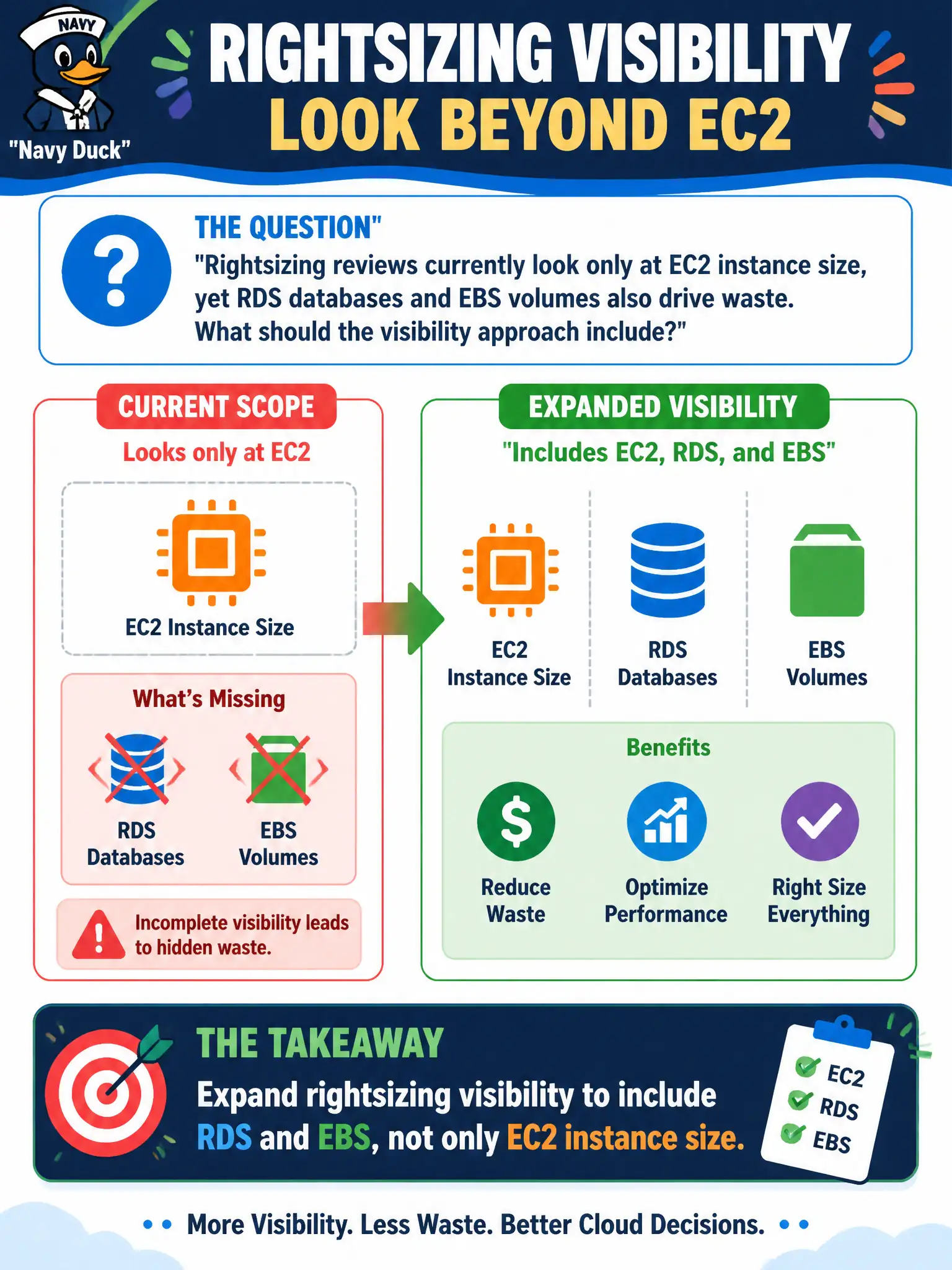
Rightsizing reviews currently look only at EC2 instance size, yet RDS databases and EBS volumes also drive waste. What should the visibility approach include?
Select an answer to reveal the explanation.
Short Explanation
Rightsizing only the truck cab while ignoring the oversized trailer and fuel tank still wastes money. Pull RDS and EBS into the same visibility pass as EC2 — not just instance size.
Full Explanation
Rightsizing reviews that look only at EC2 instance size miss common municipal waste in RDS databases and EBS volumes. Expand cost-visibility and rightsizing practice to include database instance class and storage, EBS type and size, and idle or unattached volumes—using Compute Optimizer and related utilization signals—so FinOps captures the full compute-and-storage footprint behind citizen applications. EC2 downsizing alone while leaving oversized RDS and thick EBS volumes untouched leaves material spend on the table.
Ignoring RDS and EBS because only instance families supposedly matter for cost is factually wrong; databases and block storage are major line items. Resizing nothing until every EC2 is memory-optimized regardless of metrics substitutes dogma for measurement and can increase cost. Deleting all CloudWatch metrics for databases to reduce noise removes the utilization evidence rightsizing depends on.
Exam caveat: organizational cost optimization questions often expect multi-resource rightsizing—not EC2-only tunnel vision. Operational check: enable Compute Optimizer coverage for EC2, EBS, and RDS where available, export recommendations for a sample account, prioritize high-savings low-risk changes, apply in change windows, and verify application and database KPIs after each resize.