
Consolidated billing exists, yet finance still cannot attribute spend to parks versus police. What is missing for cost visibility?
Select an answer to reveal the explanation.
Short Explanation
One city credit card statement without merchant categories still will not tell parks from police. Mandatory cost-allocation tags are how consolidated billing turns into real departmental attribution.
Full Explanation
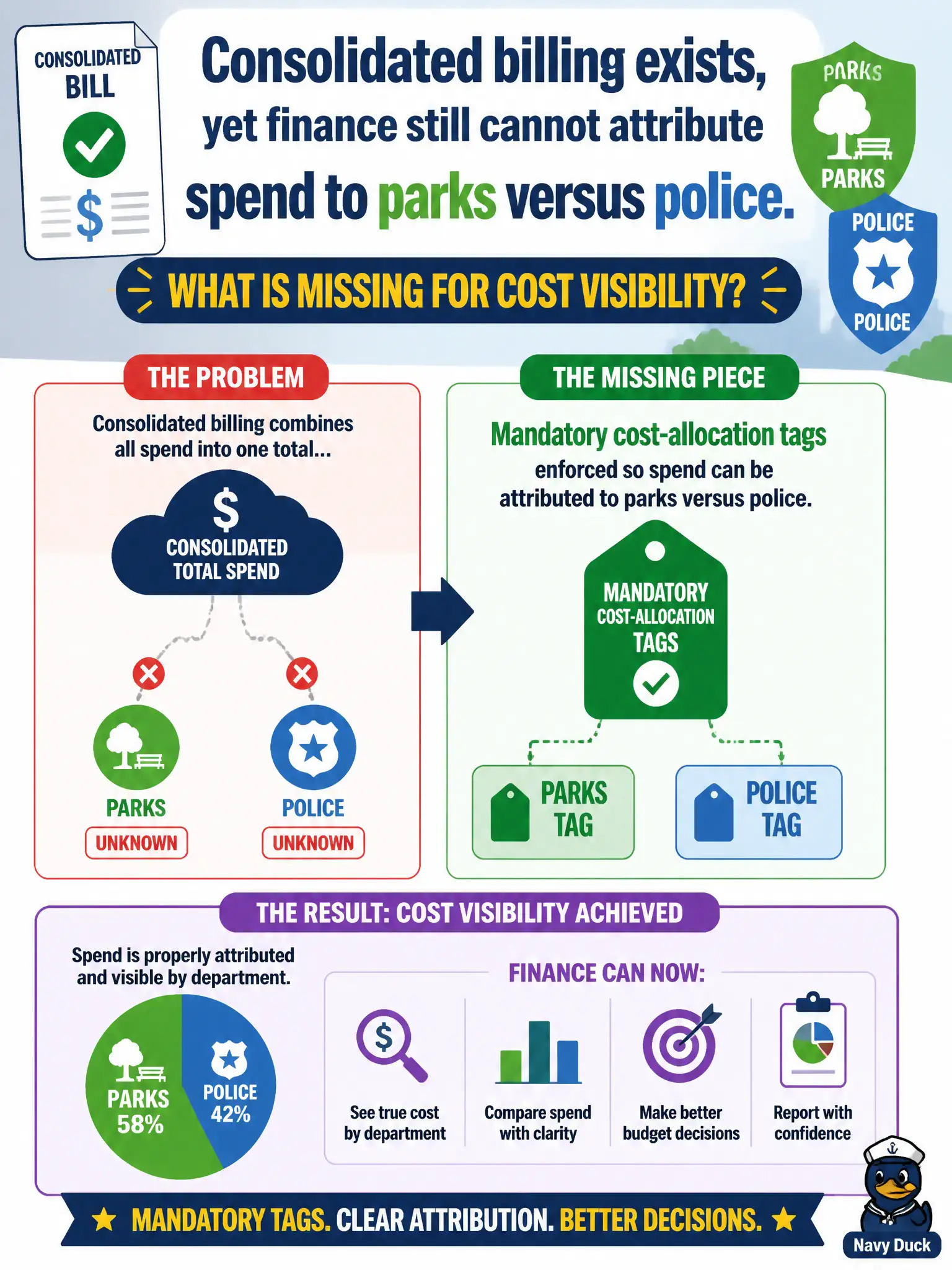
Consolidated billing gives the payer one invoice, but it does not by itself tell finance whether parks or police drove the charge. What is missing for cost visibility is mandatory cost-allocation tags—enforced and activated—so Cost Explorer and CUR can attribute spend to parks versus police and other civic owners. Tag keys must be standardized, applied at create time, activated in Billing, and backed by SCPs or tag policies; otherwise consolidated billing remains an undifferentiated credit-card statement for the whole city.
Opening a second payer account for every department with no tags multiplies invoice chaos without creating attribution dimensions inside a governed organization. Deleting all linked accounts so only the payer remains destroys multi-account isolation rather than solving showback. Disabling Cost Explorer API access organization-wide removes the analysis surface finance needs after tags exist.
Exam caveat: consolidated billing plus activated, enforced cost-allocation tags work together; either alone is insufficient for departmental attribution. Operational check: mandate department tags via policy, activate them as cost allocation tags, group Cost Explorer by parks versus police for a known month, and confirm finance can produce matching showback lines without manual spreadsheet archaeology.