
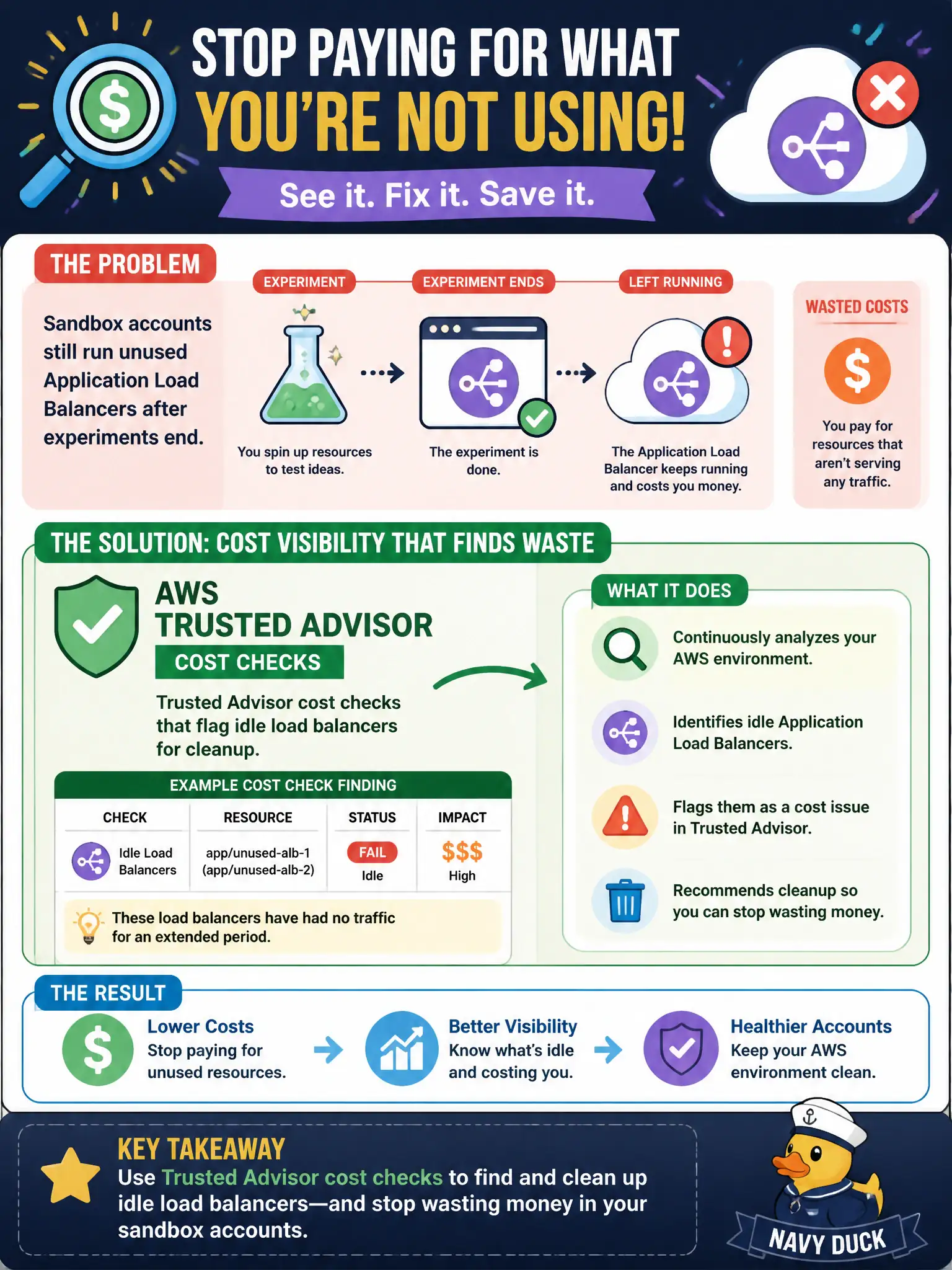
Sandbox accounts still run unused Application Load Balancers after experiments end. Which cost-visibility source commonly flags that waste?
Select an answer to reveal the explanation.
Short Explanation
An empty toll booth still costs money if you leave it staffed. Trusted Advisor cost checks call out idle load balancers in sandboxes so teams can tear them down.
Full Explanation
Sandbox accounts that still run unused Application Load Balancers after experiments end are a classic idle-resource waste pattern. AWS Trusted Advisor cost-optimization checks flag idle load balancers so platform and FinOps teams can tear them down across municipal sandboxes before monthly bills normalize waste into "expected" spend. Those checks are a standard cost-visibility source on enterprise and organizational support paths and fit cleanup of leftover ALBs after labs conclude.
Amazon Rekognition celebrity detection reports have nothing to do with load-balancer billing waste. AWS WAF managed rule groups protect applications from web exploits; they are not a billing optimizer for idle ALBs. Route 53 health checks monitor endpoint health and do not automatically delete ALBs after one idle hour—cleanup remains an operational response to Trusted Advisor or similar findings.
Exam caveat: Trusted Advisor cost checks identify candidates; organizations still need an owner and a change process to actually delete or stop the idle resources. Operational check: review the idle load balancer Trusted Advisor check for sandbox accounts, verify no DNS or application dependency remains, delete or stop the unused ALBs, and re-check the finding clears on the next Trusted Advisor refresh.