
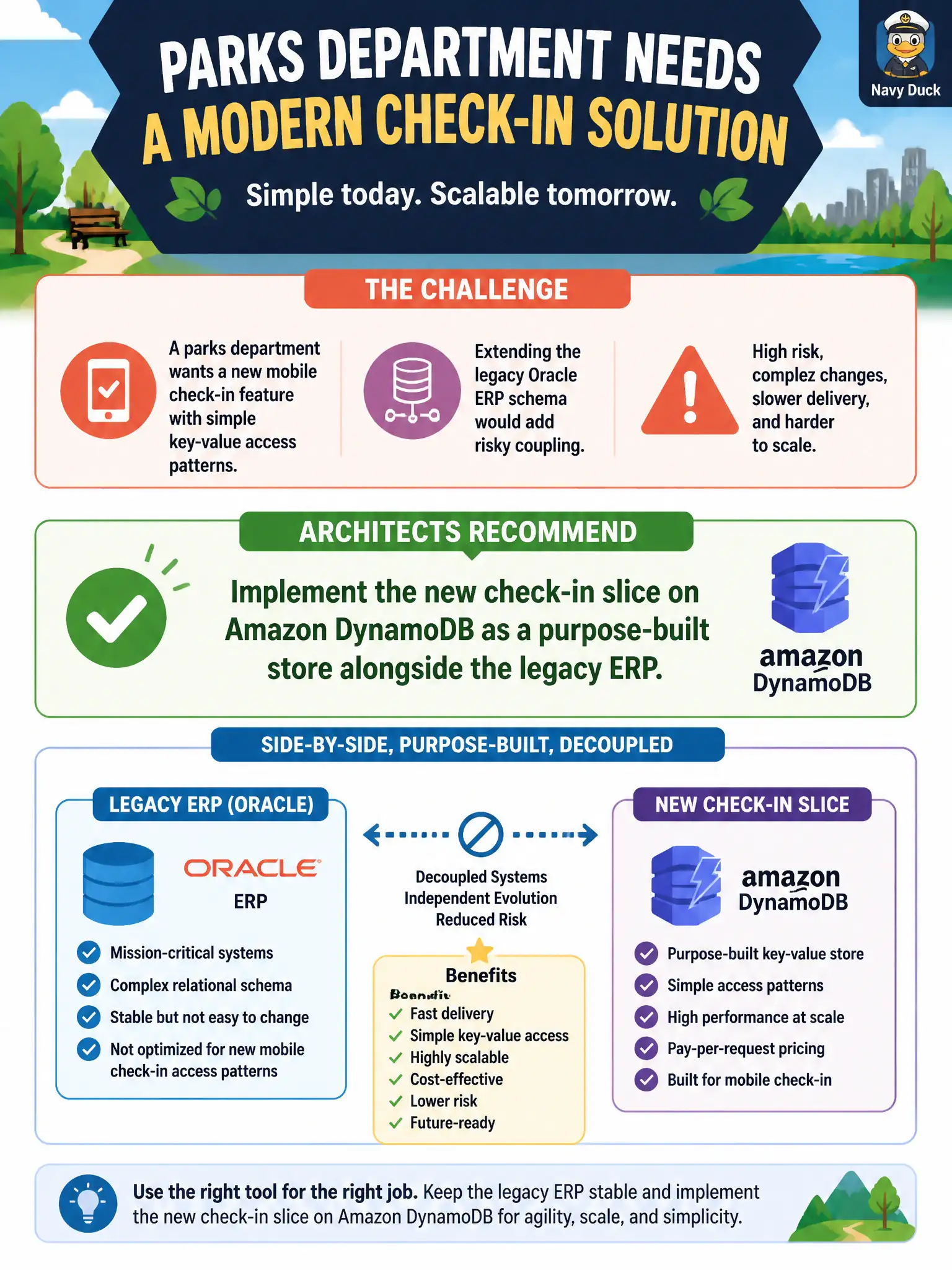
Public-health clinics want a new mobile patient check-in feature with simple keyed writes and variable load, while the existing clinic system of record remains Oracle. Which purpose-built database approach should architects recommend for the new slice?
Select an answer to reveal the explanation.
Short Explanation
A new check-in clip-on doesn't need another wing on the Oracle mansion. DynamoDB fits keyed, bursty mobile writes, and Oracle can stay the system of record for the old clinic workflows. Don't remodel the cathedral for a clipboard.
Full Explanation
Public-health clinics wanting a new mobile patient check-in feature with simple keyed writes and variable load—while the existing clinic system of record remains Oracle—should implement the new mobile check-in slice on Amazon DynamoDB rather than extending the Oracle schemas for a key-value workload. Purpose-built databases let the new slice scale independently without bloating Oracle. Extending the Oracle schema with new check-in tables and stored procedures for every clinic device fails agility and couples mobile burst load to the system of record. Storing check-ins only in Amazon CloudTrail event history fails as a primary datastore. Requiring each clinic to run a local Access database with no central store fails consolidation and analytics. Exam caveat: new keyed mobile slices fit DynamoDB beside legacy Oracle SoR. Operational check: model check-in keys, use on-demand capacity for variable load, sync necessary summaries to Oracle if required, secure PHI controls, and keep Oracle as SoR for clinical records beyond check-in. Document the decision in the municipal architecture decision record and re-verify controls after the first production wave so auditors see continuous improvement, not one-time tribal knowledge.