
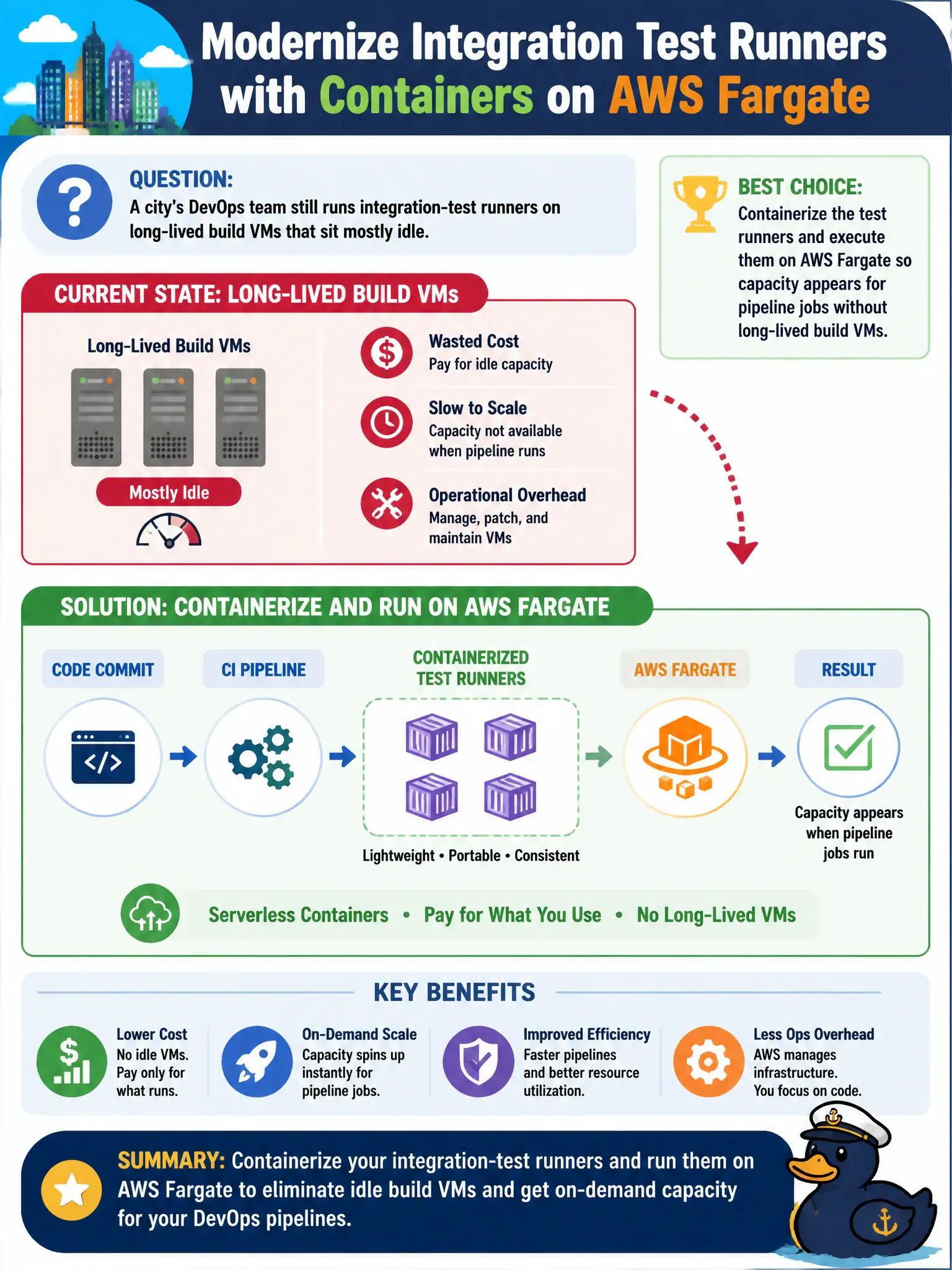
The city's shared DevOps account still runs always-on EC2 build VMs that execute containerized test suites for permitting, GIS, and public-health pipelines, sitting idle between merges. Which container-service modernization should architects select for the test runners?
Select an answer to reveal the explanation.
Short Explanation
Test runners are visiting inspectors, not tenants with a year lease. Park the suites on Fargate, run them when a merge lands, and stop paying for idle build VMs. Bigger always-on boxes just raise the rent.
Full Explanation
The city's shared DevOps account still running always-on EC2 build VMs that execute containerized test suites for permitting, GIS, and public-health pipelines—sitting idle between merges—should run the containerized test runners on AWS Fargate so the pipelines shed long-lived build VMs. That container-service modernization bills for test runtime, not idle build hosts. Keeping the long-lived build VMs and increasing instance size so idle time is more expensive fails FinOps intentionally. Moving test execution onto developer laptops only and retiring shared pipelines fails consistency and gatekeeping. Executing every test suite as a synchronous query against Amazon Athena fails purpose—Athena is not a general test runner. Exam caveat: Fargate for containerized CI runners beats always-on build VMs. Operational check: migrate pipeline agents to Fargate tasks, cache dependencies thoughtfully, measure queue time and cost, retire EC2 build fleets, and keep artifacts in S3/ECR. Document the decision in the municipal architecture decision record and re-verify controls after the first production wave so auditors see continuous improvement, not one-time tribal knowledge. Document the decision in the municipal architecture decision record and re-verify controls after the first production wave so auditors see continuous improvement, not one-time tribal knowledge.