
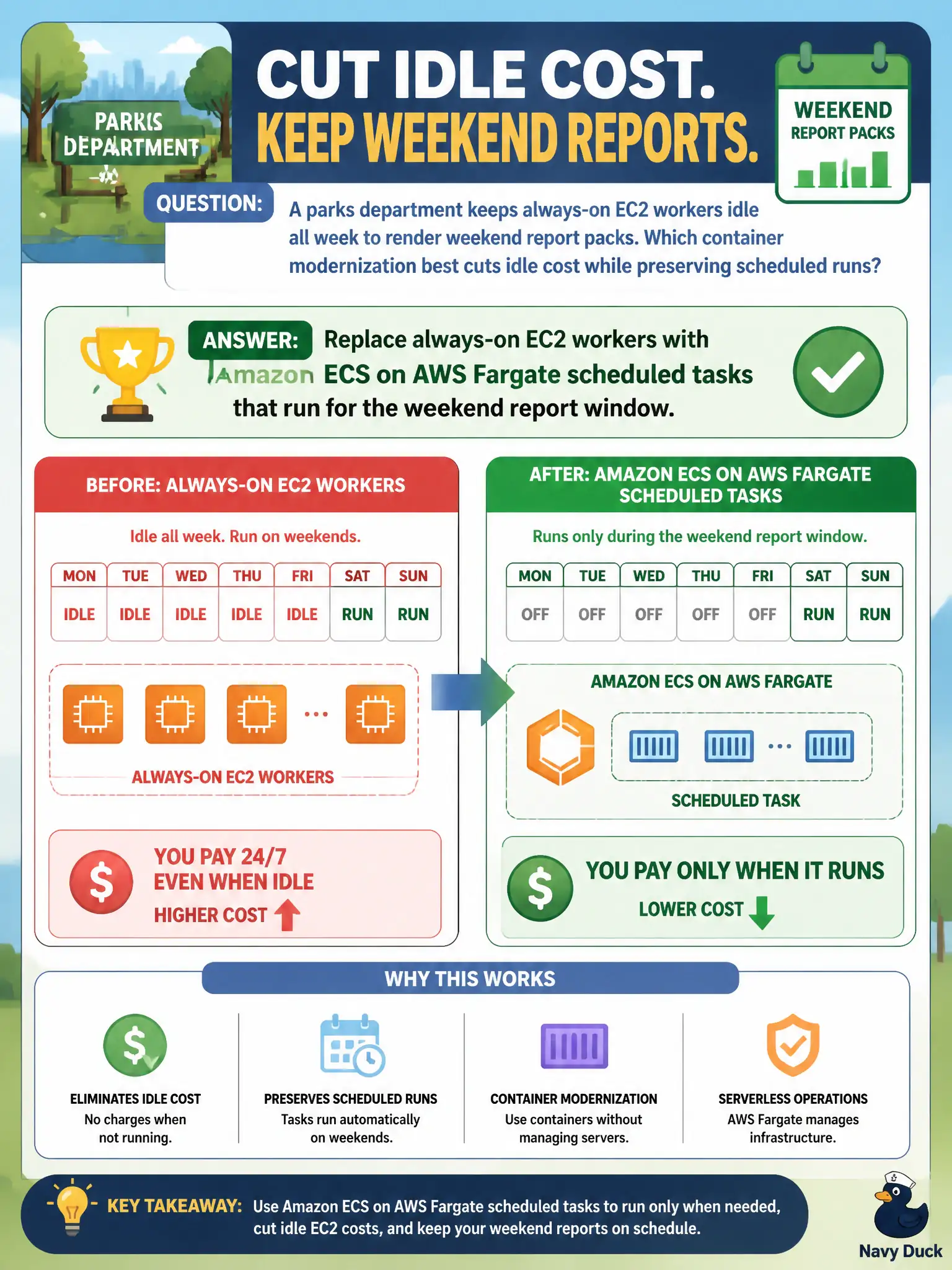
Finance and public-health accounts generate large weekend report packs on always-on EC2 workers that sit idle on weekdays. The jobs are already containerized. Which modernization should architects recommend?
Select an answer to reveal the explanation.
Short Explanation
Weekend reports are a Saturday crew, not a weekday receptionist. Schedule Fargate tasks, let them print the packs, and send the workers home. Paying for always-on EC2 all week is how idle boxes eat the budget.
Full Explanation
Finance and public-health accounts generating large weekend report packs on always-on EC2 workers that sit idle on weekdays—already containerized—should replace those workers with Amazon ECS on AWS Fargate scheduled tasks that run the weekend report packs and stop afterward. That modernization sheds weekday idle spend while keeping shared municipal reporting platforms. Converting the report packs into a permanently running Amazon Redshift cluster sized for peak all week fails cost for weekend-only jobs. Requiring each analyst laptop to compile the reports locally with no shared platform fails governance and reproducibility. Keeping the EC2 workers at maximum size 24x7 and disabling scheduling fails FinOps deliberately. Exam caveat: scheduled Fargate tasks fit containerized weekend batches better than always-on EC2 or all-week Redshift. Operational check: define scheduled ECS/Fargate tasks, land outputs in S3, alarm on weekend failures before Monday briefings, compare weekday cost to zero runtime, and decommission always-on workers. Document the decision in the municipal architecture decision record and re-verify controls after the first production wave so auditors see continuous improvement, not one-time tribal knowledge.