
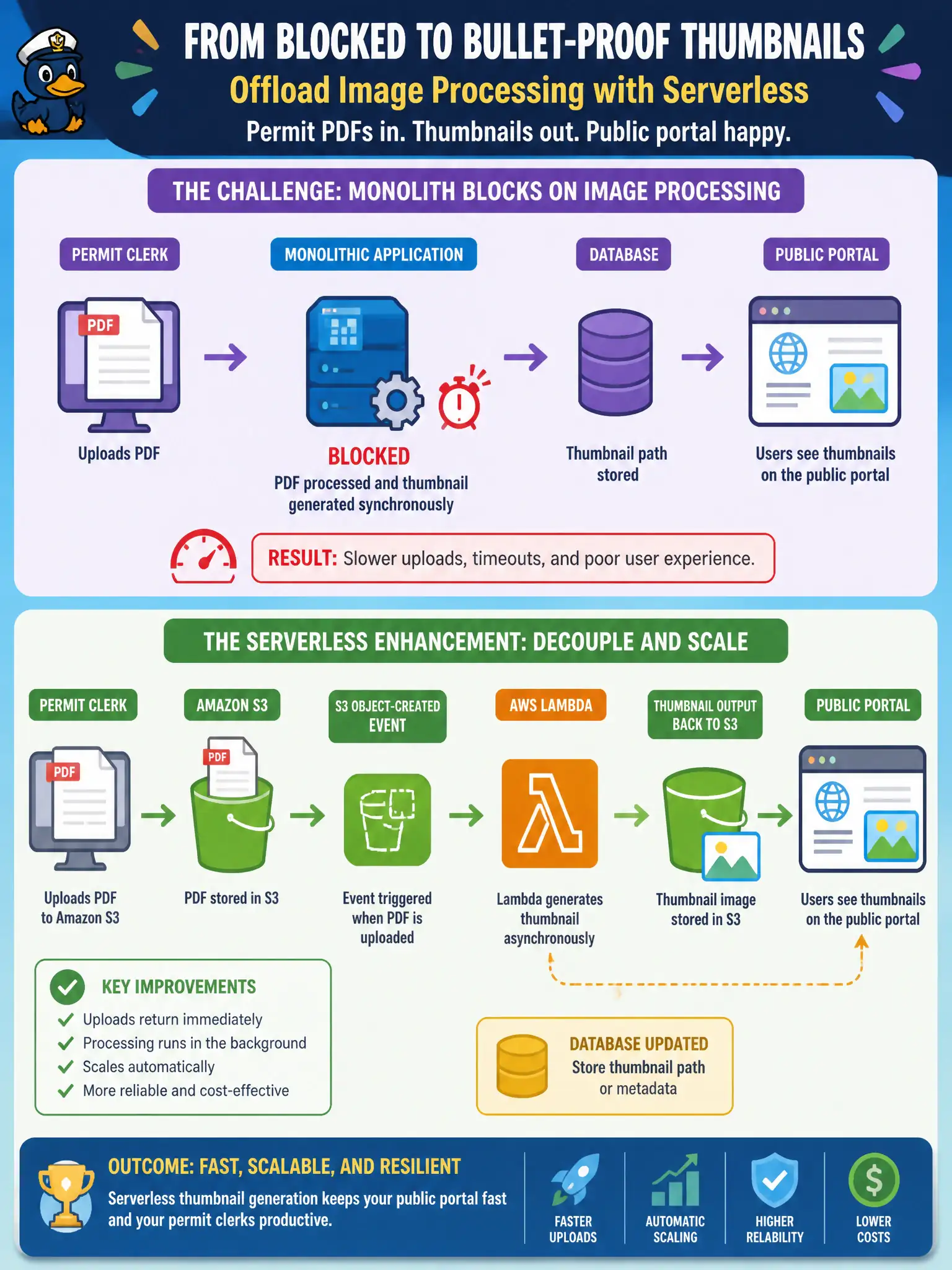
Planning staff upload permit-plan PDFs to a records bucket, and the current monolith blocks the upload thread while it generates thumbnails on an always-on EC2 worker. Which serverless enhancement should architects select?
Select an answer to reveal the explanation.
Short Explanation
Don't make the front counter wait while someone photocopies a thumbnail. Drop the PDF in S3, let Lambda wake up, and keep the upload snappy. An always-on worker for a burst of PDFs is overtime nobody needs.
Full Explanation
Planning staff uploading permit-plan PDFs to a records bucket while the monolith blocks the upload thread generating thumbnails on an always-on EC2 worker should extract thumbnail generation to AWS Lambda triggered by Amazon S3 object-created events so uploads are not blocked by image work. That serverless enhancement keeps clerks productive and scales with upload bursts. Keeping thumbnail generation inside the upload API on the same EC2 worker and adding more instance hours fails responsiveness and cost for bursty planning uploads. Running a 24x7 GPU workstation in a public subnet that polls the bucket every second fails security posture and idle cost. Writing thumbnails by spawning unmanaged processes on the city's jump host fails operations and change control. Exam caveat: S3 event-driven Lambda is the classic async thumbnail pattern. Operational check: enable S3 notifications to Lambda, set concurrency and DLQs, store thumbnails beside plans, verify upload API returns quickly, and retire the always-on thumbnail EC2 worker. Document the decision in the municipal architecture decision record and re-verify controls after the first production wave so auditors see continuous improvement, not one-time tribal knowledge.