
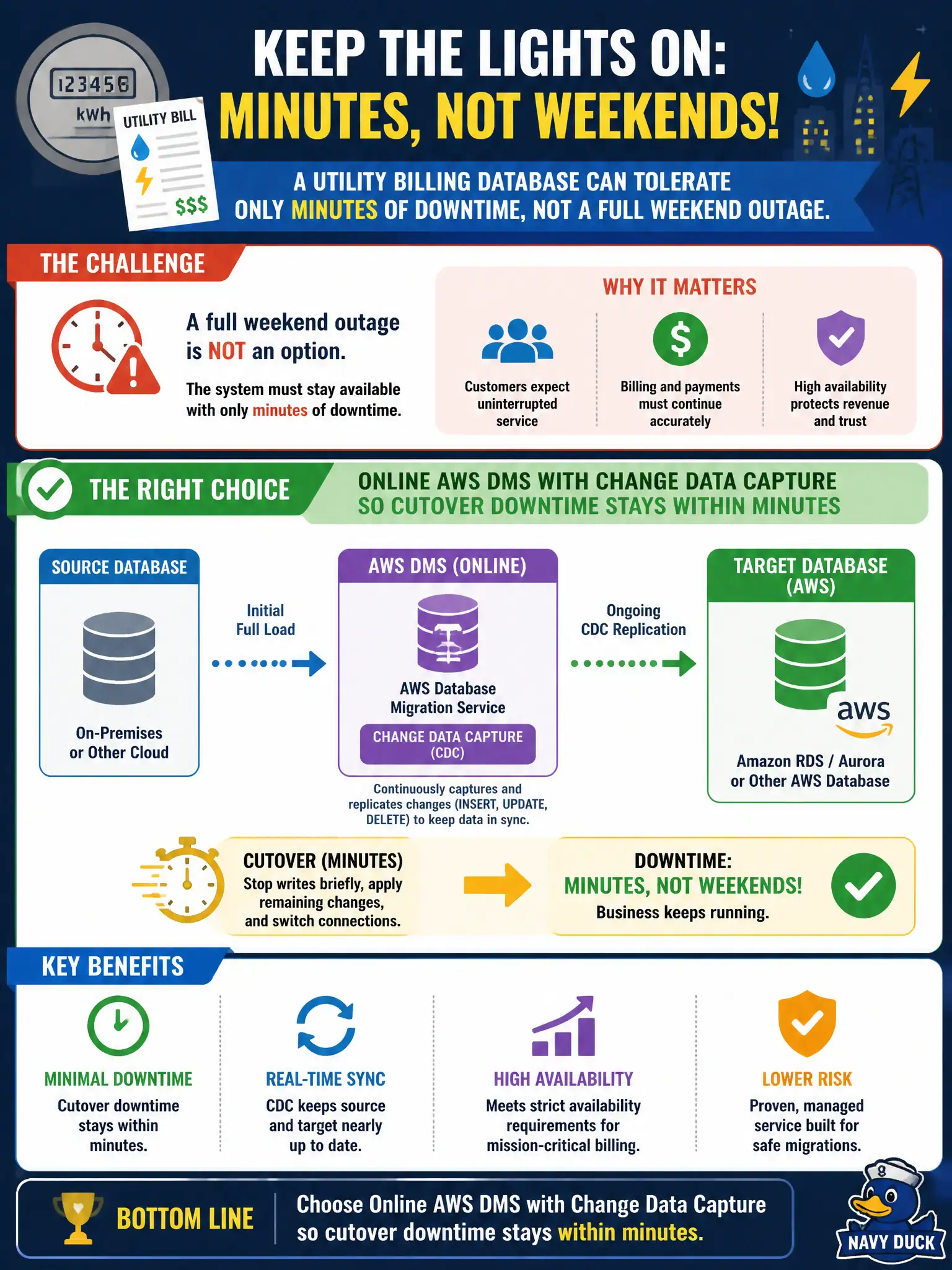
A utility billing database can tolerate only minutes of downtime, not a full weekend outage. Which database transfer mechanism should architects choose?
Select an answer to reveal the explanation.
Short Explanation
Billing cannot nap for a weekend while someone restores a dump. Use DMS with CDC so the database keeps humming and cutover is measured in minutes, not camping trips.
Full Explanation
A utility billing database that can tolerate only minutes of downtime—not a full weekend outage—needs an online transfer mechanism. Choose online AWS DMS with change data capture so cutover downtime stays within minutes while billing continues accepting payments until the final flip for ratepayers. A single offline dump restore that requires the billing DB offline for the entire weekend fails the downtime budget and risks revenue and citizen trust. Exporting only schema DDL and recreating empty tables in AWS without data fails completeness—the city still needs the billing rows. Stopping accepting payments for two weeks while tapes are recopied twice for safety fails business continuity for a utility. Exam caveat: tight RTO database moves use DMS CDC online patterns, not weekend offline dumps. Operational check: set DMS CDC, validate lag and data validation reports, rehearse cutover to minutes-scale downtime, coordinate with billing operations, and keep a rollback snapshot plan. Document the decision in the municipal architecture decision record and re-verify controls after the first production wave so auditors see continuous improvement, not one-time tribal knowledge. Document the decision in the municipal architecture decision record and re-verify controls after the first production wave so auditors see continuous improvement, not one-time tribal knowledge.