
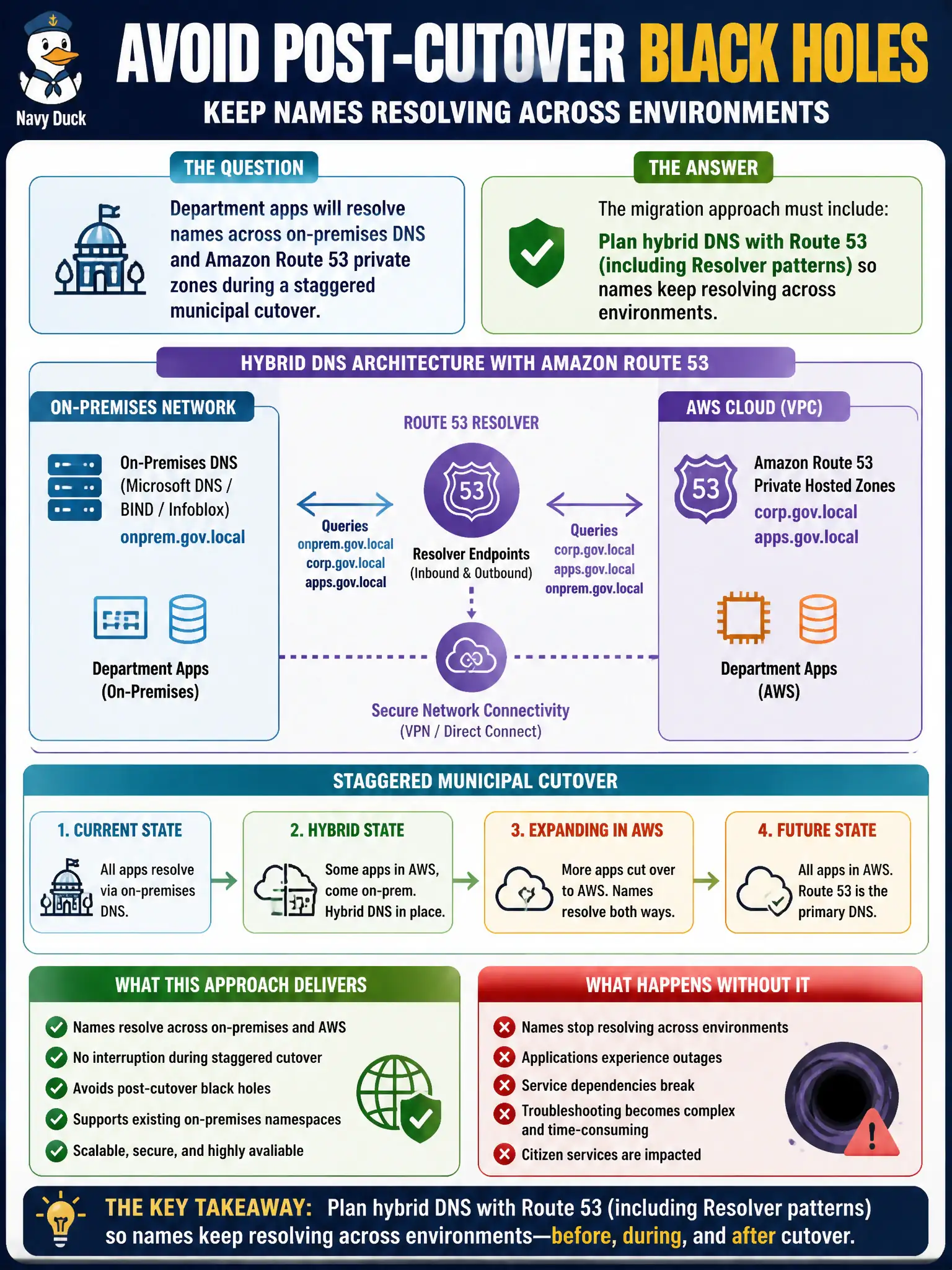
Department apps will resolve names across on-premises DNS and Amazon Route 53 private zones during a staggered municipal cutover. What must the migration approach include to avoid post-cutover black holes?
Select an answer to reveal the explanation.
Short Explanation
If DNS goes dark at cutover, the app might as well be on the moon. Build hybrid DNS with Route 53 so on-prem and AWS names keep answering while waves stagger—don't bet the city on hosts files.
Full Explanation
Department apps that resolve names across on-premises DNS and Amazon Route 53 private zones during a staggered municipal cutover must include hybrid DNS planning to avoid post-cutover black holes. Plan hybrid DNS with Route 53, including Resolver patterns, so names keep resolving across environments as waves move and staff applications do not lose backends. Deleting all DNS zones the night before cutover and relying on IP hardcoding fails resilience and recreates hard-coded IP migration blockers. Pointing every client at a single public open resolver with no hybrid forwarding fails private name resolution and security posture. Using only hosts files updated manually after each wave fails scale and consistency across county fleets. Exam caveat: hybrid DNS/Resolver is required for staggered cutovers spanning on-prem and AWS. Operational check: design conditional forwarders or Route 53 Resolver endpoints, dual-publish critical names during transition, test resolution from both sides before each wave, and ban last-minute zone deletes. Document the decision in the municipal architecture decision record and re-verify controls after the first production wave so auditors see continuous improvement, not one-time tribal knowledge.