
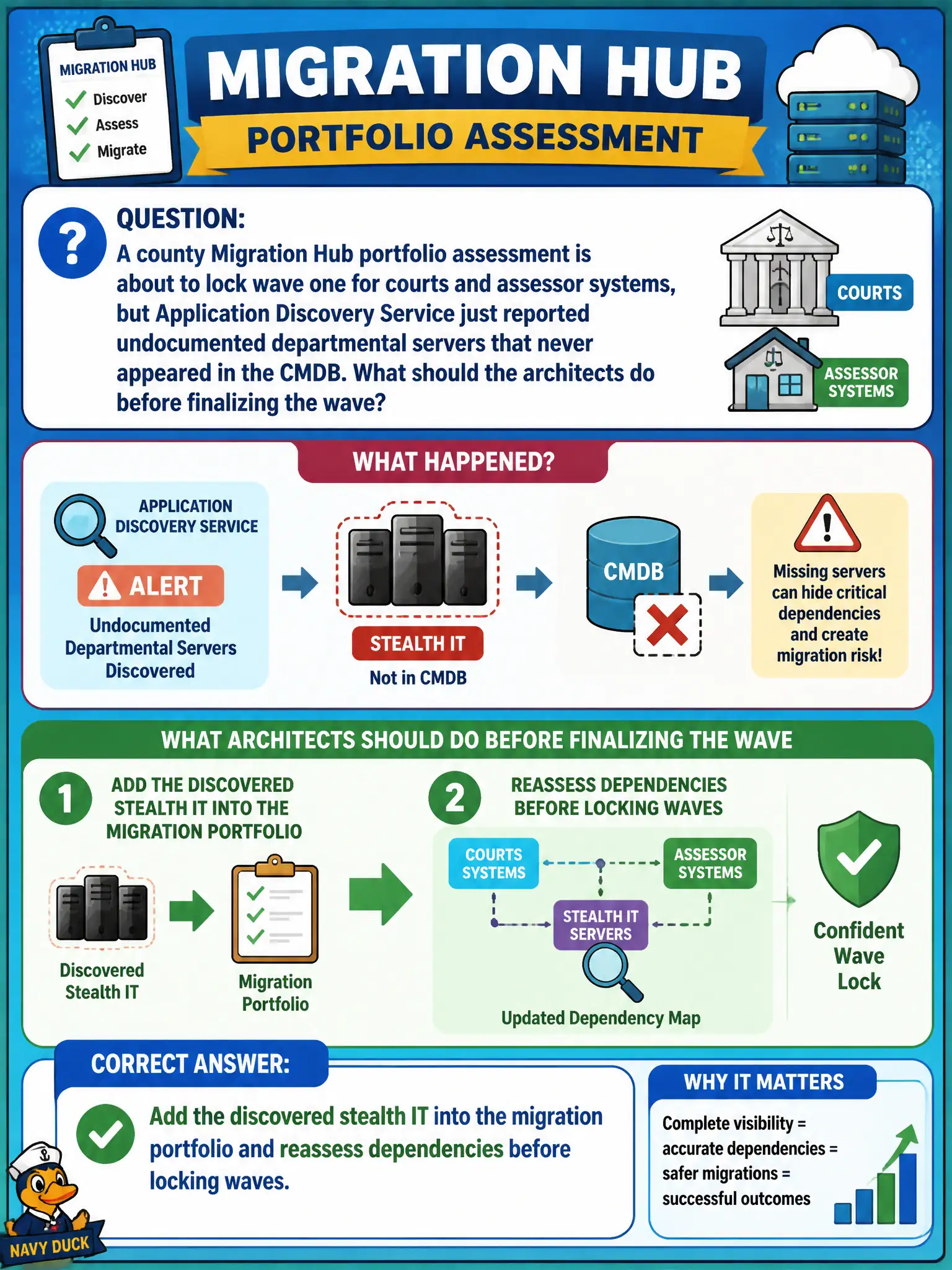
A county Migration Hub portfolio assessment is about to lock wave one for courts and assessor systems, but Application Discovery Service just reported undocumented departmental servers that never appeared in the CMDB. What should the architects do before finalizing the wave?
Select an answer to reveal the explanation.
Short Explanation
Think of packing for a move and finding three mystery boxes in the attic the day before the truck leaves. Discovery just surfaced stealth IT the CMDB never knew about, so fold those assets into the portfolio and re-check dependencies before you lock wave one.
Full Explanation
When a county Migration Hub portfolio assessment is about to lock wave one for courts and assessor systems but Application Discovery Service reports undocumented departmental servers absent from the CMDB, architects must absorb stealth IT before finalizing the wave. Add the discovered servers into the migration portfolio and reassess dependencies so wave composition reflects reality rather than the outdated CMDB alone. Ignoring discovery findings and freezing the CMDB list to protect the original schedule fails because schedule optics do not remove hidden dependencies that break civic cutovers. Moving every newly discovered server into wave one immediately without dependency analysis fails by dumping unknowns into the first production wave and amplifying risk. Deferring all discovery remediation until after production cutover to avoid delaying political milestones fails safe practice and merely schedules outages for after the ribbon cutting. Exam caveat: new discovery before wave lock forces portfolio reassessment, not ignore-or-shove-into-wave-one extremes. Operational check: import stealth servers into Migration Hub, map owners and dependencies, adjust wave one scope with courts and assessor stakeholders, update CMDB, and only then freeze the wave with steering-committee acknowledgment of the inventory delta.