
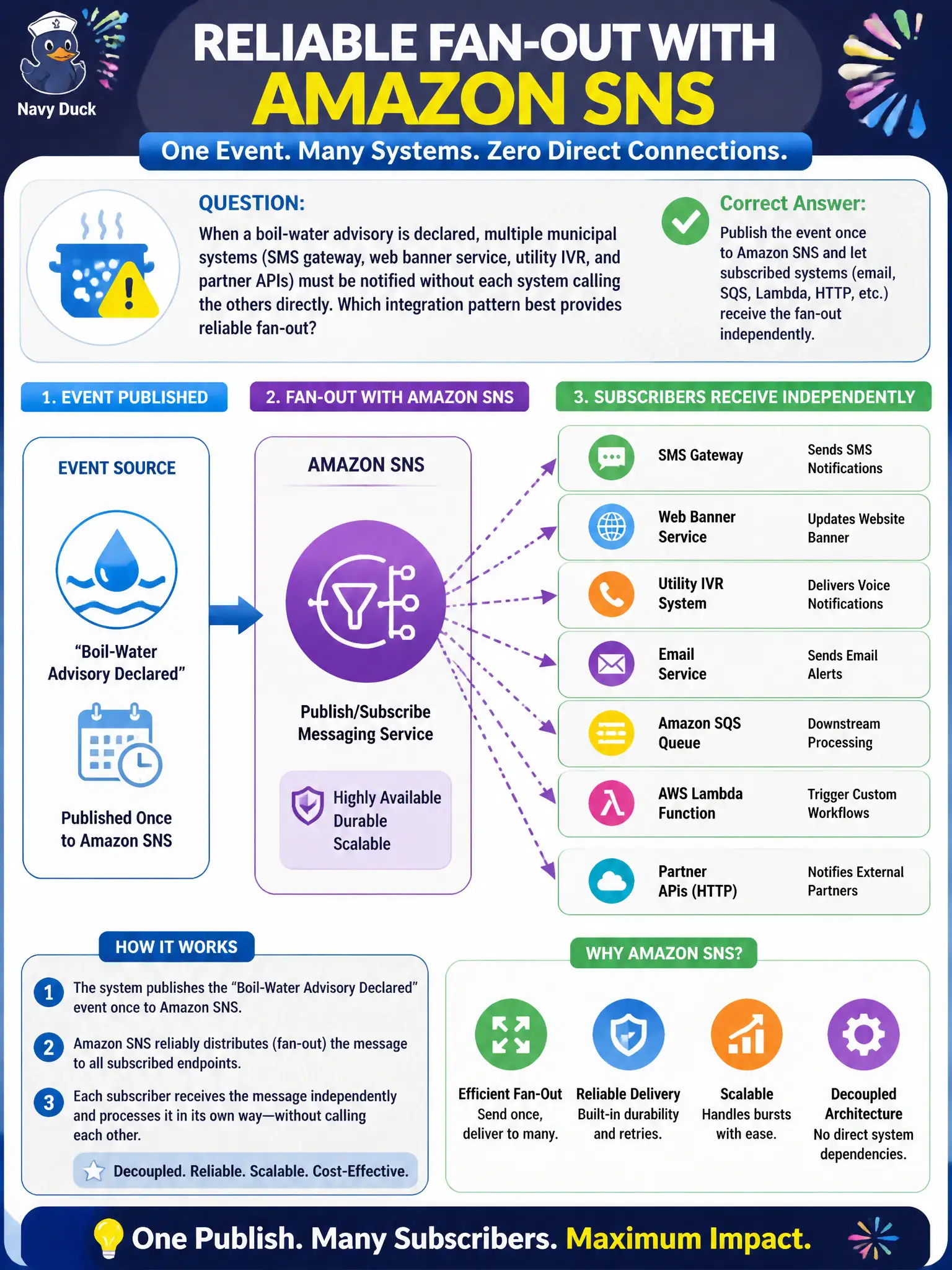
When a boil-water advisory is declared, multiple municipal systems (SMS gateway, web banner service, utility IVR, and partner APIs) must be notified without each system calling the others directly. Which integration pattern best provides reliable fan-out?
Select an answer to reveal the explanation.
Short Explanation
SNS is the city loudspeaker: one boil-water shout, many departments hear it on their own channel. Hand-SSH and shared-spreadsheet phone trees couple everyone into one fragile knot.
Full Explanation
A building-permits API on private subnets still needs controlled administrative access without opening SSH from the internet. AWS Systems Manager Session Manager provides interactive access through the SSM agent and IAM without inbound bastion SSH from 0.0.0.0/0, aligning with least exposure for municipal admin paths. Opening SSH from the entire internet to every instance recreates the attack surface Session Manager is meant to remove. Disabling all remote administration including break-glass paths can strand incident response if not replaced with an approved alternative. Sharing a single shared root SSH key in a public ticket system fails credential hygiene. Exam caveat: Session Manager needs agent connectivity via endpoints or NAT, instance profiles, and logging of session activity to the city's audit bucket. Operational check: remove inbound SSH from instance SGs, connect via Session Manager, confirm commands work, and verify session logs land in the designated audit destination. In municipal cloud governance, record the owners, success metrics, and rollback or restore contacts beside this technical choice so the next incident, budget review, or audit does not rediscover the decision from scratch under time pressure.