
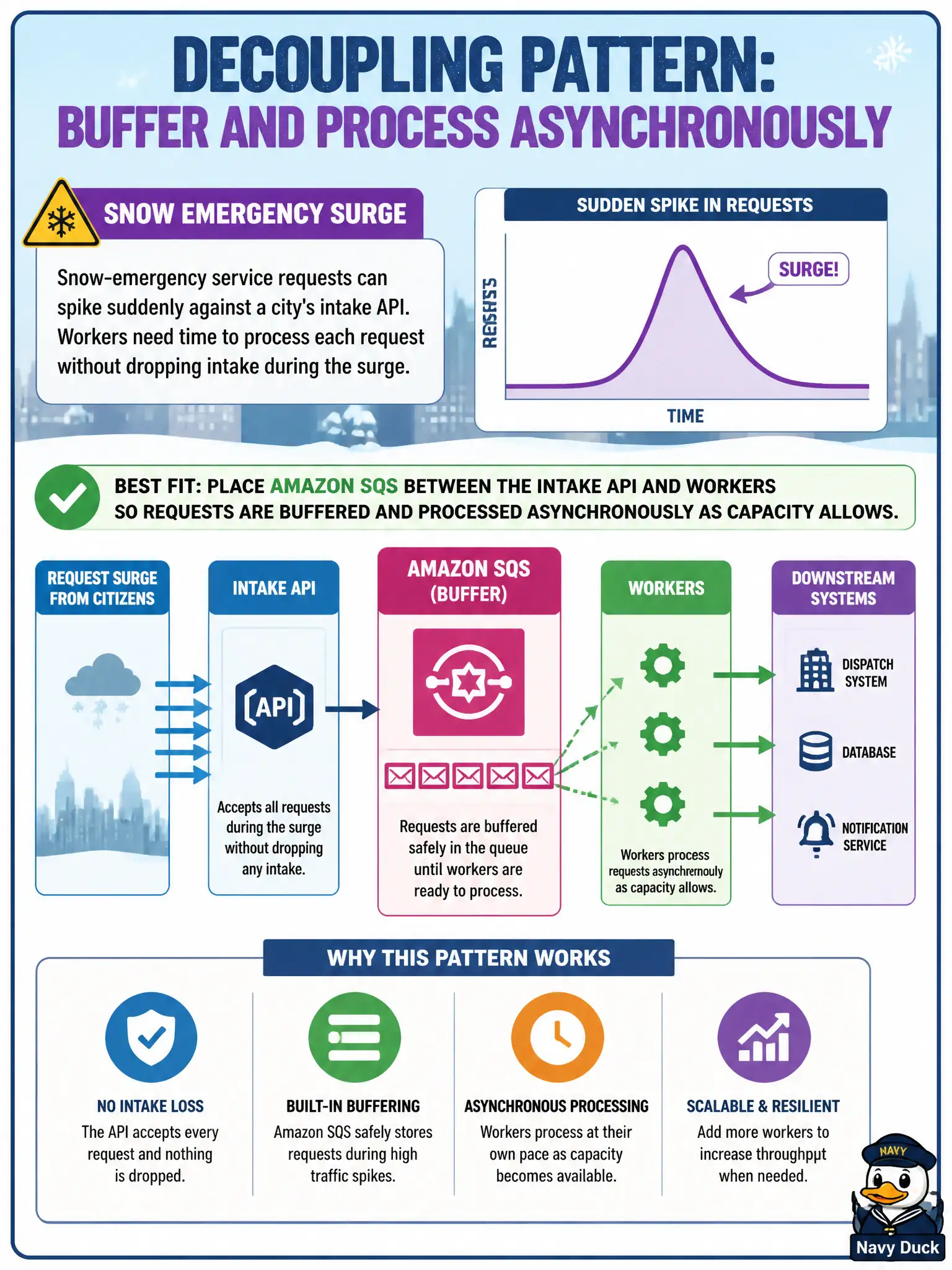
Snow-emergency service requests can spike suddenly against a city's intake API. Workers need time to process each request without dropping intake during the surge. Which decoupling pattern best fits?
Select an answer to reveal the explanation.
Short Explanation
SQS is the storm ticket hopper—citizens drop requests at the intake window, and workers pull tickets when they can. Making intake wait on every busy shovel crew is how the line spills into the street.
Full Explanation
Centralized logging for a new 911-adjacent dispatch support system must be tamper-resistant and retained per policy. Delivering CloudTrail, VPC Flow Logs, and application logs to a dedicated immutable or tightly controlled logging account with appropriate retention meets that need better than leaving logs only in workload accounts where operators can delete evidence. Disabling CloudTrail to save money removes accountability. Writing logs only to local instance disks without central collection fails retention and investigation at fleet scale. Allowing every developer unrestricted s3:DeleteObject on the log archive undermines tamper resistance. Exam caveat: log accounts still need least-privilege ingest roles and encryption; immutability features should match retention law for public-safety adjacent systems. Operational check: verify org trail and flow logs arrive in the logging account, attempt delete from a workload role, confirm denial or object-lock protection, and restore a sample query for an incident tabletop. In municipal cloud governance, record the owners, success metrics, and rollback or restore contacts beside this technical choice so the next incident, budget review, or audit does not rediscover the decision from scratch under time pressure.