
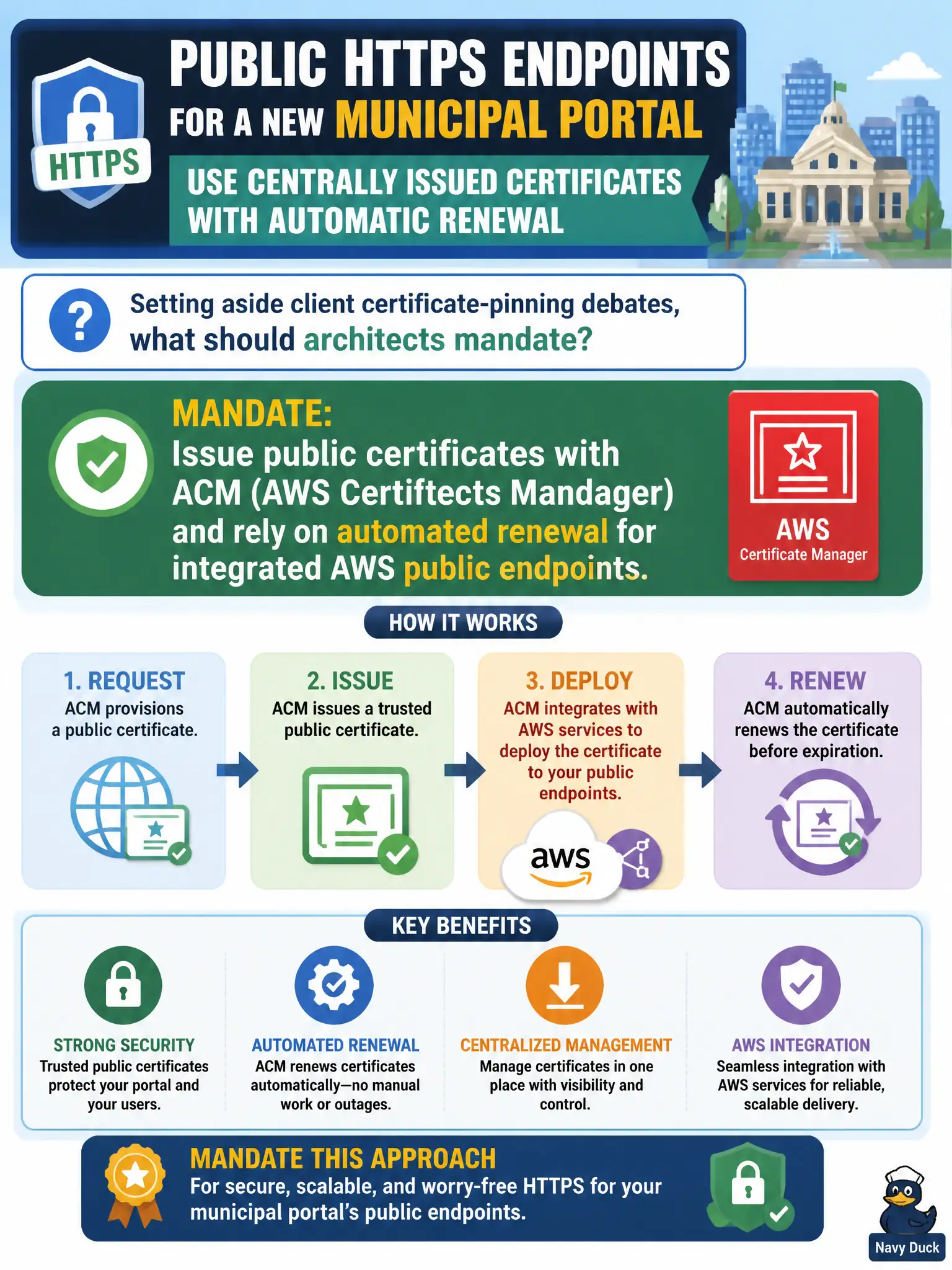
Public HTTPS endpoints for a new municipal portal must use centrally issued certificates with automatic renewal. Setting aside client certificate-pinning debates, what should architects mandate?
Select an answer to reveal the explanation.
Short Explanation
ACM hands out the city's HTTPS badges and renews them before they expire—no personal credit cards, no decade-old self-signed leftovers. Turning TLS off to dodge renewal is not a certificate strategy.
Full Explanation
Citizen document uploads for benefits enrollment need malware scanning before objects become broadly readable inside the city. Architect an upload bucket pattern that triggers scanning—such as an event-driven antivirus or malware inspection pipeline—and only promote or tag clean objects for downstream processing. Making every raw upload immediately public for convenience exposes the city and other residents to malware and data leakage. Disabling all object scanning because uploads are from citizens assumes goodwill and skips a standard intake control. Storing uploads only on clerk desktops with no cloud scanning fails durability and centralized inspection. Exam caveat: quarantine and promote flows must preserve audit metadata and encryption; failed scans need human review paths for false positives on legitimate PDFs. Operational check: upload an EICAR or lab sample to the intake prefix, confirm it is quarantined and not promoted, upload a clean PDF that becomes available to the workflow, and review CloudTrail for the scan pipeline role. In municipal cloud governance, record the owners, success metrics, and rollback or restore contacts beside this technical choice so the next incident, budget review, or audit does not rediscover the decision from scratch under time pressure.