
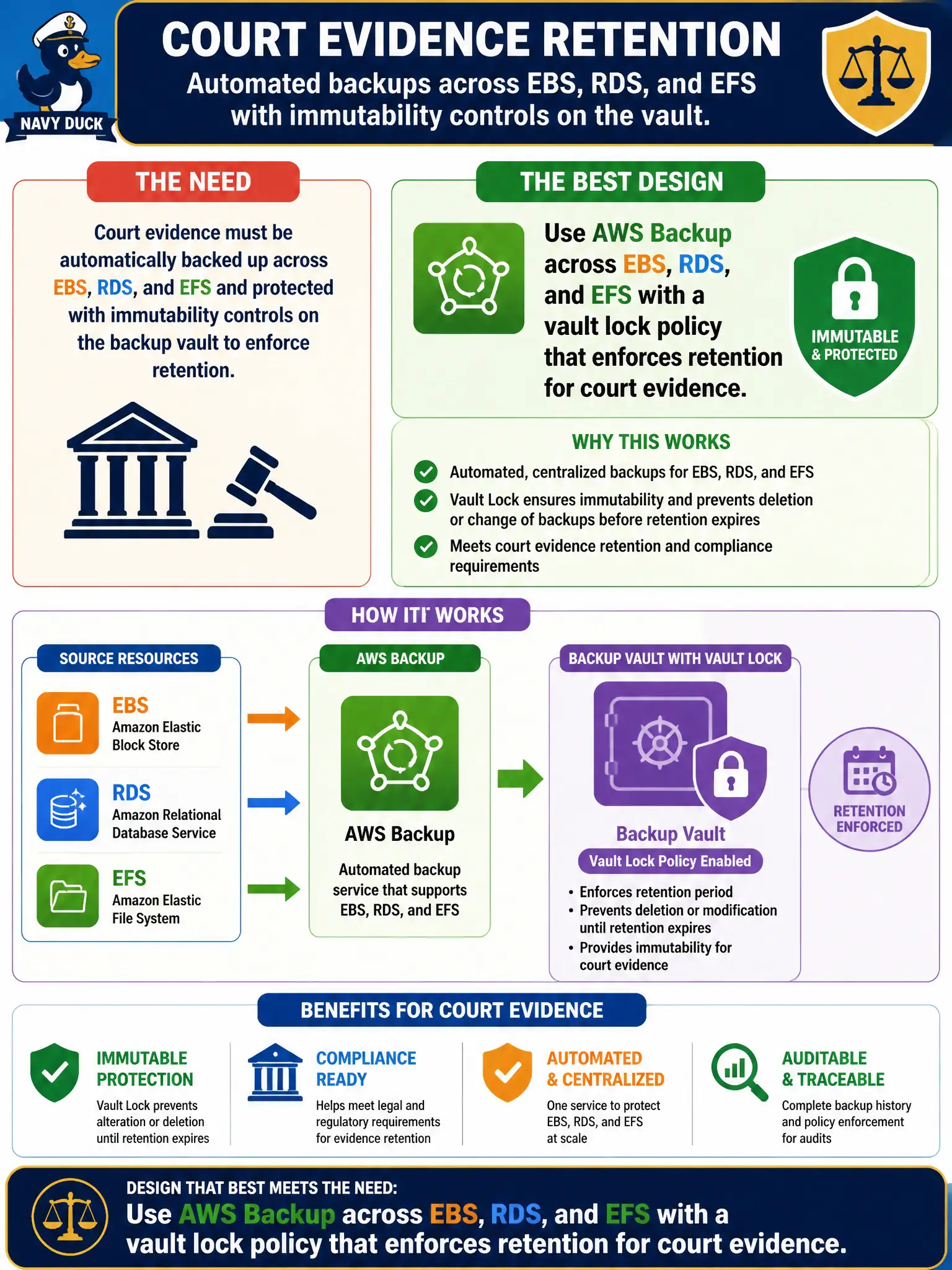
Court evidence retention requires automated backups across EBS, RDS, and EFS with immutability controls on the vault. Which design best meets that need?
Select an answer to reveal the explanation.
Short Explanation
Evidence cannot vanish because someone deleted a snapshot. AWS Backup covers the disks, databases, and file systems, and vault lock puts a legal-grade seal on retention.
Full Explanation
Court evidence retention requires coordinated automated backups across multiple storage services plus immutability so retention cannot be quietly shortened after compromise or mistake. AWS Backup covering EBS, RDS, and EFS with a vault lock policy that enforces retention meets that need with centralized plans and WORM-style vault controls. Manual yearly snapshots of one EBS volume leave most evidence unprotected. Copying databases to personal USB drives creates chain-of-custody and loss risks. Turning off EFS backups because file systems are informally called ephemeral contradicts retention when evidence lives on shared file systems. Exam caveat: vault lock modes must match legal holds, and immutability without restore drills still fails court readiness. Operational check: protect representative EBS, RDS, and EFS resources, enable vault lock, attempt early delete to confirm denial, and restore a sample evidence set to a quarantine account. In municipal cloud governance, record the owners, success metrics, and rollback or restore contacts beside this technical choice so the next incident, budget review, or audit does not rediscover the decision from scratch under time pressure. In municipal cloud governance, record the owners, success metrics, and rollback or restore contacts beside this technical choice so the next incident, budget review, or audit does not rediscover the decision from scratch under time pressure.