
Emergency operations leadership needs evidence that disaster recovery designs meet real RTO targets. What practice best validates continuity?
Select an answer to reveal the explanation.
Short Explanation
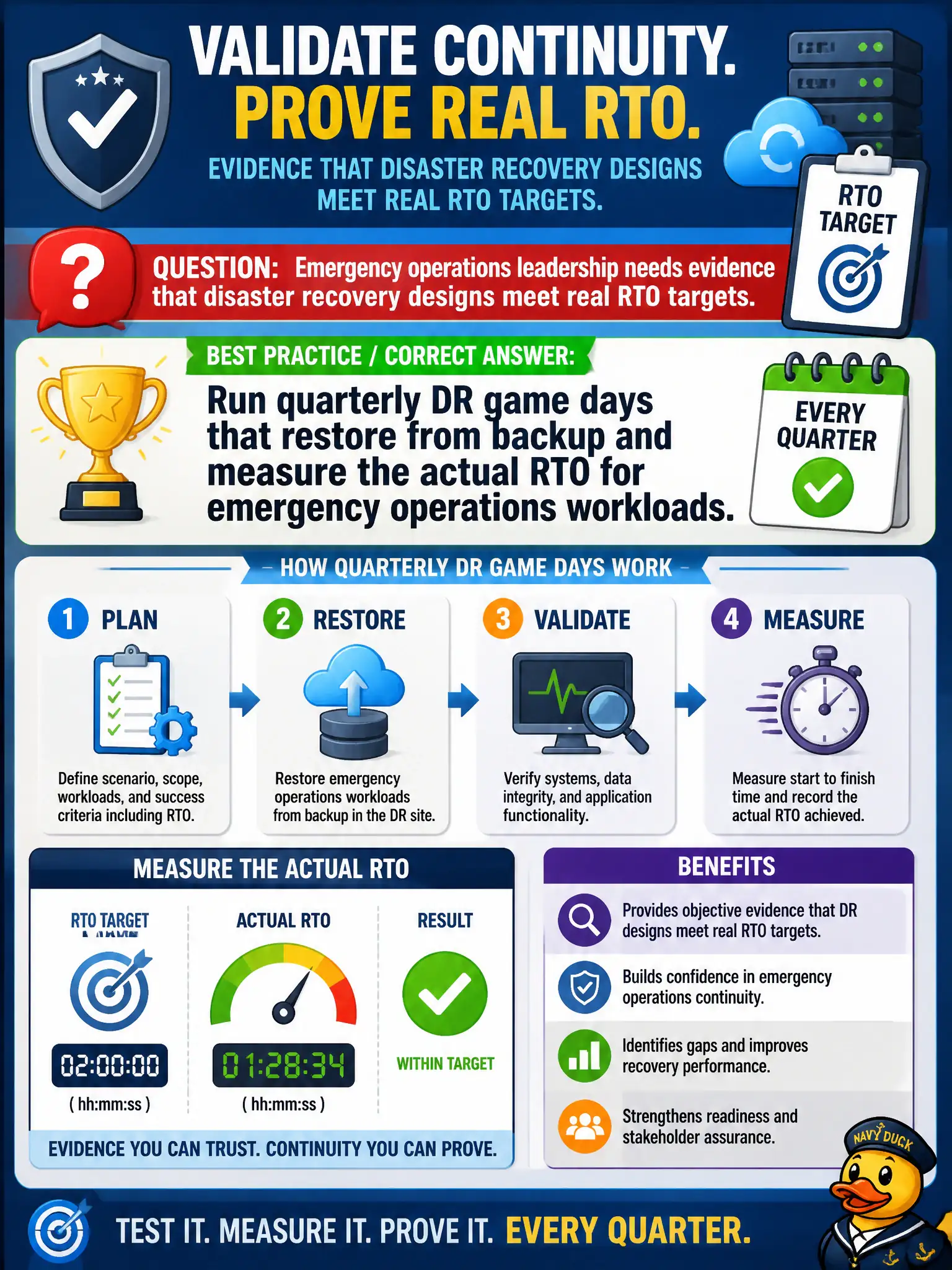
A runbook that never left the binder is fiction. Quarterly game days restore for real, start the stopwatch, and tell the mayor whether the RTO is honest.
Full Explanation
Emergency operations leadership needs empirical evidence that disaster recovery designs meet real RTO targets, which only comes from restoring systems under time measurement. Quarterly DR game days that restore from backup and measure actual RTO for emergency workloads validate continuity claims against reality. Assuming paper runbooks guarantee RTO without restores confuses documentation with capability. Testing DR only after a real disaster already exceeded the RTO is too late. Measuring RTO from marketing slides about multi-AZ logos does not exercise people, process, DNS, or cross-Region recovery. Exam caveat: game days must include identity, DNS, data, and application tiers—database-only restores understate citizen-facing RTO. Operational check: start a timed game day, execute the runbook to a usable emergency operations endpoint, compare elapsed time to RTO, and file remediation for any breaching step. In municipal cloud governance, record the owners, success metrics, and rollback or restore contacts beside this technical choice so the next incident, budget review, or audit does not rediscover the decision from scratch under time pressure. In municipal cloud governance, record the owners, success metrics, and rollback or restore contacts beside this technical choice so the next incident, budget review, or audit does not rediscover the decision from scratch under time pressure.