
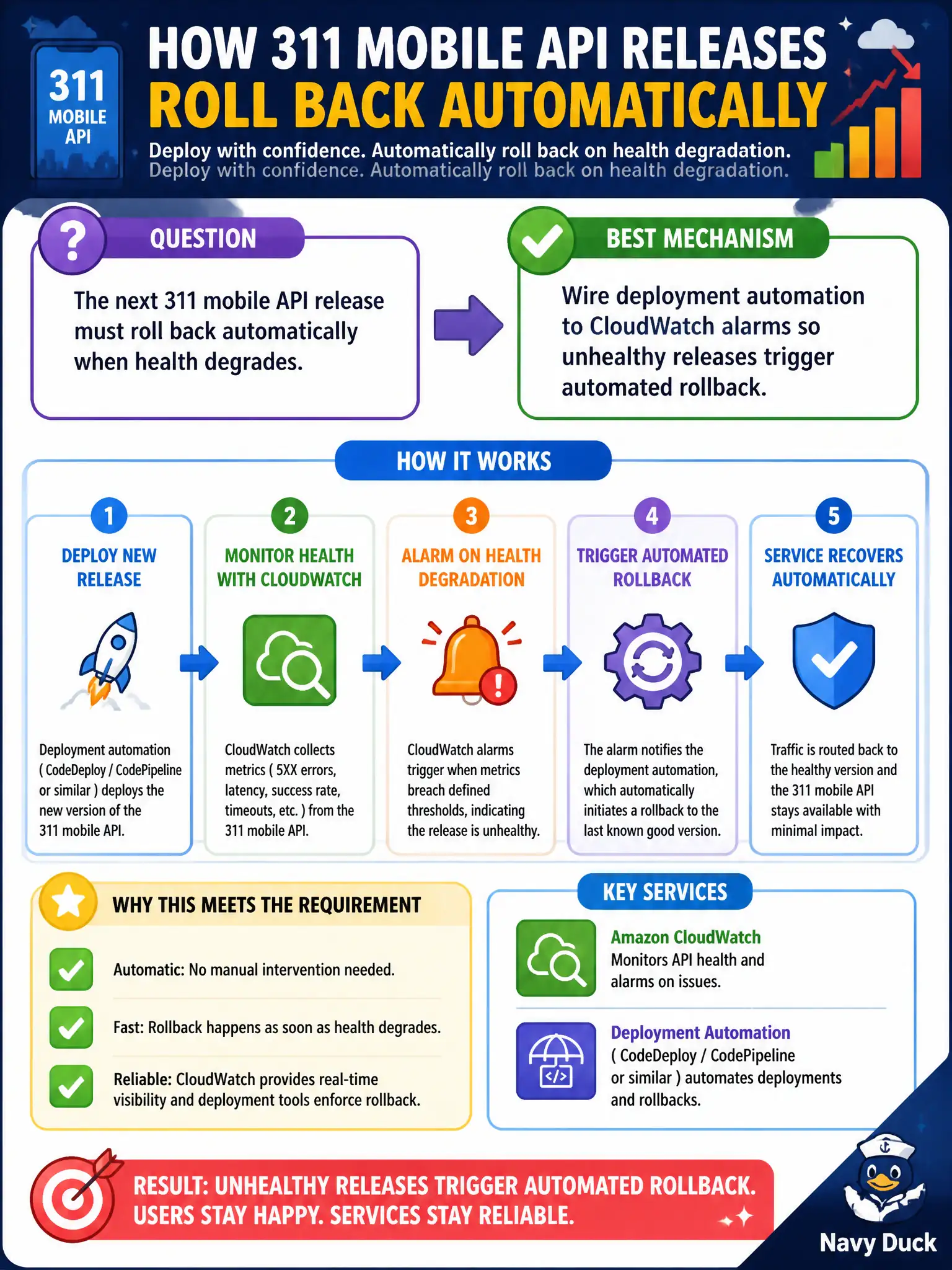
The next 311 mobile API release must roll back automatically when health degrades. Which mechanism best meets that requirement?
Select an answer to reveal the explanation.
Short Explanation
Do not wait for Twitter to be the health check. Tie the deploy to CloudWatch alarms so a sick release rolls itself back while citizens still get 311 answers.
Full Explanation
The next 311 mobile API release must roll back automatically when health degrades, which requires deployment automation wired to objective signals rather than social-media triage. Connecting the deployment controller to CloudWatch alarms so unhealthy releases trigger automated rollback meets that requirement with measurable thresholds and fast remediation for citizen request intake. Paging on-call only after citizens flood social media adds delay with no alarm-driven rollback. Keeping deploys moving forward until errors reach 100 percent maximizes citizen impact. Disabling metrics during releases removes the signals needed for safe automation. Exam caveat: alarms must distinguish release regressions from unrelated dependency blips, or flapping rollbacks erode trust. Operational check: inject a controlled fault in non-production, verify the CloudWatch alarm trips and the deployment rolls back, and confirm 311 synthetic checks recover on the prior version. In municipal cloud governance, record the owners, success metrics, and rollback or restore contacts beside this technical choice so the next incident, budget review, or audit does not rediscover the decision from scratch under time pressure.