
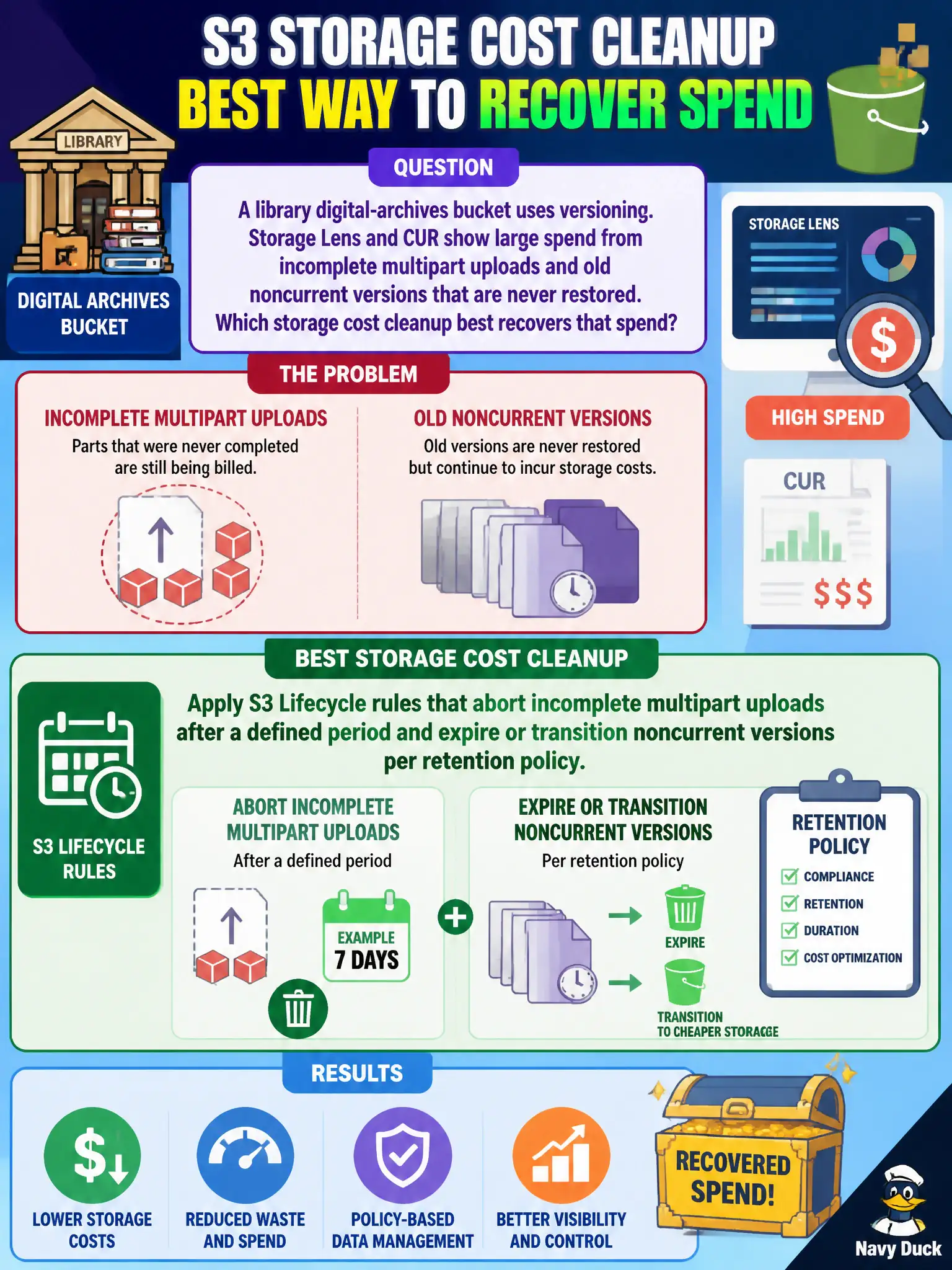
A library digital-archives bucket uses versioning. Storage Lens and CUR show large spend from incomplete multipart uploads and old noncurrent versions that are never restored. Which storage cost cleanup best recovers that spend?
Select an answer to reveal the explanation.
Short Explanation
Incomplete multipart junk and dusty noncurrent versions quietly rent space forever. Lifecycle rules that abort multiparts and expire noncurrent versions are the cleanup crew. Transfer Acceleration and turning off encryption don’t fix that bill.
Full Explanation
A library digital-archives bucket with versioning that burns money on incomplete multipart uploads and never-restored noncurrent versions needs storage lifecycle cleanup, not exotic storage class myths. Apply S3 Lifecycle rules that abort incomplete multipart uploads after a defined period and expire or transition noncurrent versions per retention policy so Storage Lens and CUR stop showing avoidable archive waste. That recovers spend while preserving the versioning posture records retention requires. Turning off versioning and deleting the bucket's default encryption to shrink object metadata charges fails because it weakens integrity and confidentiality controls and does not specifically target incomplete multipart parts or governed noncurrent expiry. Moving the bucket to Reduced Redundancy Storage because it is cheaper for incomplete multipart parts fails on concept: RRS is a retired/inappropriate model for this problem, and incomplete multiparts are cleaned by abort rules, not by switching durability classes. Enabling S3 Transfer Acceleration on the archives bucket to reduce stored-byte charges overnight fails because Transfer Acceleration affects transfer path pricing, not stored-byte or noncurrent-version inventory. Exam caveat: incomplete multipart abort and noncurrent version expiration are classic S3 cost hygiene items separate from acceleration or encryption toggles. Operational check: inventory incomplete uploads and noncurrent growth via Storage Lens, set abort and expire/transition days aligned to library retention counsel, apply lifecycle, verify next CUR period declines, and keep encryption and versioning policies intact for audit.