
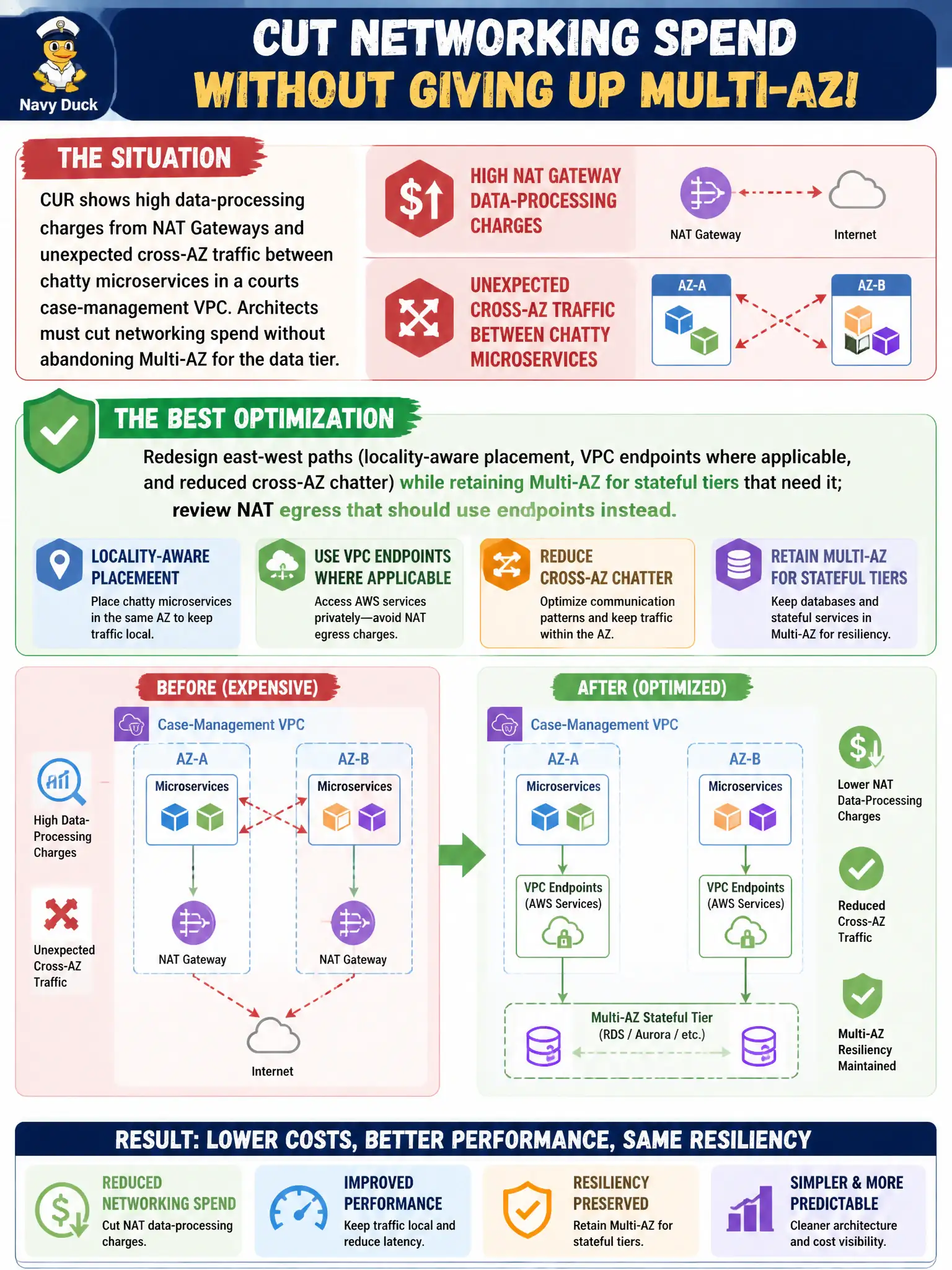
CUR shows high data-processing charges from NAT Gateways and unexpected cross-AZ traffic between chatty microservices in a courts case-management VPC. Architects must cut networking spend without abandoning Multi-AZ for the data tier. Which optimization best addresses the waste?
Select an answer to reveal the explanation.
Short Explanation
Chatty east-west that hops AZs and hairpins NAT is pure municipal money on fire. Pull traffic local, use endpoints, keep Multi-AZ where state needs it. Putting IGWs on private subnets just relocates the pain.
Full Explanation
When CUR shows high NAT Gateway data-processing charges and unexpected cross-AZ traffic between chatty microservices in a courts case-management VPC, networking spend drops by redesigning east-west paths—locality-aware placement, VPC endpoints where applicable, and reduced cross-AZ chatter—while retaining Multi-AZ for stateful tiers that need it, and by reviewing NAT egress that should use endpoints instead. That keeps justice-system resilience without paying for avoidable chatter and public-egress hairpins. Collapsing the database into a single AZ and disabling all inter-AZ routes permanently fails because it abandons Multi-AZ durability the data tier requires for court continuity. Attaching an Internet Gateway to every private subnet so NAT charges move to IGW line items fails conceptually: private subnets with IGWs expose instances and do not magically eliminate data-transfer economics or security boundaries. Enabling VPC peering to the same VPC to eliminate cross-AZ billing fails because you cannot peer a VPC to itself, and peering is the wrong tool for intra-VPC AZ traffic design. Exam caveat: distinguish necessary Multi-AZ data-tier patterns from chatty cross-AZ application anti-patterns and NAT-versus-endpoint choices. Operational check: map top talkers with flow logs and CUR, place chatty pairs in the same AZ where safe, add gateway/interface endpoints for AWS APIs, re-measure NAT processing and cross-AZ bytes, and keep Multi-AZ on databases with documented RTO ownership for the courts PMO.