
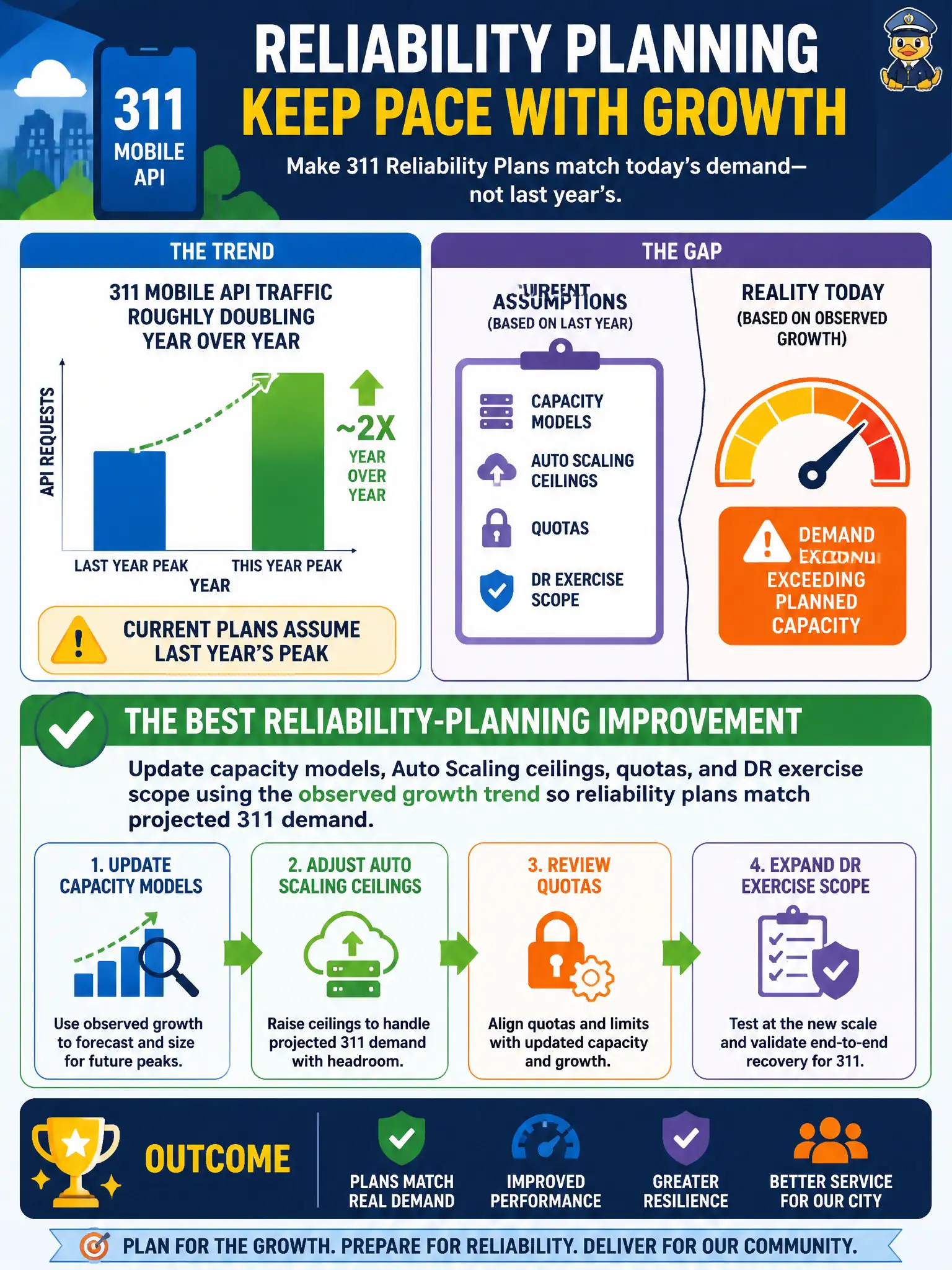
Analytics show the city’s 311 mobile API traffic roughly doubling year over year. Current capacity and DR plans still assume last year’s peak. Which reliability-planning improvement best responds to that growth trend?
Select an answer to reveal the explanation.
Short Explanation
If 311 calls are doubling, planning like last summer is wishful thinking. Refresh the ceilings, quotas, and DR drills for the new curve before the next spike teaches the lesson the hard way.
Full Explanation
Analytics showing the city’s 311 mobile API traffic roughly doubling year over year make last-year peak assumptions for capacity and DR obsolete. Updating capacity models, Auto Scaling ceilings, quotas, and DR exercise scope using the observed growth trend aligns reliability plans with projected 311 demand. That planning improvement works because reliability is a moving target when mobile adoption compounds annually across resident devices. Freezing Auto Scaling max size at last year’s peak to control cost regardless of demand fails when growth is measured and continuing. Assuming mobile usage will reverse next year and postponing capacity review fails conceptually as optimism without evidence. Removing multi-AZ deployments to fund marketing of the 311 app fails by cutting resilience to pay for growth marketing. Exam caveat: growth models should include storm or event spikes atop trend lines; average doubling can still hide sharper peaks that breach ceilings first. Operational check: rebuild the capacity spreadsheet from YoY API metrics, raise ASG max and related quotas accordingly, expand the next DR game day to the new peak, and brief leadership on cost of the updated envelope before storm season.