
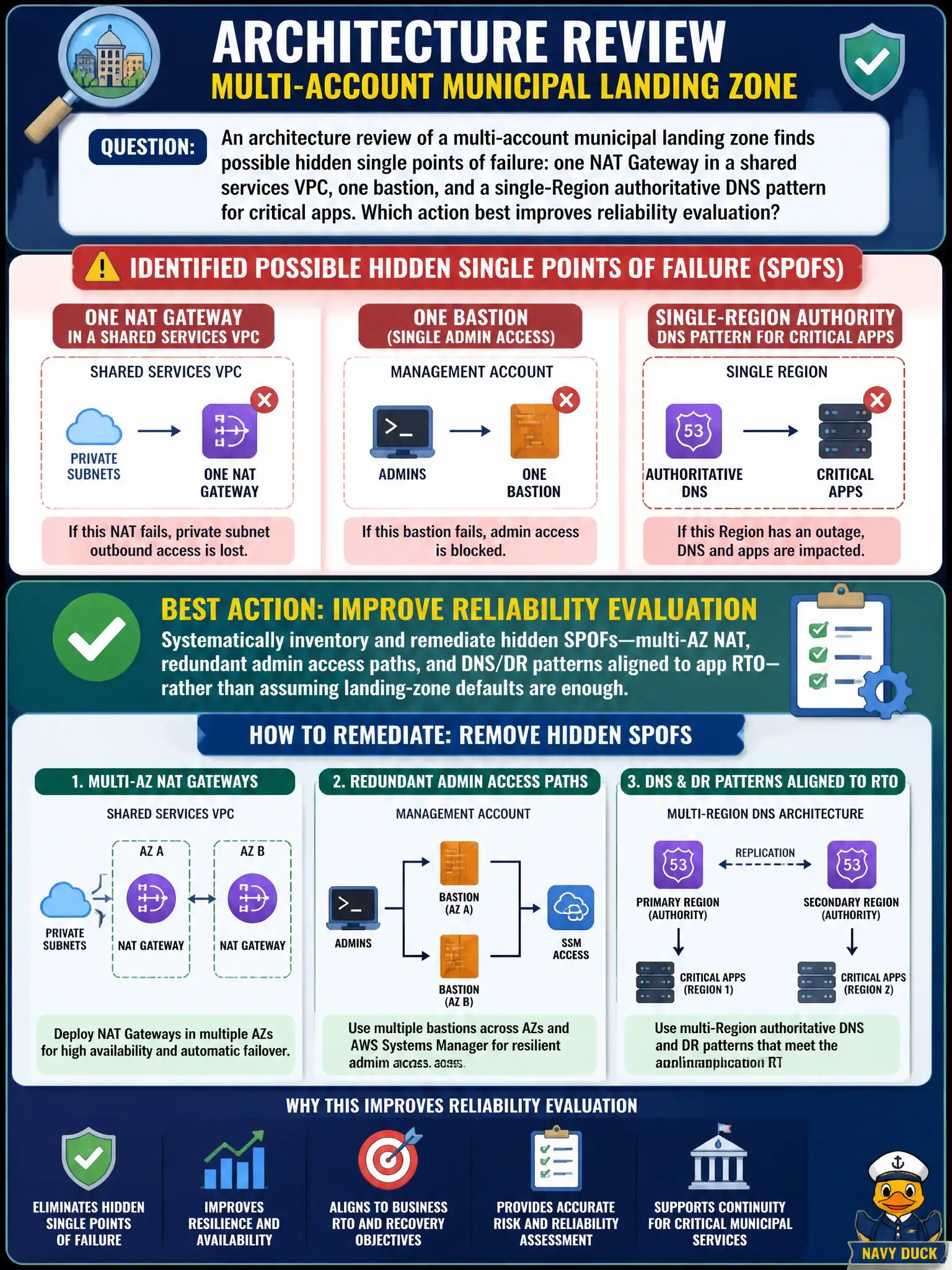
An architecture review of a multi-account municipal landing zone finds possible hidden single points of failure: one NAT Gateway in a shared services VPC, one bastion, and a single-Region authoritative DNS pattern for critical apps. Which action best improves reliability evaluation?
Select an answer to reveal the explanation.
Short Explanation
Landing zones can still hide one lonely NAT or bastion acting like a drawbridge. Hunt those SPOFs on purpose and fix them—Control Tower paperwork is not a spare NAT Gateway.
Full Explanation
An architecture review of a multi-account municipal landing zone that finds one NAT Gateway in a shared services VPC, one bastion, and a single-Region authoritative DNS pattern for critical apps is uncovering hidden SPOFs. Systematically inventorying and remediating those SPOFs—multi-AZ NAT, redundant admin access paths, and DNS/DR patterns aligned to app RTO—improves reliability evaluation more than assuming Control Tower defaults are enough. That action works because landing-zone automation vends accounts; it does not automatically eliminate single paths in shared networking and identity. Documenting SPOFs as acceptable solely because Control Tower was used at vending time fails conceptually: tooling choice is not a hazard analysis. Consolidating all workloads into one AZ to make failure domains easier to reason about fails by enlarging blast radius. Replacing Route 53 with a hosts file distributed by email during incidents fails operational DNS resilience. Exam caveat: not every SPOF has equal RTO impact—prioritize paths that critical citizen apps share (NAT, DNS, CI) before polishing low-traffic lab networks. Operational check: produce a SPOF inventory for shared services, remediate NAT to multi-AZ, add a second admin access path (for example Session Manager without a single bastion), validate DNS failover against app RTO, and re-review quarterly.