
During a Testing Center run against the discharge-instruction summary template, several test cases fail because the generated summaries occasionally omit a medication dosage that was present in the source record. What is the appropriate next step in the lifecycle?
Select an answer to reveal the explanation.
Short Explanation
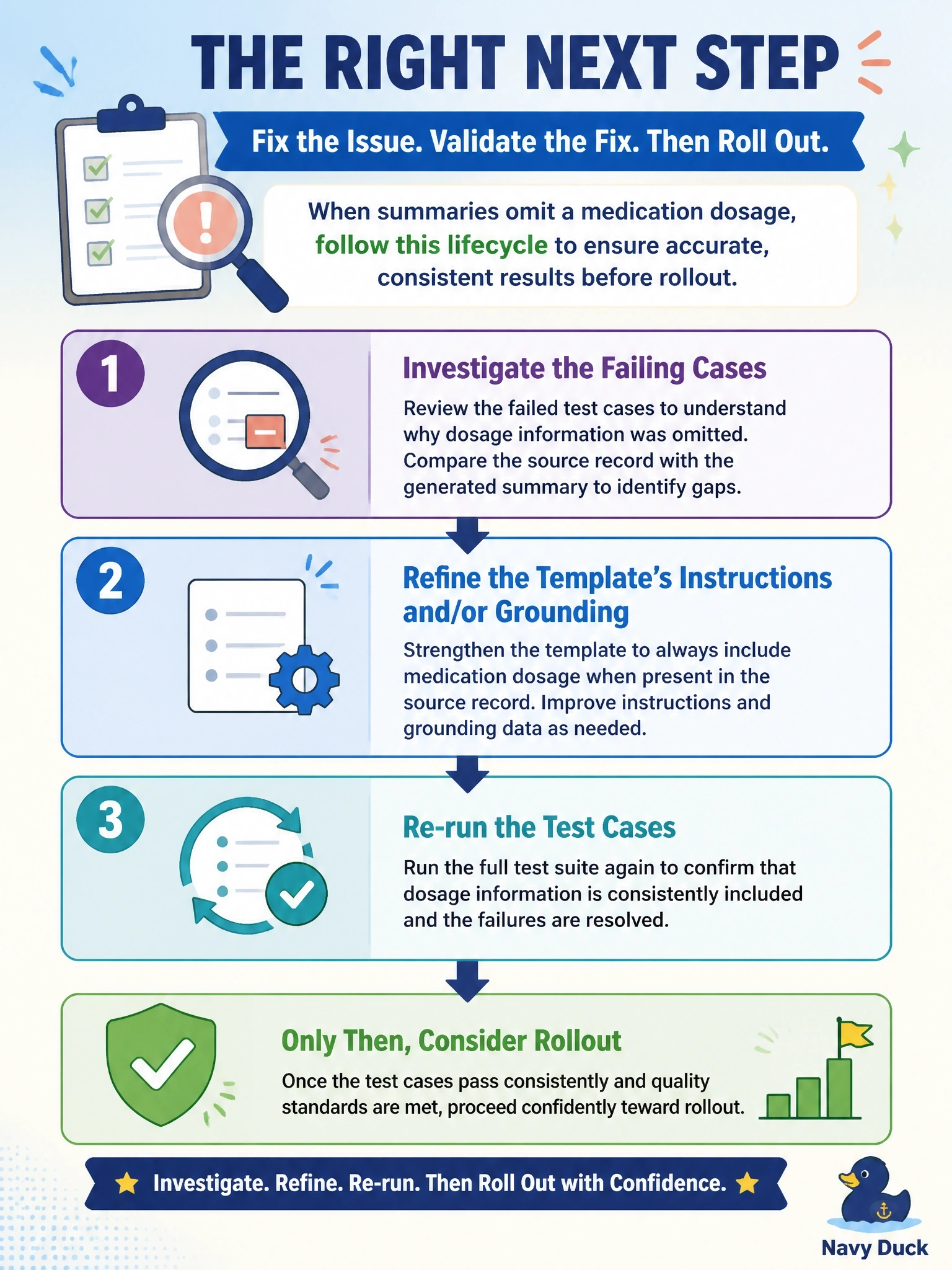
When a test reveals that dosage information is being dropped, you should investigate the cause, refine the instructions or grounding, and re-test before considering rollout. Treating the omissions as harmless, deploying with a known failure, or deleting the failing cases won’t resolve the defect.
Full Explanation
The appropriate lifecycle step is to investigate the failing cases, refine the template’s instructions and/or grounding so dosage information is consistently included, and re-run the tests before considering rollout. Testing Center findings help reveal defects to address before deployment; treating an omitted medication dosage as harmless wording variation and proceeding without changes or retesting leaves a real failure unresolved. The omission is specific and clinically relevant, so immediately rolling the template out on the assumption that some failure rate is acceptable would expose users to a known defect rather than confirm that the summary works as intended. Deleting failing test cases to make the go-live report look acceptable would misrepresent the results and defeat testing’s purpose; the evidence should prompt a fix, not be hidden. One exam caveat: passing tests support a rollout decision but do not justify ignoring a known failure simply because findings are described as advisory. As a practical check, verify that the revised template includes the source medication dosage in the previously failing cases when you re-run them, then consider rollout only after confirming the fix.