
After activating a new prescription-refill-explanation template, the prompt engineering team wants to verify it produces acceptable answers across a representative range of refill scenarios before rolling it out broadly to every clinic. What activity best fits this need within the development lifecycle?
Select an answer to reveal the explanation.
Short Explanation
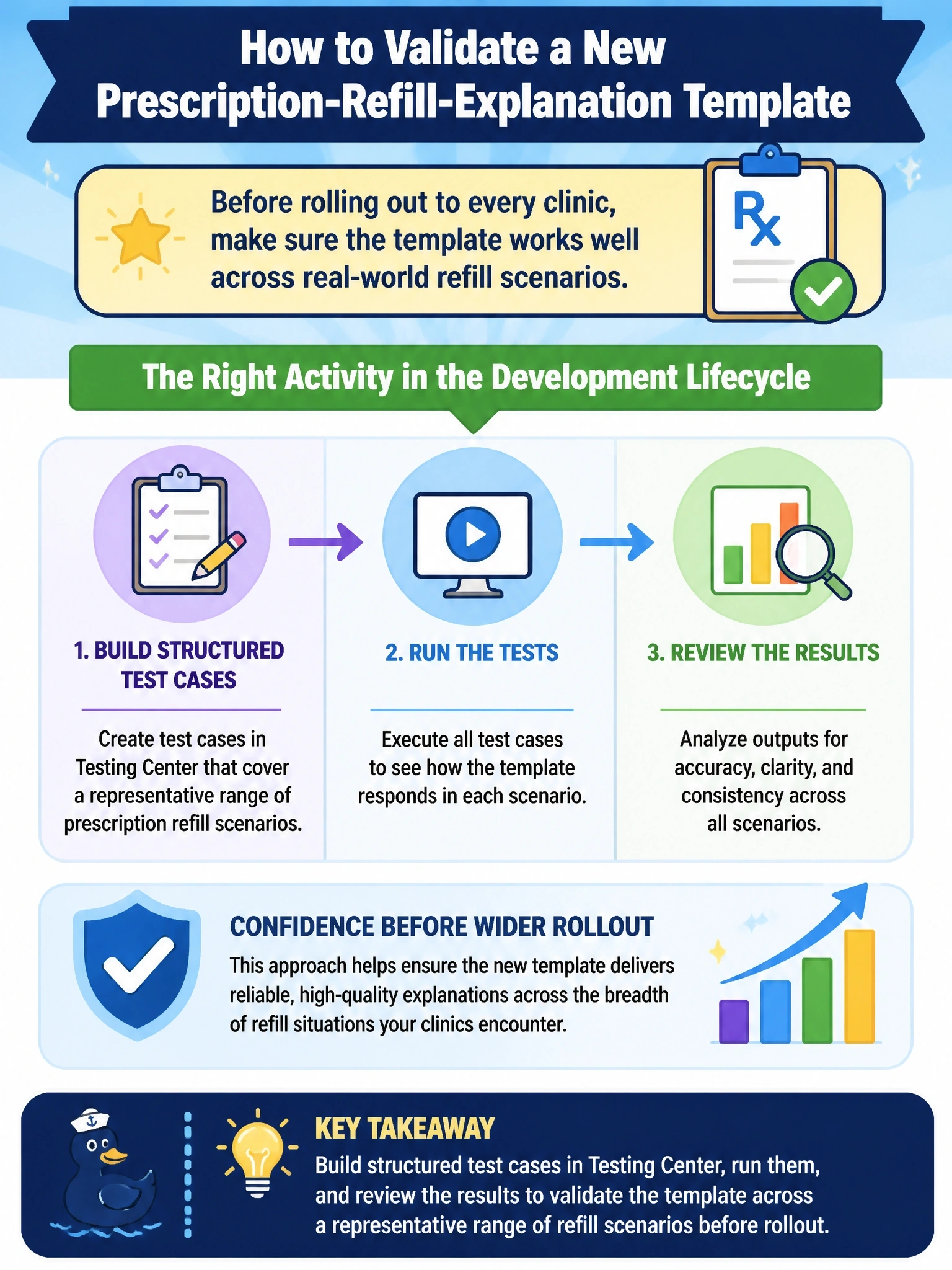
You can use Testing Center to run structured, repeatable test cases across representative refill scenarios before a wider rollout. Reviewing the results helps you catch problems before real customers encounter them.
Full Explanation
The correct approach is to build structured test cases in Testing Center that cover a representative range of refill scenarios, run them, and review the results before a wider rollout. This is systematic pre-deployment verification, the activity called for by the Development Lifecycle objective for agents and relevant to validating generative behavior before broad exposure. Activating a template only makes it available to use; it does not validate the correctness or quality of its outputs across scenarios, so activation alone cannot establish readiness. Asking a handful of employees to try it once each and report back informally lacks a structured, repeatable record of what was tested and what passed or failed, leaving no reliable basis for a rollout decision. Waiting for real pet owners to report production problems makes customers the first test population, potentially during urgent prescription situations, and exposes them to undiscovered issues rather than following responsible testing practice. One exam caveat is that making a template available is not the same as verifying its behavior. As a practical check, confirm that the test cases represent varied refill situations, run them before rollout, and review the results for problems.