
Copperfen Veterinary Network's specialist is preparing to deploy a significant update to the claims-processing agent's instructions and actions. Beyond a passing Testing Center run, what should the deployment plan also include before go-live?
Select an answer to reveal the explanation.
Short Explanation
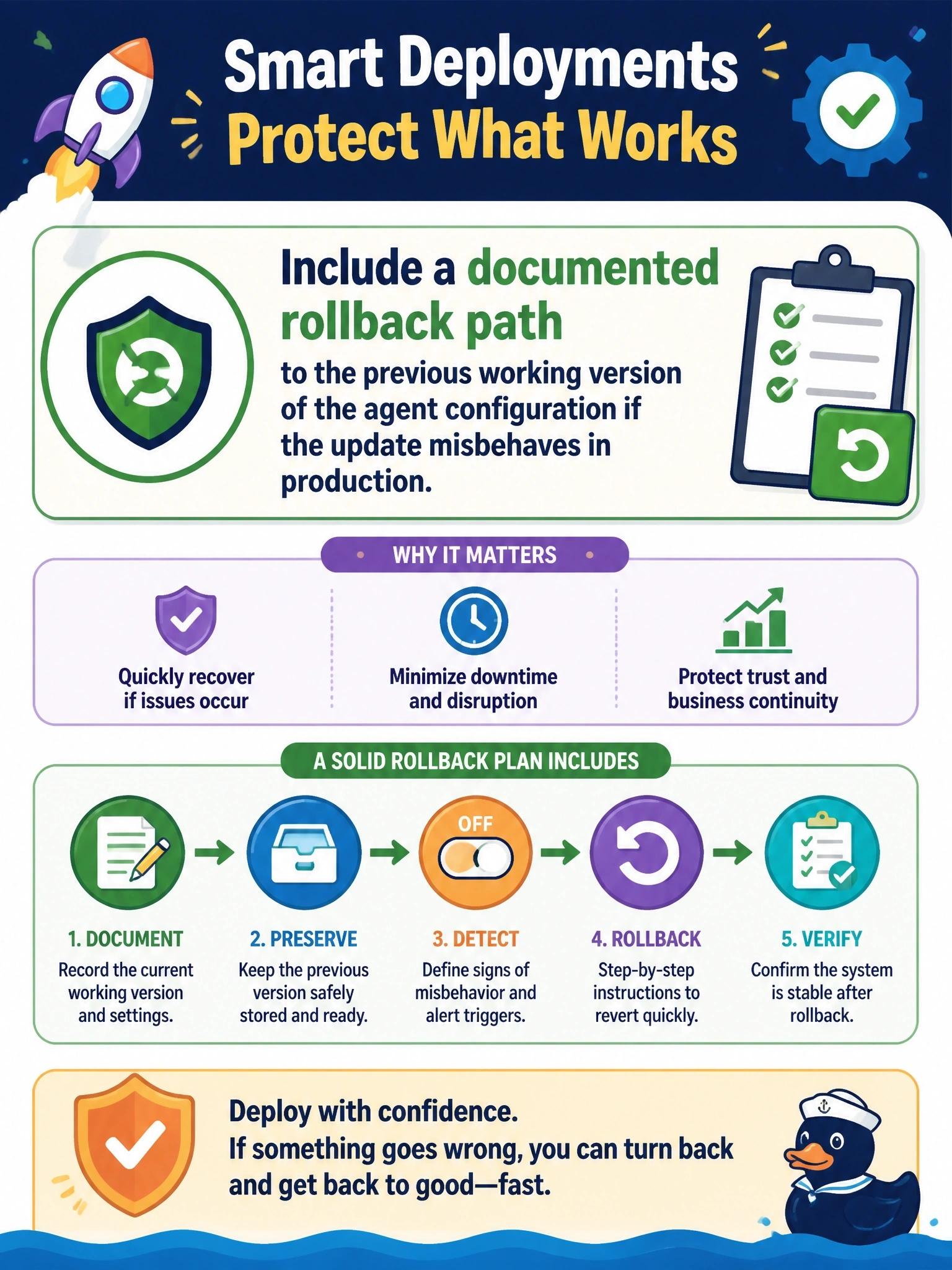
Passing tests tells you the update should work, it doesn't guarantee production will behave exactly like the sandbox did. A real deployment plan also answers the question: if this goes sideways, how fast can we get back to the version that worked?
Full Explanation
A responsible deployment plan for a significant update goes beyond proving the change works in Testing Center and also plans for the possibility that production reveals a problem the tests did not catch; having a documented rollback path to the previous known-good configuration lets the specialist recover quickly rather than troubleshooting live while owners are affected. Claiming an update can never be reverted is backwards: deployment planning exists precisely to make reversal possible and fast if something goes wrong, not to foreclose it. Deleting the previous version's metadata immediately after deployment removes the very thing a rollback plan depends on and would make recovery harder, not safer, defeating the purpose of planning ahead. There is no requirement, and no benefit, to exposing internal topic and action names to pet owners; that is an implementation detail irrelevant to their experience and unrelated to safe deployment practice. The core lesson is that a deployment plan pairs forward progress with a practical way to step backward if production surfaces something the sandbox did not.