
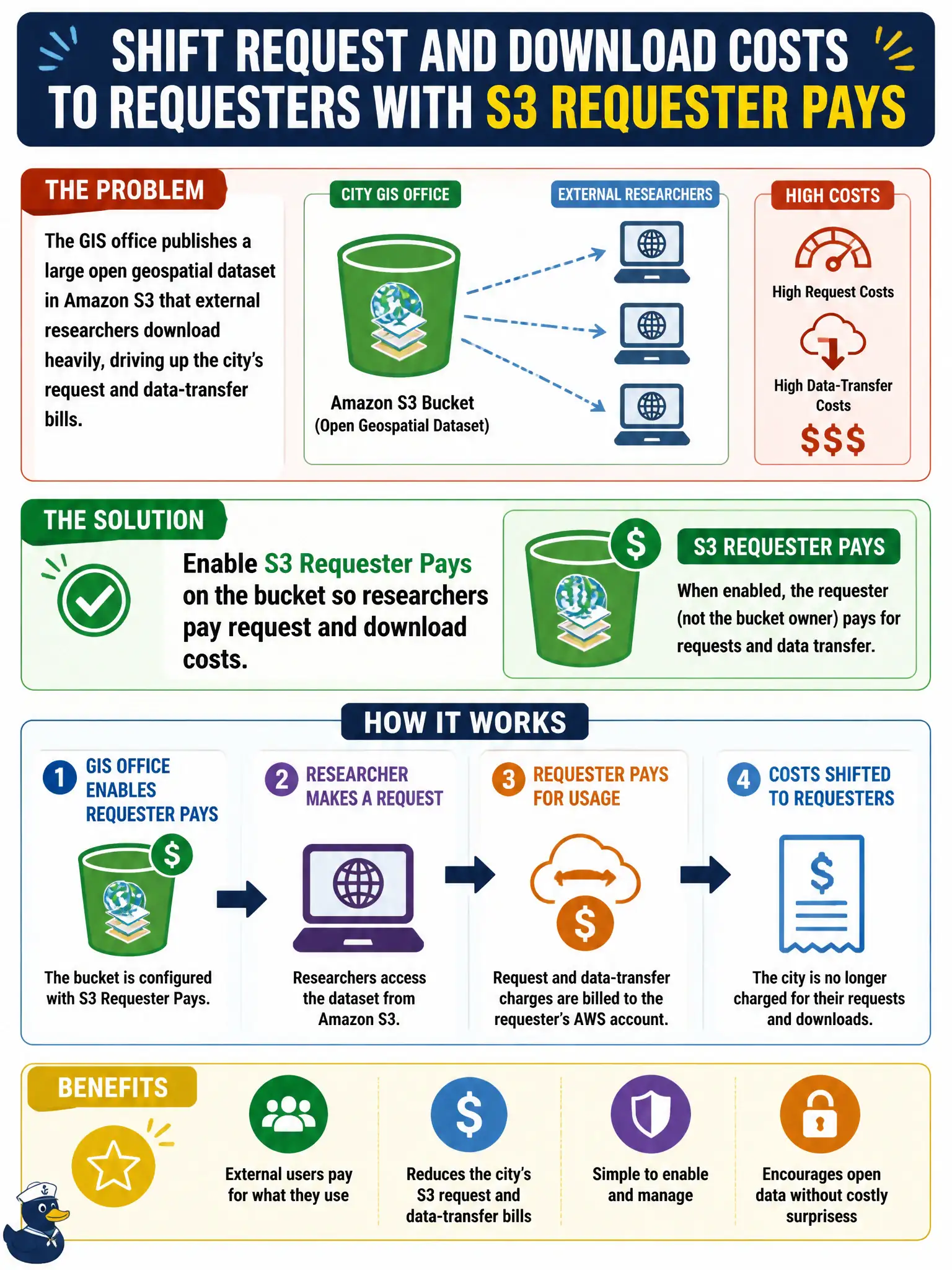
The GIS office publishes a large open geospatial dataset in Amazon S3 that external researchers download heavily, driving up the city’s request and data-transfer bills. Which S3 feature best shifts those request and download costs to the requesters?
Select an answer to reveal the explanation.
Short Explanation
If outsiders pull terabytes of open GIS data, don’t eat every GET on the city card. Requester Pays hands request and download charges to the researchers pulling the objects. Outlook ZIPs, turning off logging, or anonymous FTP on gp2 don’t fix the bill fairly.
Full Explanation
Enabling S3 Requester Pays on the GIS open geospatial bucket shifts request and data-transfer charges to the external researchers who download heavily, instead of leaving those costs on the city’s AWS bill. That feature is specifically intended for open datasets where requesters should fund their own access pattern. Making the bucket private and emailing multi-gigabyte ZIP files from a staff Outlook mailbox recreates an unscalable, insecure distribution process and still costs staff time and mailbox/transfer resources. Disabling CloudTrail and VPC Flow Logs citywide to hide transfer charges does not reduce underlying data-transfer fees and destroys security visibility. Moving the dataset to a single gp2 volume and sharing it with anonymous FTP on an EC2 bastion abandons durable object distribution for a fragile, insecure host that the city would still pay to run. Exam caveat: Requester Pays requires callers to acknowledge the mode in their requests; anonymous/unsigned access patterns may not work as casually as a normal public bucket, so publish clear researcher instructions. Operational check: enable Requester Pays on a pilot prefix, have a partner account download with the requester-pays flag, verify charges appear on the requester account, and update open-data documentation accordingly.