
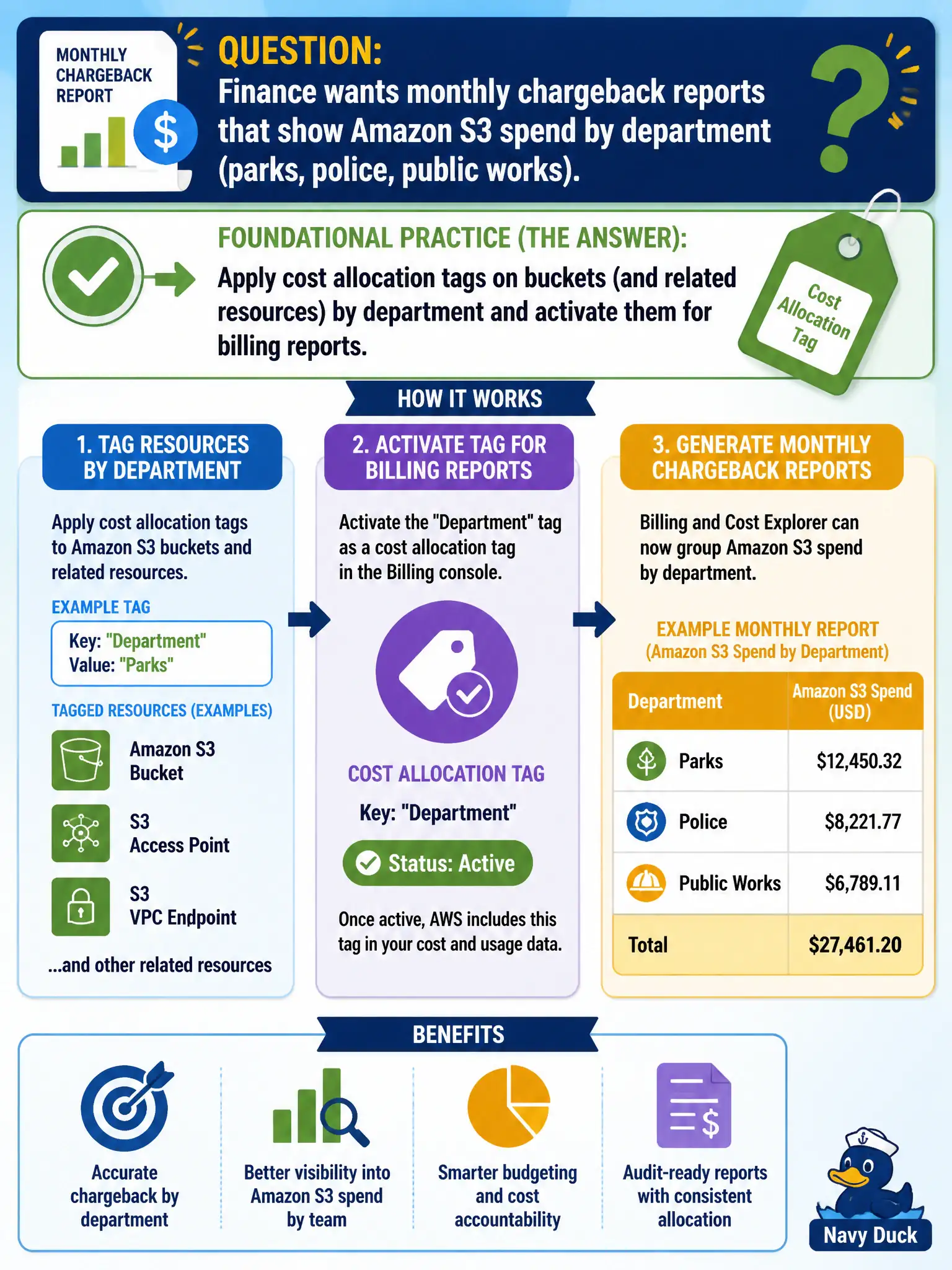
Finance wants monthly chargeback reports that show Amazon S3 spend by department (parks, police, public works). What foundational practice enables that cost allocation?
Select an answer to reveal the explanation.
Short Explanation
Chargeback without tags is arguing over a restaurant bill with no itemized check. Tag buckets by department, activate those tags for billing, and finance can finally split the S3 tab. Guesswork, one untagged pile, or hiding Cost Explorer just prolongs the fight.
Full Explanation
Applying cost allocation tags on Amazon S3 buckets (and related resources) by department—parks, police, public works—and activating those tags for billing reports is the foundational practice that enables monthly chargeback. Without consistent tags activated in billing, Cost Explorer and detailed billing reports cannot reliably split municipal S3 spend. Relying on informal spreadsheet guesses without tagging any buckets produces disputes without evidence. Storing all departments’ objects in one untagged bucket with identical key prefixes only fails automated allocation unless additional mechanisms exist; tags (or separate accounts/OUs) are the standard chargeback foundation called for here. Deleting Cost Explorer access for finance so disputes cannot be raised hides the problem instead of solving allocation. Exam caveat: tags must be activated for cost allocation, applied consistently (including to new buckets), and often complemented by account-per-department or OU strategies in larger orgs. Operational check: define a mandatory Department tag taxonomy, remediate untagged buckets, activate the tag keys in Billing, generate a sample monthly report, and have finance validate totals against known departmental usage.