
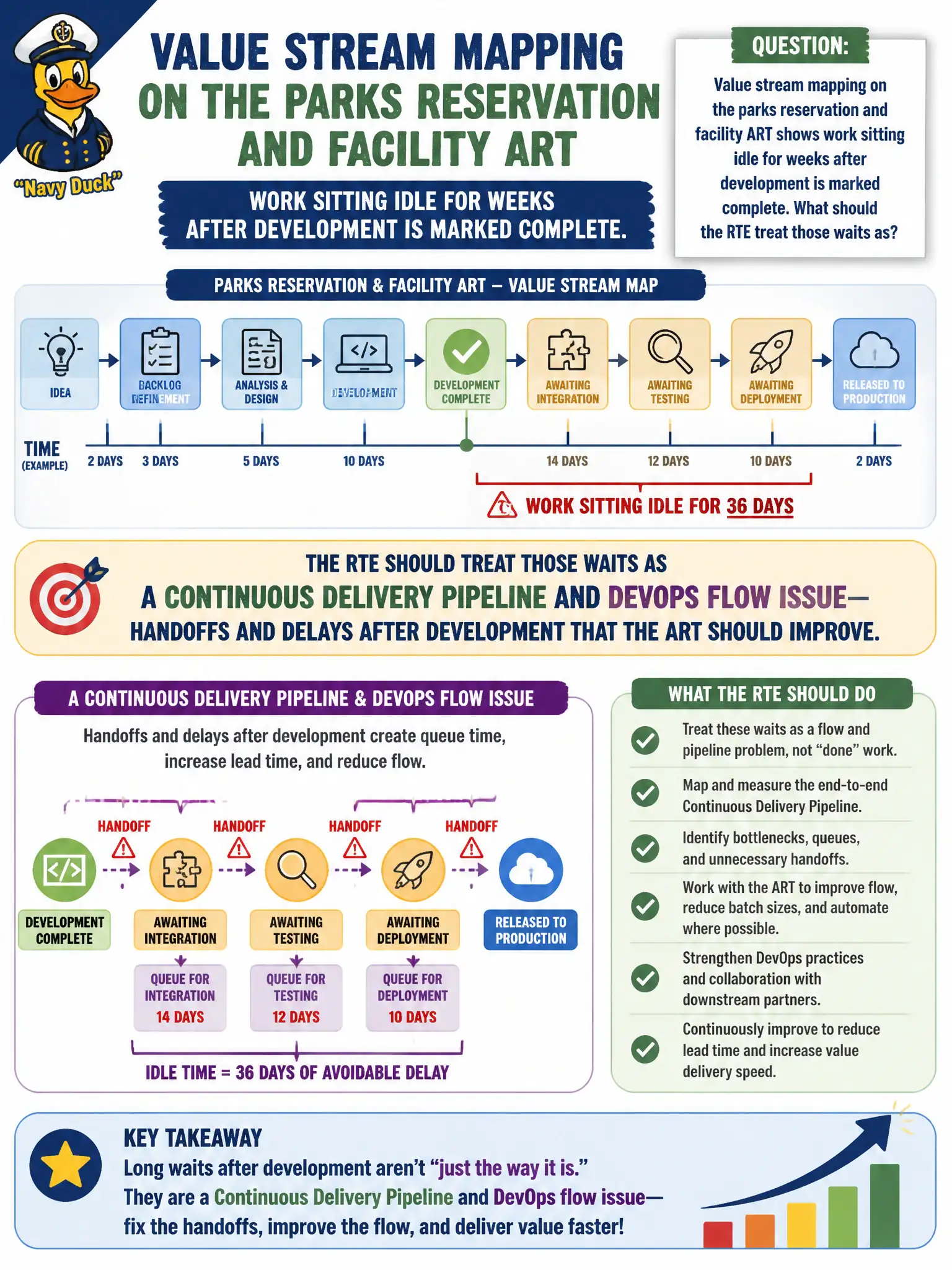
Value stream mapping on the parks reservation and facility ART shows work sitting idle for weeks after development is marked complete. What should the RTE treat those waits as?
Select an answer to reveal the explanation.
Short Explanation
The picnic shelter is built, then it sits in a lot for weeks waiting for a stamp. That wait is the pipeline, not the carpentry. Long post-dev idle time is a CDP and DevOps flow problem the parks ART can actually attack.
Full Explanation
Waits after development is marked complete are Continuous Delivery Pipeline and DevOps flow issues—handoffs and delays the ART should improve. When parks reservation and facility value-stream mapping shows weeks of idle time after development, the RTE should treat those waits as flow problems, not inevitable government destiny. Treating them as proof the parks ART should return to a yearly waterfall freeze abandons incremental delivery. Calling them a Product Owner problem solved by writing longer user stories misplaces the delay after development. Claiming SAFe says to ignore cycle time once code is compiled contradicts flow and DevOps thinking. Parks visitors feel multi-week waits after development as broken online reservation promises; those waits are flow defects the ART can improve. Exam caveat: some approvals are external, but they still belong on the value-stream map with owners and improvement experiments. Operational check: time the post-development parks queues, name the handoff owners, and run an improvement story to shrink the largest wait. Report post-development queue age to Business Owners so civic cycle time stays visible. Hold the civic standard in facilitation notes so the next RTE inherits the same expectation for resident-facing outcomes.