
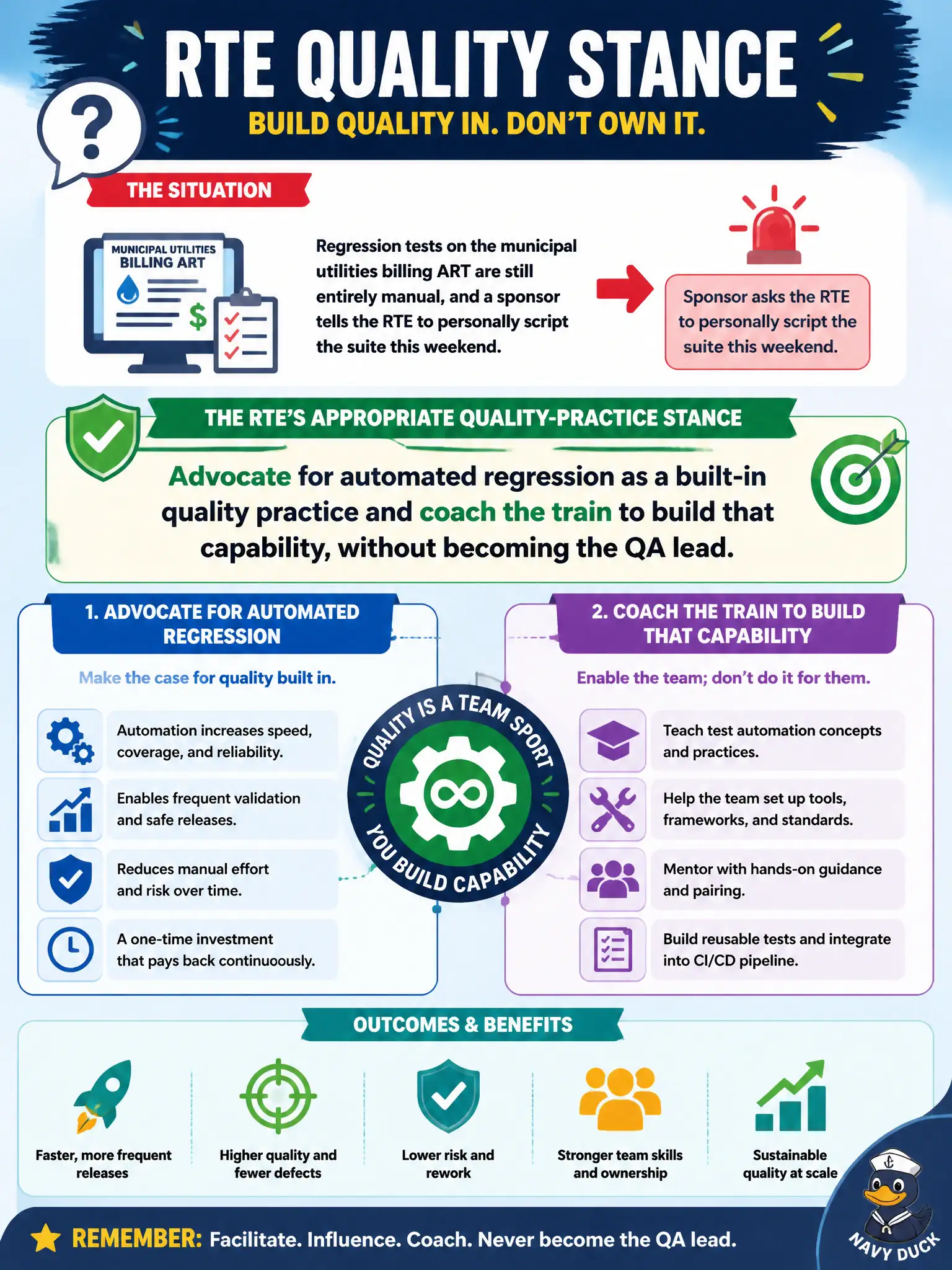
Regression tests on the municipal utilities billing ART are still entirely manual, and a sponsor tells the RTE to personally script the suite this weekend. What is the RTE's appropriate quality-practice stance?
Select an answer to reveal the explanation.
Short Explanation
The RTE is the conductor, not the person soldering every meter in the substation. Test automation is a quality practice the train needs, and the RTE should champion it—then let the people who build billing software own the scripts. Jumping into QA-lead mode drops the ART-level job.
Full Explanation
Automated regression is a built-in quality practice the ART must grow; the RTE advocates and coaches but does not become the QA lead scripting suites on weekends. When municipal utilities billing regression is entirely manual and a sponsor tells the RTE to personally script the suite this weekend, the appropriate stance is advocacy and coaching without taking the engineering seat. Becoming the ART's test-automation engineer and owning billing scripts going forward abandons facilitation for a specialist role. Canceling System Demos until every bill type has a handwritten checklist slows learning without building automation. Freezing the ART Kanban until the RTE finishes coding tests makes the facilitator the bottleneck. Elections systems cannot trade accuracy for speed theater; the RTE coaches built-in quality even when calendar pressure rises before an election. Exam caveat: the RTE may help secure capacity and shared-service support for automation; helping is not personally owning the codebase. Operational check: place a billing regression-automation enabler on the Program Backlog with team ownership and track coverage growth across PIs. Keep quality gates visible on the elections ART plan and escalate attempts to bypass them for schedule optics.