
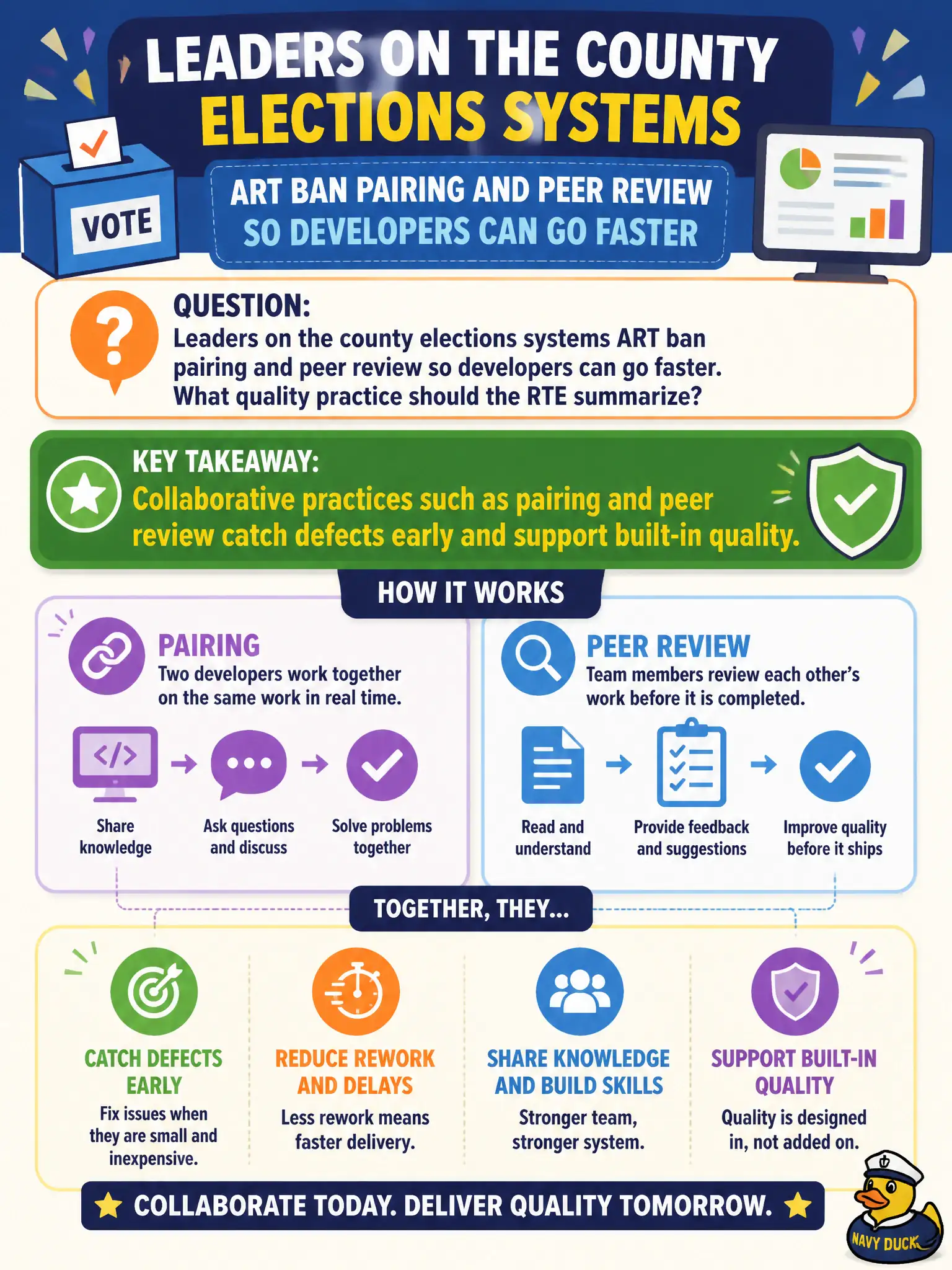
Leaders on the county elections systems ART ban pairing and peer review so developers can go faster. What quality practice should the RTE summarize?
Select an answer to reveal the explanation.
Short Explanation
Two clerks checking a ballot tally is slower than one person waving it through—until a bad count hits election night. Pairing and peer review are how the elections ART builds quality in, not a luxury tax on speed. Skipping both just moves the wait to production.
Full Explanation
Collaborative practices such as pairing and peer review catch defects early and support built-in quality. When county elections systems leaders ban pairing and peer review so developers can go faster, the RTE should summarize that those practices are quality mechanisms, not optional niceties. Banning code comments as well so authors never slow down for another set of eyes doubles down on isolation. Saving all reviews for a single post-election audit after the PI has shipped discovers defects when remediation is most expensive. Routing every ballot-tabulation change through a command-and-control board instead of peers recreates bottlenecked approval without collaborative learning. Utility billing quality escapes become resident disputes; built-in quality practices belong in the Definition of Done, not in a heroic hardening weekend. Exam caveat: high-assurance elections changes may need additional controlled reviews, but that is layered assurance—not a ban on peer collaboration. Operational check: restore peer review or pairing expectations in elections working agreements and track escaped defects before versus after the ban. Audit billing team DoDs for automated checks and stop accepting 'test later' as planned work.