
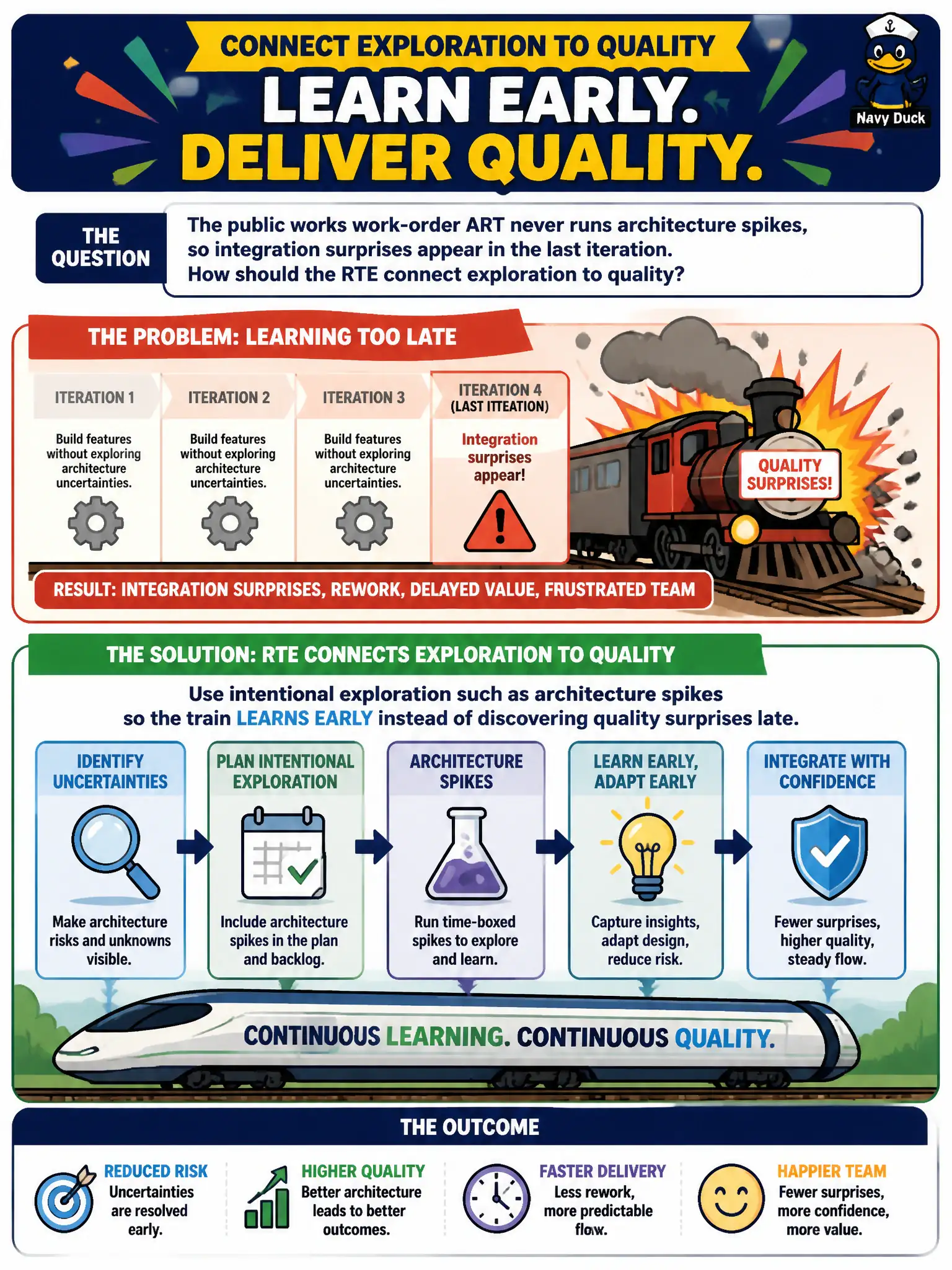
The public works work-order ART never runs architecture spikes, so integration surprises appear in the last iteration. How should the RTE connect exploration to quality?
Select an answer to reveal the explanation.
Short Explanation
Building the new work-order bridge without a soil sample is how you meet bedrock in week nine. Spikes are the ART's soil samples—cheap learning before the expensive pour. Skipping them is not going faster; it is scheduling the surprise.
Full Explanation
Intentional exploration such as architecture spikes lets the train learn early instead of discovering integration quality surprises in the last iteration. When a public works work-order ART never runs spikes, the RTE should connect exploration to quality by coaching early learning. Forbidding enablers so every iteration stays one hundred percent citizen-facing work orders starves runway. Deferring all technical unknowns until the IP iteration after the PI has already committed leaves unknowns inside committed scope. Replacing spikes with a year-long architecture freeze signed by procurement blocks learning. Permit portal defects frustrate applicants and reviewers; definition-of-done shortcuts that skip shared checks recreate local optimization failures. Exam caveat: spikes are timeboxed learning investments with exit criteria—they are not open-ended research vacations. Operational check: identify the top integration uncertainties on the work-order ART and schedule at least one spike with a demo of learning before mid-PI. Facilitate a cross-team DoD review focused on shared integration checks before the next PI. Hold the civic standard in facilitation notes so the next RTE inherits the same expectation for resident-facing outcomes.