
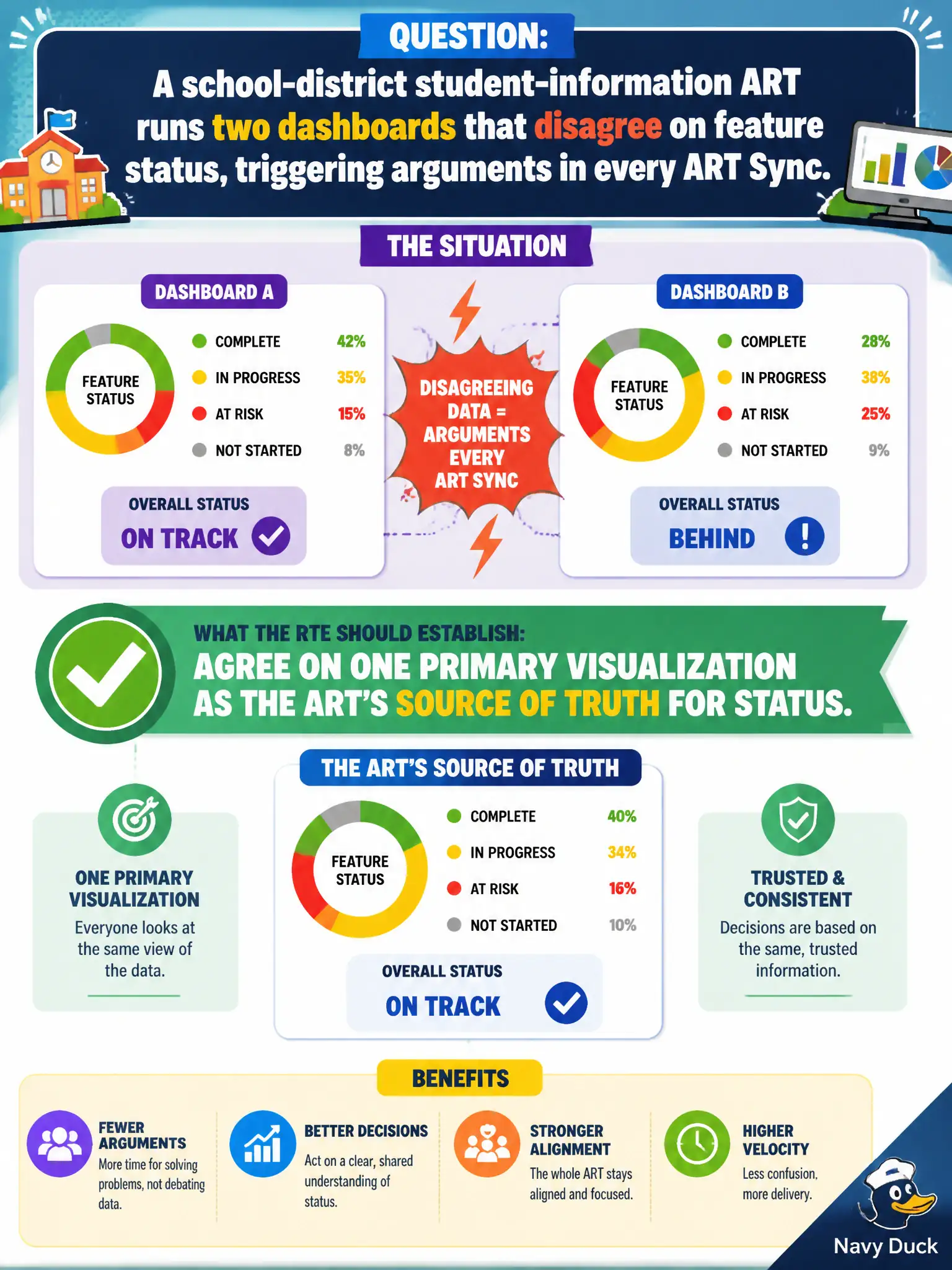
A school-district student-information ART runs two dashboards that disagree on feature status, triggering arguments in every ART Sync. What should the RTE establish?
Select an answer to reveal the explanation.
Short Explanation
Two official scoreboards start a fight, not a sync. Pick one primary board for the student-information ART and treat the other as a feed. Arguments about whose pixels are right waste the meeting.
Full Explanation
The ART needs one primary visualization as the source of truth for status; competing official dashboards produce arguments instead of decisions. When a school-district student-information ART runs two dashboards that disagree on feature status every ART Sync, the RTE should establish agreement on one primary visualization. Keeping both dashboards official so every vendor feels represented institutionalizes conflict. Banning all visualization and reporting only in hallway conversations removes evidence. Letting each team pick a private tool and never reconciling pictures recreates silos. Housing-voucher releases change caseworker and applicant workflows; holding every change to a yearly ceremony while ignoring demand destroys civic responsiveness. Exam caveat: secondary analytics can exist, but escalation and commitment conversations should reference one agreed ART status view. Operational check: name the primary student-information status board in working agreements and stop debating a second dashboard in sync unless a data-quality defect is raised. Pilot smaller demand-driven voucher releases with support readiness instead of a single annual big-bang. Hold the civic standard in facilitation notes so the next RTE inherits the same expectation for resident-facing outcomes.