
A public-health immunization registry ART bought a digital flow board, then stopped updating it after two iterations, and leaders still quote the stale columns in steering. What should the RTE insist on?
Select an answer to reveal the explanation.
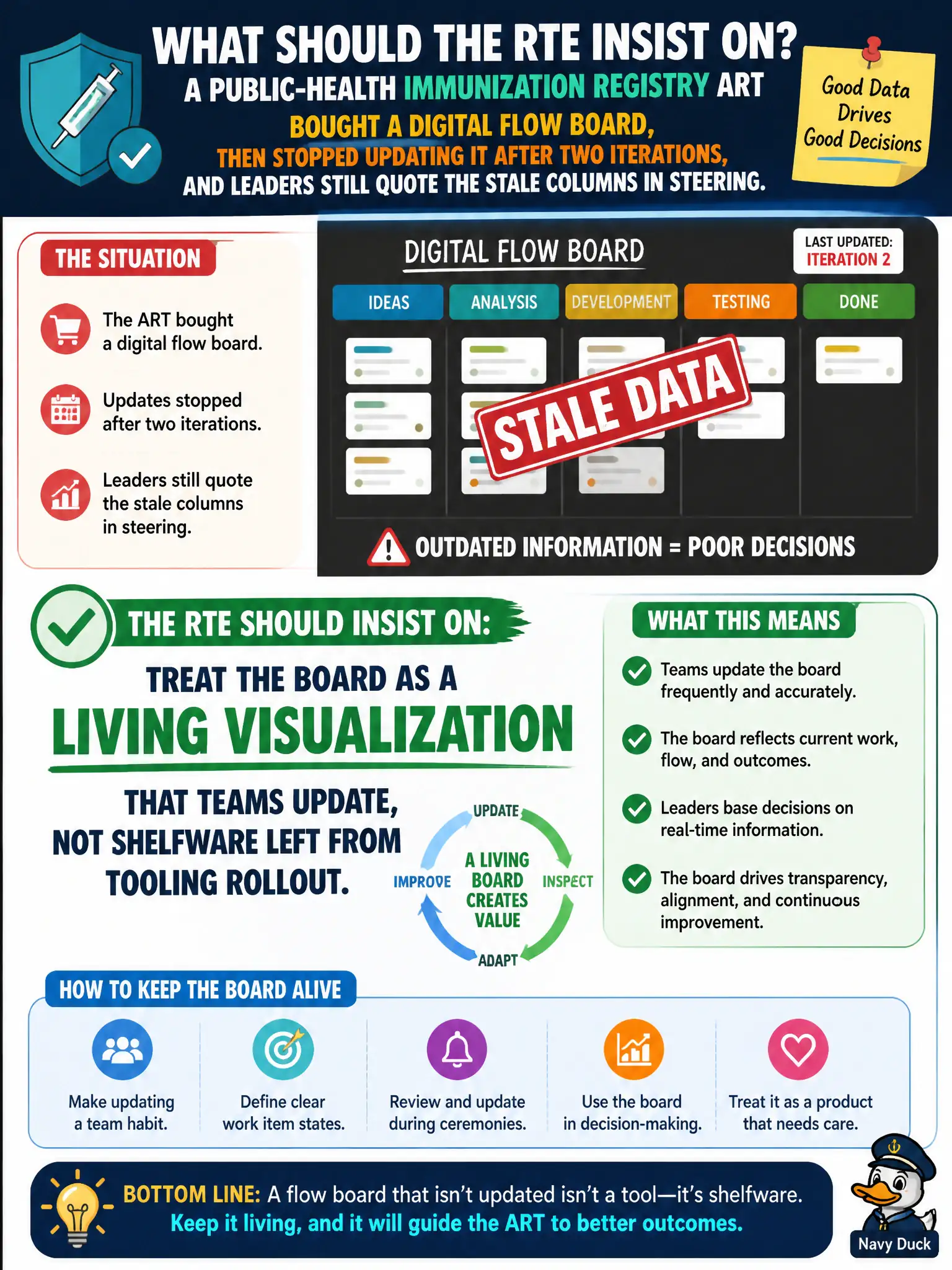
Short Explanation
A board nobody updates is a mural. Public-health leaders making decisions from last month's columns will steer the wrong way. The tool only counts if it is alive.
Full Explanation
Visualization tools support execution only when they reflect current work. Shelfware—purchased, launched, then abandoned—creates false confidence because stakeholders still treat the picture as truth. When a public-health immunization registry ART bought a digital flow board, stopped updating it after two iterations, and leaders still quote stale columns, the RTE must insist the board is a living visualization teams update, not shelfware from tooling rollout. Leaving the stale board as a permanent historical record invites bad decisions. Buying a second unused tool hides the first tool's staleness. Screenshotting once at PI Planning and refusing further updates freezes a planning souvenir as execution truth. DMV licensing leaders need to see where features sit in the delivery pipeline, not only team-story motion that hides statewide issuance risk. Exam caveat: currency requires an agreed update cadence and ownership—not perpetual perfect data entry. Operational check: assign board-update owners per registry team, set a daily or sync-cadence refresh rule, and stop citing columns that fail a freshness check. Walk the feature pipeline states in the next steering review with Business Owners present.