
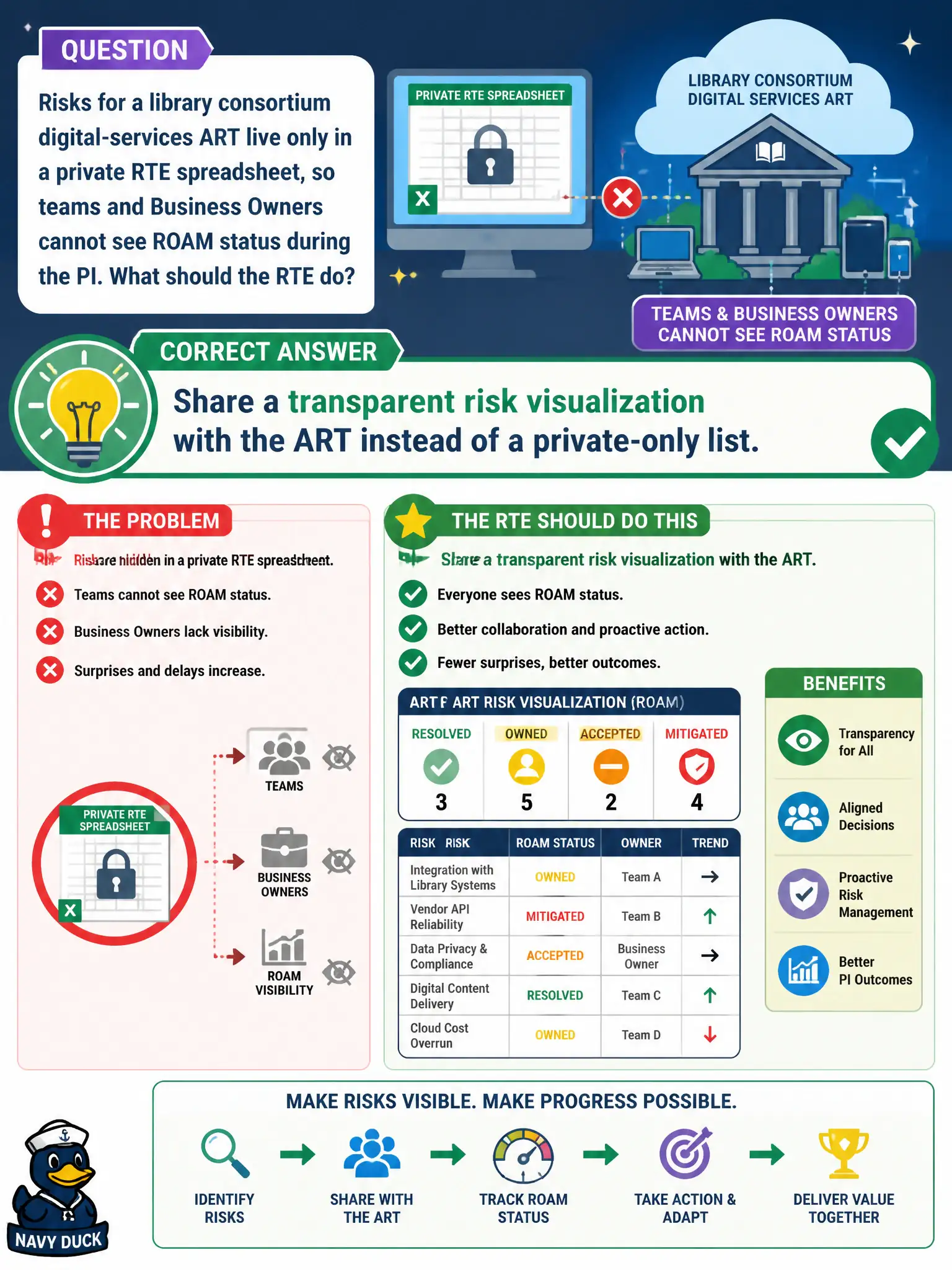
Risks for a library consortium digital-services ART live only in a private RTE spreadsheet, so teams and Business Owners cannot see ROAM status during the PI. What should the RTE do?
Select an answer to reveal the explanation.
Short Explanation
A private risk list is a diary, not a dashboard. Library teams cannot own or mitigate what they cannot see. Put ROAM on a wall the ART actually walks past.
Full Explanation
ART risks must be transparent to teams and Business Owners during the PI so ROAM status can drive action, not hide in a private facilitator notebook. When library consortium digital-services risks live only in a private RTE spreadsheet, the RTE should share a transparent risk visualization with the ART. Keeping the spreadsheet private so teams are not distracted by risk language withholds the very information they need to mitigate. Moving risks into a locked executive folder after each ART Sync continues the opacity. Converting every risk into a team story and deleting the ART-level view loses train-level risk management even if some mitigations become backlog items. Open-data consumers lose trust when releases are surprise dumps; Release on Demand still requires intentional civic communication and readiness. Exam caveat: some sensitive civic risks may need controlled audiences, but default privacy for all risks is not that control model. Operational check: publish an ART risk board with ROAM categories, owners, and next steps reviewed in library ART sync. Confirm release checklists include communications and support readiness before each public dataset drop. Hold the civic standard in facilitation notes so the next RTE inherits the same expectation for resident-facing outcomes.