
Leaders on a county tax-assessment ART keep starting new projects because work in process is invisible, so queues grow while the start rate does not slow. What should the RTE make visible first?
Select an answer to reveal the explanation.
Short Explanation
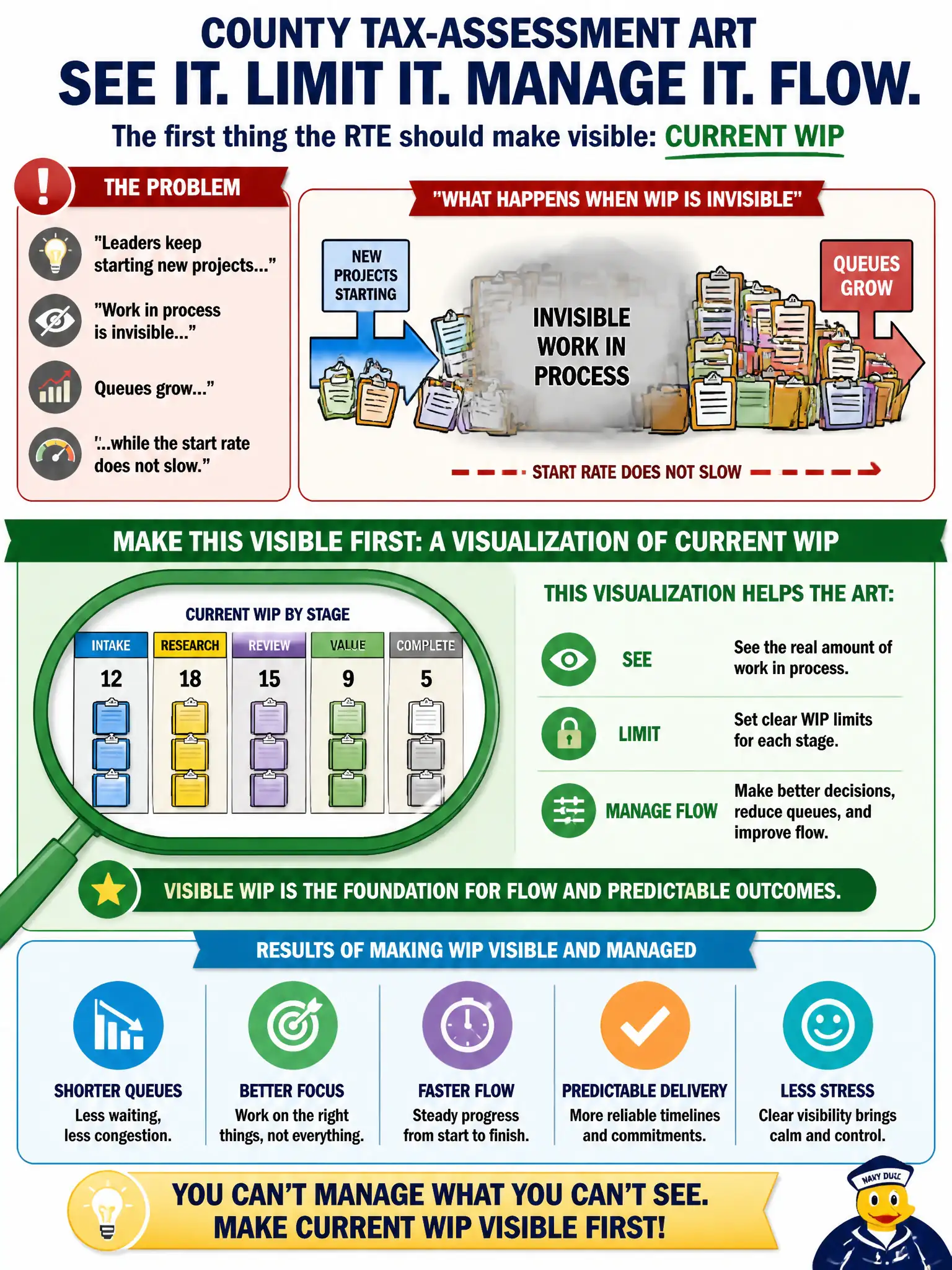
If you cannot see the cars already on the road, you keep opening more on-ramps. Visible WIP is how a tax-assessment ART stops starting and starts finishing.
Full Explanation
When work in process is invisible, leaders keep starting new projects and queues grow because the start rate never slows. On a county tax-assessment ART, the RTE should first make current WIP visible so the ART can see, limit, and manage flow. A running count of new project kickoffs only makes starting more work look like progress while drowning the train. Individual timesheets show hours, not items in process, and invite utilization theater. A policy that every new assessment project starts the same week it is requested institutionalizes overload. Social-services eligibility decisions affect resident benefits; Scrum of Scrums and PO Sync each solve different coordination problems and should not collapse into one muddled meeting. Exam caveat: visibility alone does not limit WIP—leaders must still decide to stop starting—but without a WIP picture those decisions have no evidence. Operational check: publish a WIP count by workflow state for tax-assessment features and review start-versus-finish rates in the next leadership sync. Publish distinct agendas so delivery blockers and backlog decisions do not drown each other out. Hold the civic standard in facilitation notes so the next RTE inherits the same expectation for resident-facing outcomes.