
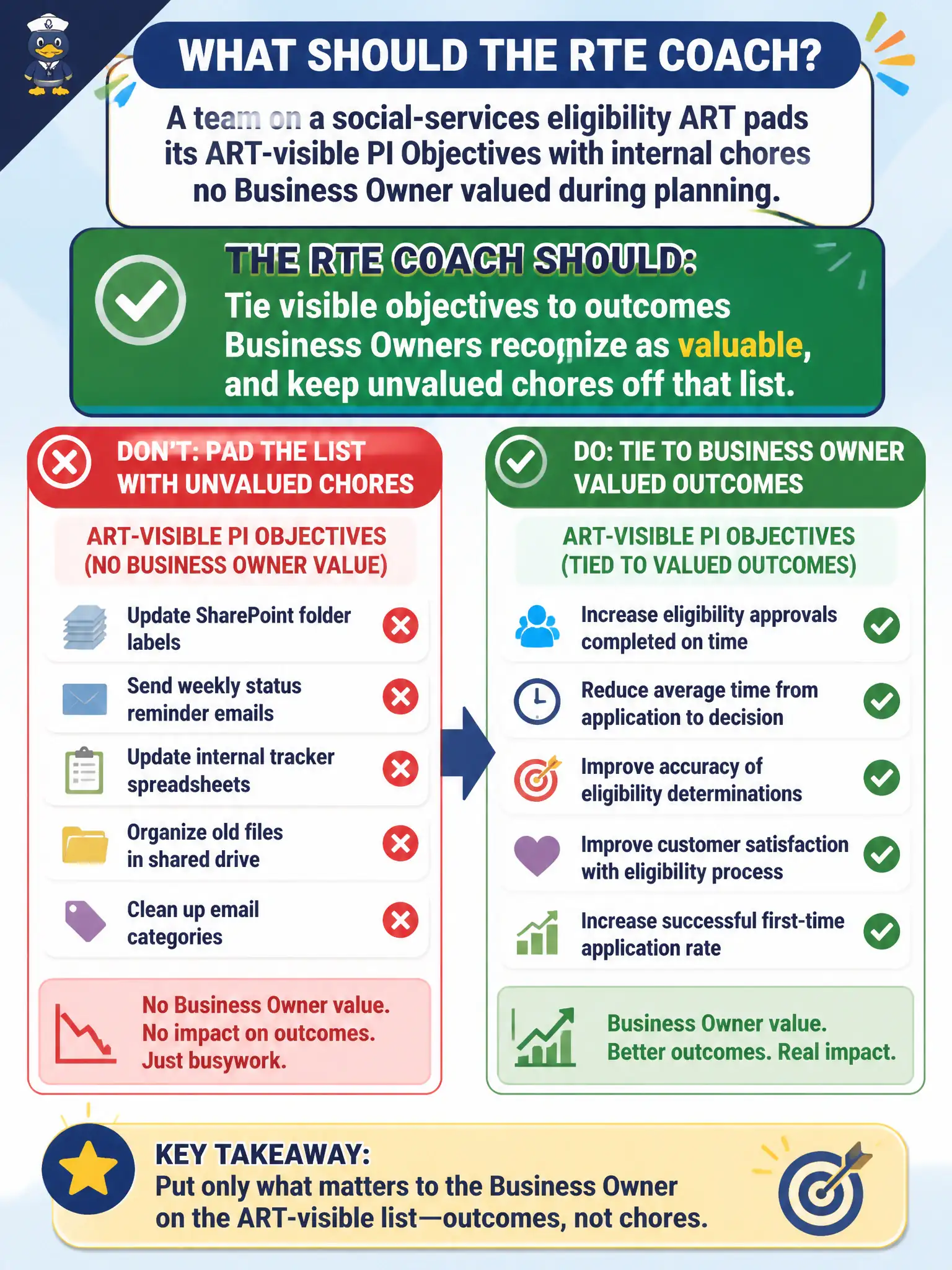
A team on a social-services eligibility ART pads its ART-visible PI Objectives with internal chores no Business Owner valued during planning. What should the RTE coach?
Select an answer to reveal the explanation.
Short Explanation
If a Business Owner would not pay civic attention to it, it is not an ART-visible objective. Chores can live on the team board. Eligibility outcomes belong on the scored list.
Full Explanation
Visible PI Objectives should tie to outcomes Business Owners recognize as valuable; unvalued internal chores do not belong on the ART-facing objective list. When a social-services eligibility team pads ART-visible objectives with chores no Business Owner valued during planning, the RTE should coach tying visible objectives to valued outcomes and keeping unvalued chores off that list. Keeping chores as top ART objectives so cleanup work is scored like citizen outcomes distorts economic signaling. Banning all enabling work from objectives, including items Business Owners explicitly value, overcorrects—valued enablers can be objectives. Letting the team assign its own business value so chores automatically rank with eligibility outcomes usurps Business Owners. Transit riders depend on coordinated fare and schedule changes; unmanaged dependencies between teams become missed civic release dates. Exam caveat: teams may still track internal chores on team backlogs; the issue is misrepresenting them as ART PI Objectives. Operational check: review the eligibility ART objective list with a Business Owner and demote any item they would not have scored as valuable. Review the dependency board in every ART Sync until fare-system handoffs have dated owners.