
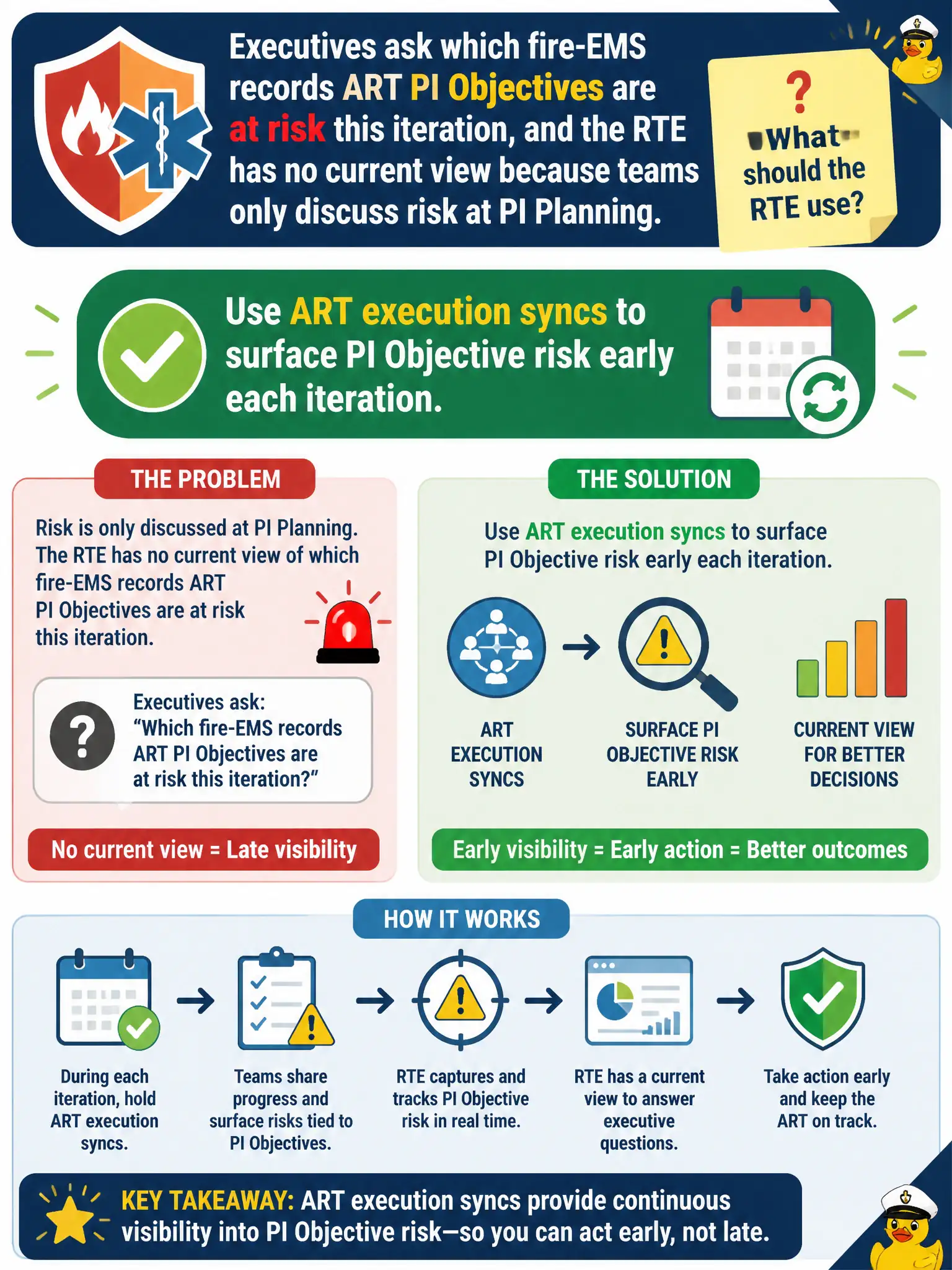
Executives ask which fire-EMS records ART PI Objectives are at risk this iteration, and the RTE has no current view because teams only discuss risk at PI Planning. What should the RTE use?
Select an answer to reveal the explanation.
Short Explanation
Risk does not wait for the end-of-PI awards banquet. Fire-EMS records work slips in the middle of the increment. Syncs are where the ART says this objective is wobbling while there is still time.
Full Explanation
ART execution syncs surface PI Objective risk early each iteration so leaders are not surprised at Inspect and Adapt. When executives ask which fire-EMS records ART objectives are at risk and the RTE has no current view because teams only discuss risk at PI Planning, the fix is to use ART syncs for ongoing objective-risk visibility. Waiting for Inspect and Adapt to list failed objectives after the PI ends makes risk reporting forensic rather than actionable. Emailing every firefighter for a private status and keeping answers off the ART board recreates tribal knowledge. Replacing objectives with a daily Gantt percent-complete briefing for the fire chief optimizes for schedule theater over outcome risk. Parks reservation customers notice when features demo as slides instead of working software; the System Demo must show running civic capability. Exam caveat: not every risk needs escalation—syncs triage which objective risks need Business Owner attention. Operational check: add an objectives-at-risk segment to the fire-EMS ART sync agenda and update a visible board before leadership asks. Refuse slide-only demos for reservation features and reschedule when the working increment is actually available.