
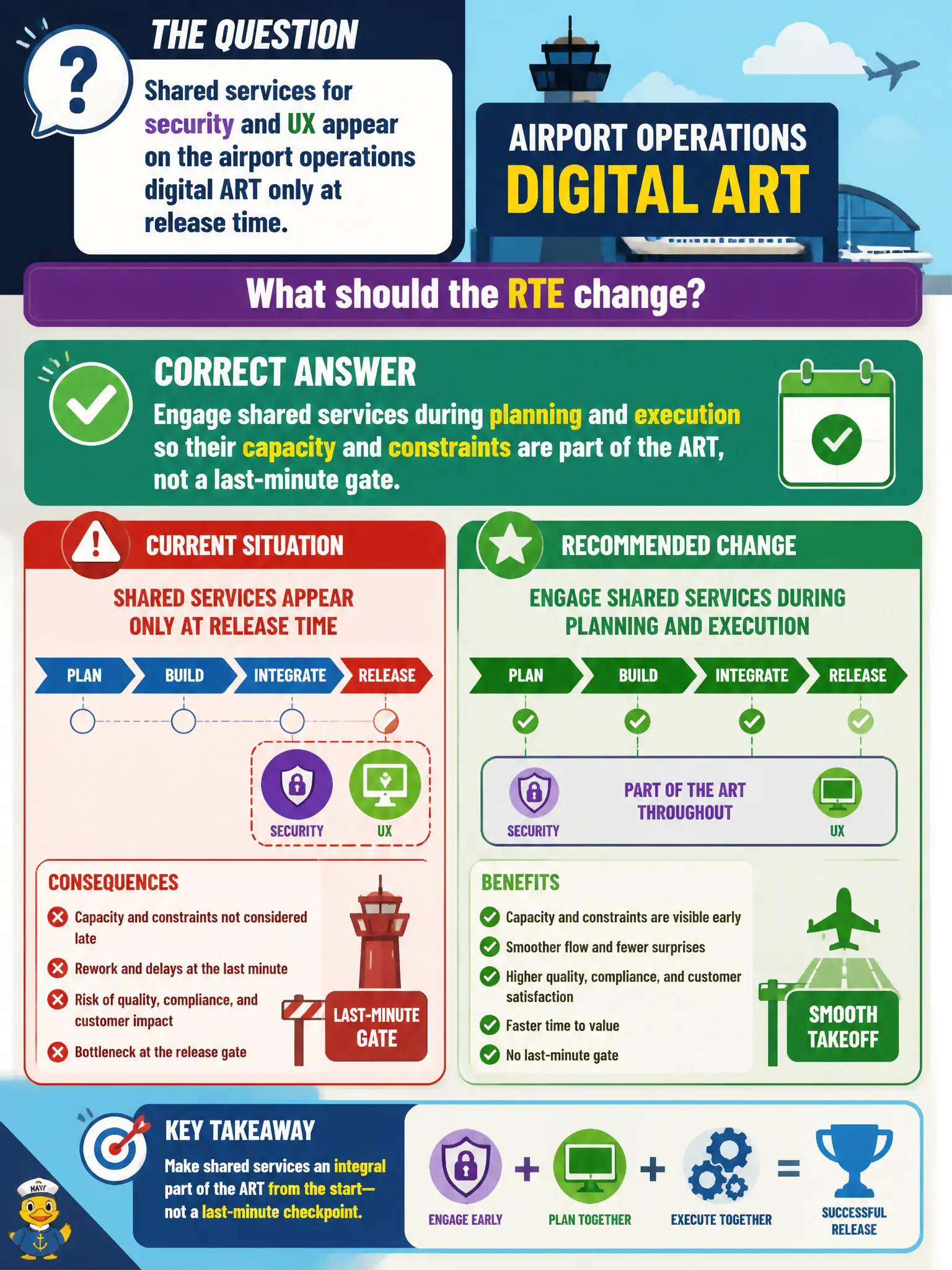
Shared services for security and UX appear on the airport operations digital ART only at release time. What should the RTE change?
Select an answer to reveal the explanation.
Short Explanation
If security and UX only show up at the airport gate, the plane is already loaded wrong. Shared services need a seat at PI Planning and during the PI. A last-minute stamp is not collaboration.
Full Explanation
Engage shared services during planning and execution so their capacity and constraints are part of the ART, not a last-minute gate. When security and UX appear on an airport operations digital ART only at release time, the RTE should change engagement so those services help shape PI plans for airport digital outcomes. Keeping shared services out until the last week so they stay independent creates late surprises and rework. Replacing shared services with a post-release audit instead of collaboration discovers problems after passengers and staff already feel them. Having the RTE impersonate security and UX during PI Planning fakes expertise and still leaves real capacity unplanned. Exam caveat: Shared services may remain organizationally separate; the requirement is early, explicit engagement and capacity visibility on the ART. Operational check: Invite security and UX to airport PI Planning with capacity reserved on the program board, and track whether release-time blockers decline next PI. In municipal settings, pressure to look busy, compliant, or politically safe is constant; the RTE earns trust by holding the principle through that pressure and verifying the next cadence event shows improved civic delivery, not just a quieter meeting. Capture the before/after signal so sponsors see the operational evidence.