
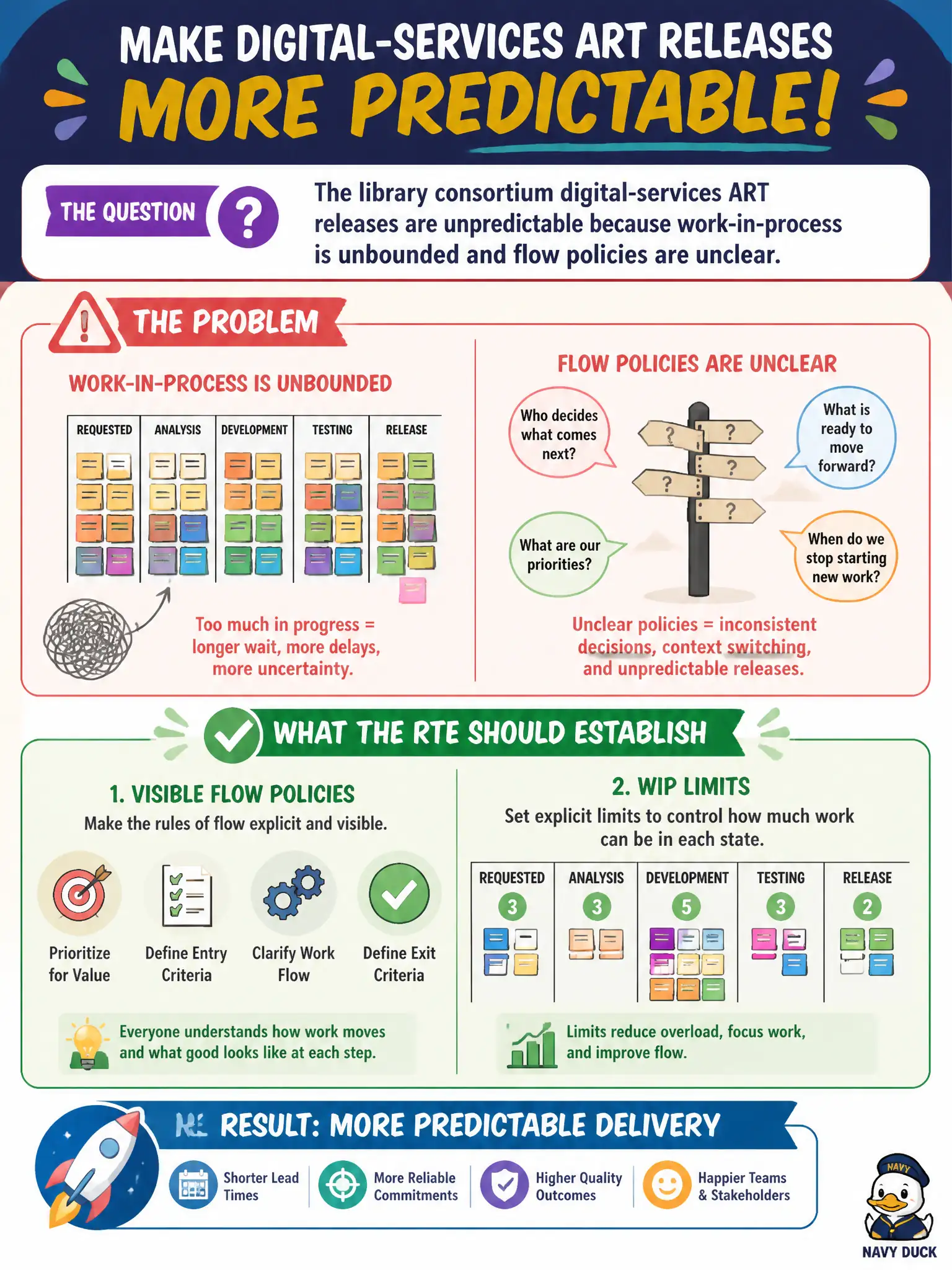
The library consortium digital-services ART releases are unpredictable because work-in-process is unbounded and flow policies are unclear. What should the RTE establish?
Select an answer to reveal the explanation.
Short Explanation
Unbounded WIP is a library with every book pulled off the shelf at once—nothing actually checks out. Clear flow policies and limits make digital-services releases predictable. Unfinished work has to stay visible or it cannot be managed.
Full Explanation
Visible flow policies and WIP limits make delivery more predictable. When a library consortium digital-services ART releases are unpredictable because work-in-process is unbounded and flow policies are unclear, the RTE should establish those policies so member libraries can trust digital-service increments. A rule that every team must start as many items as possible each week increases thrash and worsens predictability. A ban on visual boards because libraries should not show unfinished work destroys Transparency about queues. Individual utilization targets that ignore queues and handoffs optimize busyness instead of flow through the consortium's value stream. Exam caveat: Policies should be lightweight and improved at Inspect and Adapt, not bureaucratic gates that freeze learning. Operational check: Publish WIP limits on the library ART Kanban, review stopped items in ART Sync, and compare release predictability over the next PI against the unbounded baseline. In municipal settings, pressure to look busy, compliant, or politically safe is constant; the RTE earns trust by holding the principle through that pressure and verifying the next cadence event shows improved civic delivery, not just a quieter meeting. Capture the before/after signal so sponsors see the operational evidence.