
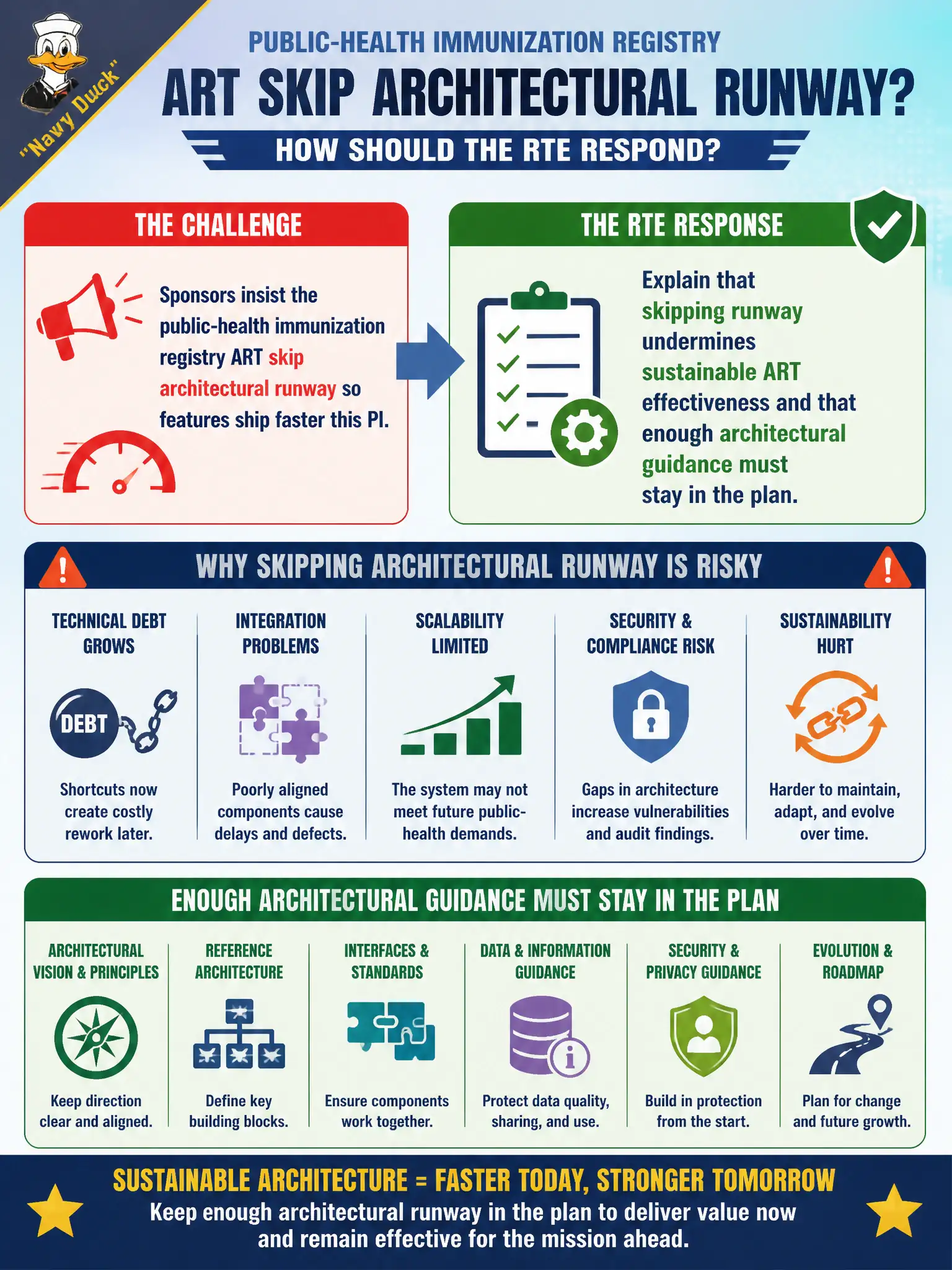
Sponsors insist the public-health immunization registry ART skip architectural runway so features ship faster this PI. How should the RTE respond?
Select an answer to reveal the explanation.
Short Explanation
Flooring a registry without a foundation is how you get a crash, not a faster clinic. Architectural runway is the next bit of platform the teams need so features can actually land. Skipping it for one faster PI usually slows the next three.
Full Explanation
Skipping architectural runway undermines sustainable ART effectiveness. When sponsors insist a public-health immunization registry ART skip runway so features ship faster this PI, the RTE should explain that enough architectural guidance must stay in the plan or later PIs will pay with blocked clinics and brittle data. Deleting all enablers permanently because public-health features never depend on platforms is false; identity, interoperability, and safety controls are platform concerns. Moving architecture work to a secret backlog the teams will not see destroys Transparency and coordination. Allowing the skip if sponsors sign a waiver at the System Demo trades paperwork for missing foundation work without restoring runway. Exam caveat: Runway is balanced with feature delivery—not infinite architecture before value—but zero runway is not the balance point. Operational check: Identify the minimum enablers required for the next immunization increment, place them on the program board with capacity, and show sponsors the feature risk if those enablers are cut. In municipal settings, pressure to look busy, compliant, or politically safe is constant; the RTE earns trust by holding the principle through that pressure and verifying the next cadence event shows improved civic delivery, not just a quieter meeting. Capture the before/after signal so sponsors see the operational evidence.