
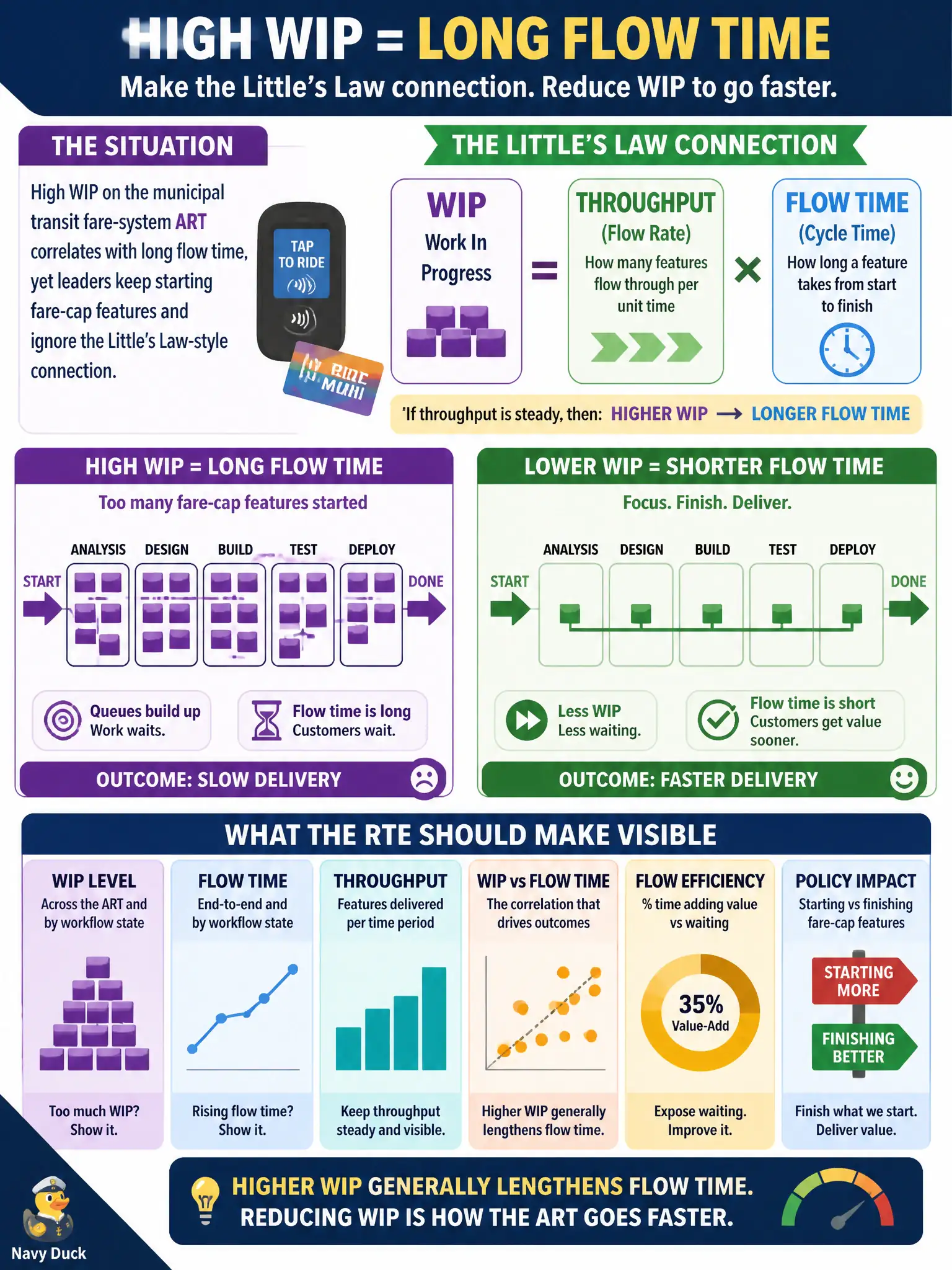
High WIP on the municipal transit fare-system ART correlates with long flow time, yet leaders keep starting fare-cap features and ignore the Little’s Law-style connection. What should the RTE make visible?
Select an answer to reveal the explanation.
Short Explanation
A packed subway car does not get downtown faster because more people squeezed in. Same idea: more in-process fare work usually means longer waits. Empty a few seats—cut WIP—and the ride shortens.
Full Explanation
Higher WIP generally lengthens flow time, so reducing WIP is how the municipal transit fare-system ART goes faster—an application of Little's Law-style flow relationships. For a given throughput, more fare-cap and fare-media items in process mean longer time in process; leaders who keep starting work while ignoring that link will not shorten rider-facing delivery. Starting more fare features will not automatically shorten flow time; it usually lengthens queues. Claiming flow time is unrelated to items in process denies the core WIP–time relationship SAFe flow coaching uses. Asserting that only individual coder utilization changes how long a fare change takes ignores wait, hand-offs, and system load. Exam caveat: if throughput rises proportionally with carefully managed WIP, flow time may hold—but unconstrained WIP growth without throughput gains is not that case; measure both. Operational check: plot WIP versus median flow time for fare items over recent iterations, run a WIP-limit experiment on the fare-system board, and compare rider-facing lead time after two PIs. Brief transit executives that emptying a few in-process seats—not packing the car—is the civic reliability move for fare changes riders actually feel.