
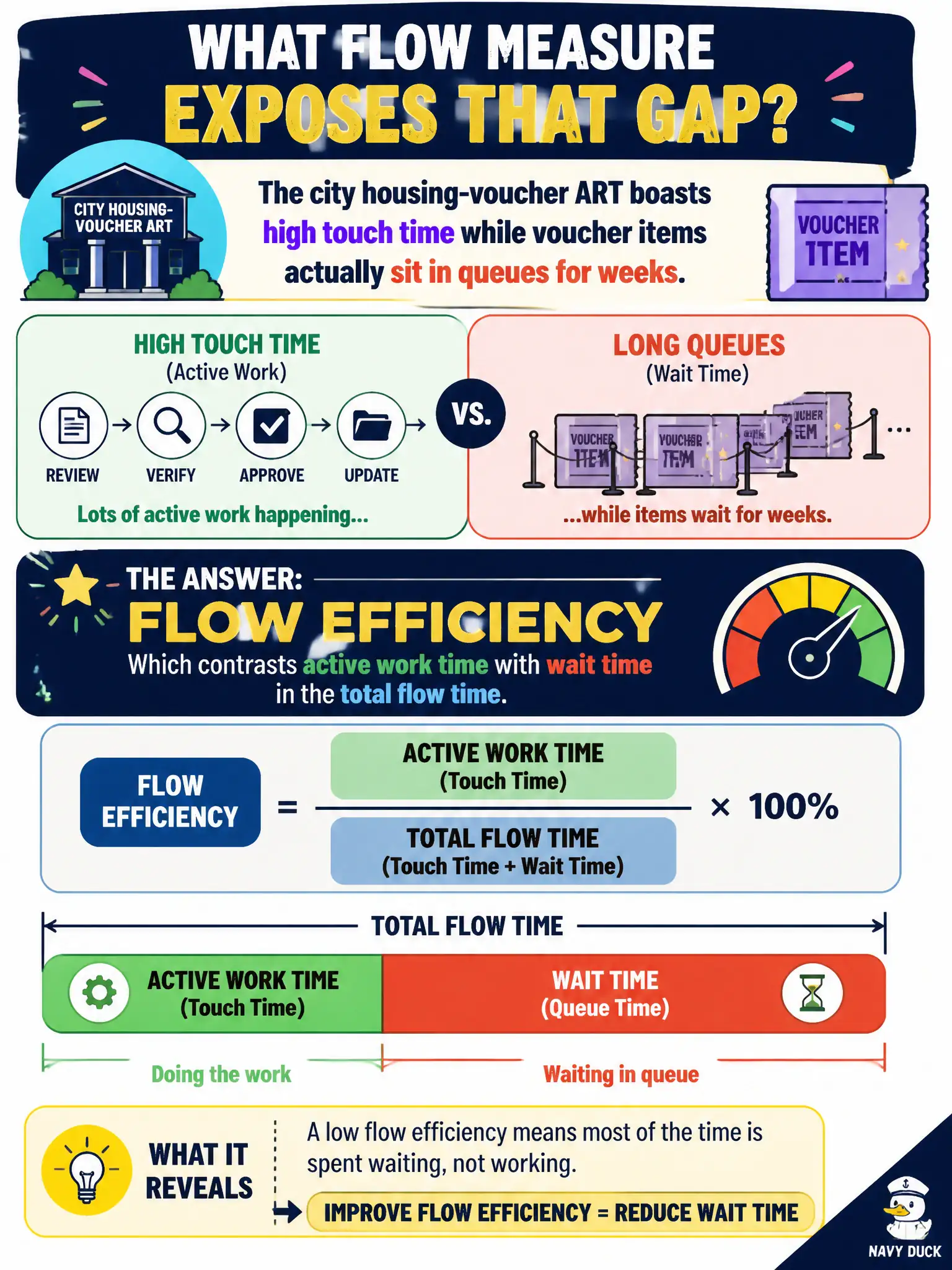
The city housing-voucher ART boasts high touch time while voucher items actually sit in queues for weeks. What flow measure exposes that gap?
Select an answer to reveal the explanation.
Short Explanation
Busy hands on a voucher file for two hours and a three-week wait in a stack is not a fast ART—it is a waiting room with brief visits. Flow efficiency is the active-versus-wait split. Completions and overtime can look heroic while the queue still wins.
Full Explanation
Flow efficiency contrasts active work time with wait time inside total flow time, exposing the gap when touch time looks high while items sit in queues for weeks. On a city housing-voucher ART that boasts high touch time while voucher items wait, flow efficiency is the measure that reveals the truth applicants already feel as stalled aid. Flow velocity alone highlights completions and can hide wait that caseworkers and residents experience as denial of timely benefits. Story-point burnup often treats queue time as invisible and congratulates motion without movement through eligibility decisions. Overtime hours may prove heroic effort without proving efficient flow through voucher determination and issuance work. Exam caveat: improving efficiency usually means shrinking queues and handoffs, not demanding people work faster during touch time. Operational check: sample voucher items, split active versus wait intervals, compute flow efficiency, and target the largest wait queues in the improvement backlog. Re-measure efficiency next PI so civic wait shrinks with evidence rather than with another round of unpaid heroics. Publish the efficiency result to Business Owners with the named queue owners so housing leadership sees waits as manageable system issues, not fate.