
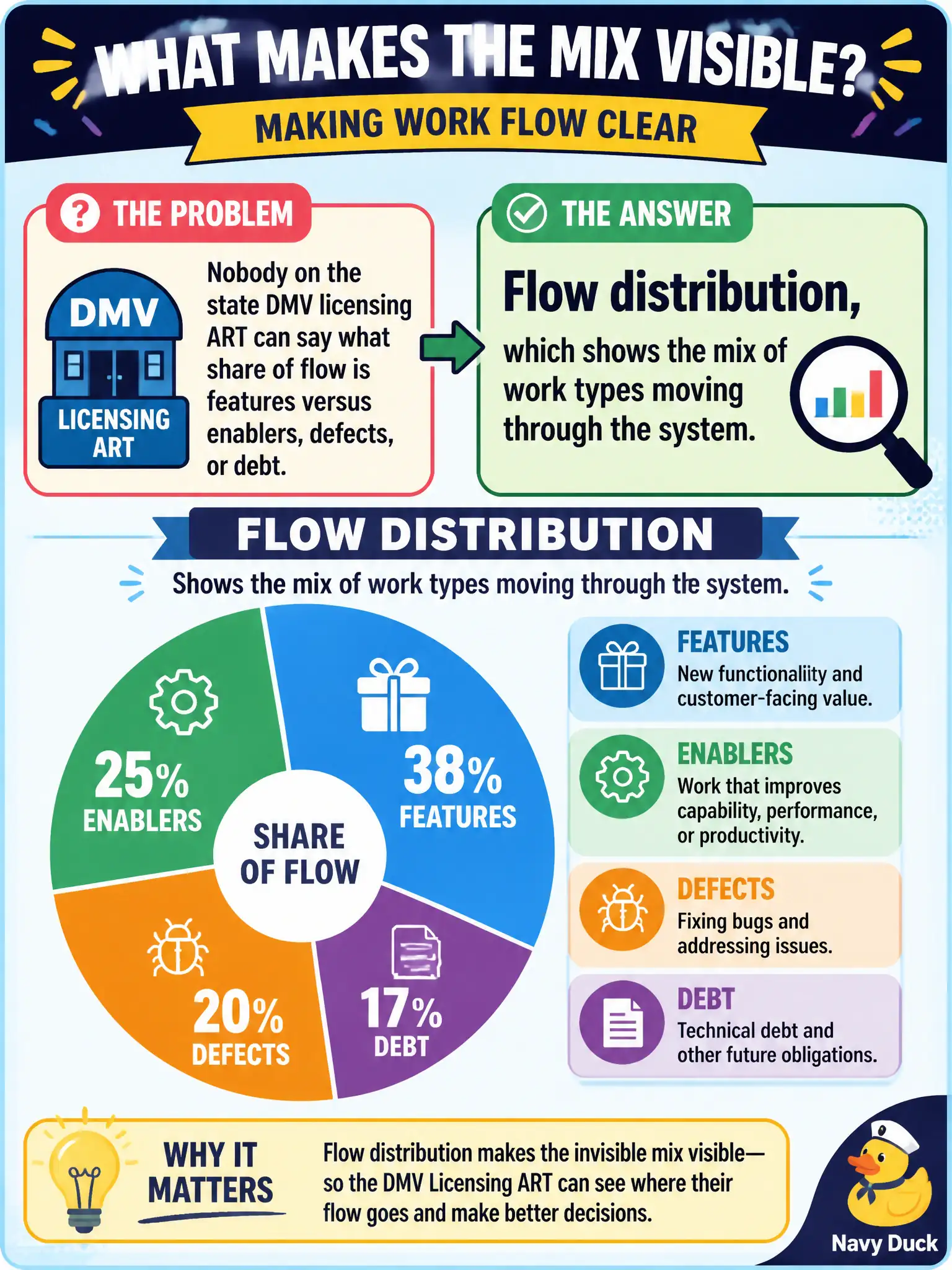
Nobody on the state DMV licensing ART can say what share of flow is features versus enablers, defects, or debt. Which metric makes that mix visible?
Select an answer to reveal the explanation.
Short Explanation
If the DMV ART cannot tell whether it is shipping license features, plumbing, bugs, or debt, it is driving without a dashboard for mix. Flow distribution is that mix view. Clock time, tester utilization, and who showed up to PI Planning do not answer the share question.
Full Explanation
Flow distribution shows the mix of work types moving through the system—features versus enablers, defects, or debt. When nobody on a state DMV licensing ART can describe that mix, flow distribution is the metric that makes it visible to Business Owners before licensing season pressure hits. Flow time only reports clock time for items and cannot show whether defect work is crowding out licensing features residents need to renew or obtain credentials. A utilization chart of testers replaces work-type mix with people-busyness theater that hides the real portfolio of flow on the train. PI Planning attendance proves who showed up, not what kind of licensing work is flowing through analysis, build, and release states. Exam caveat: a healthy mix is context-specific; the point is visibility so leaders see when defect or debt work is crowding licensing features. Operational check: tag DMV work items by type and chart distribution each iteration for Business Owners, then discuss trade-offs when defect or debt share spikes. Making that civic work-mix explicit prevents accidental capacity choices that surprise field offices and applicants. Record mix targets and exceptions in ART notes so licensing season planning inherits last PI’s civic learning about debt versus features.