
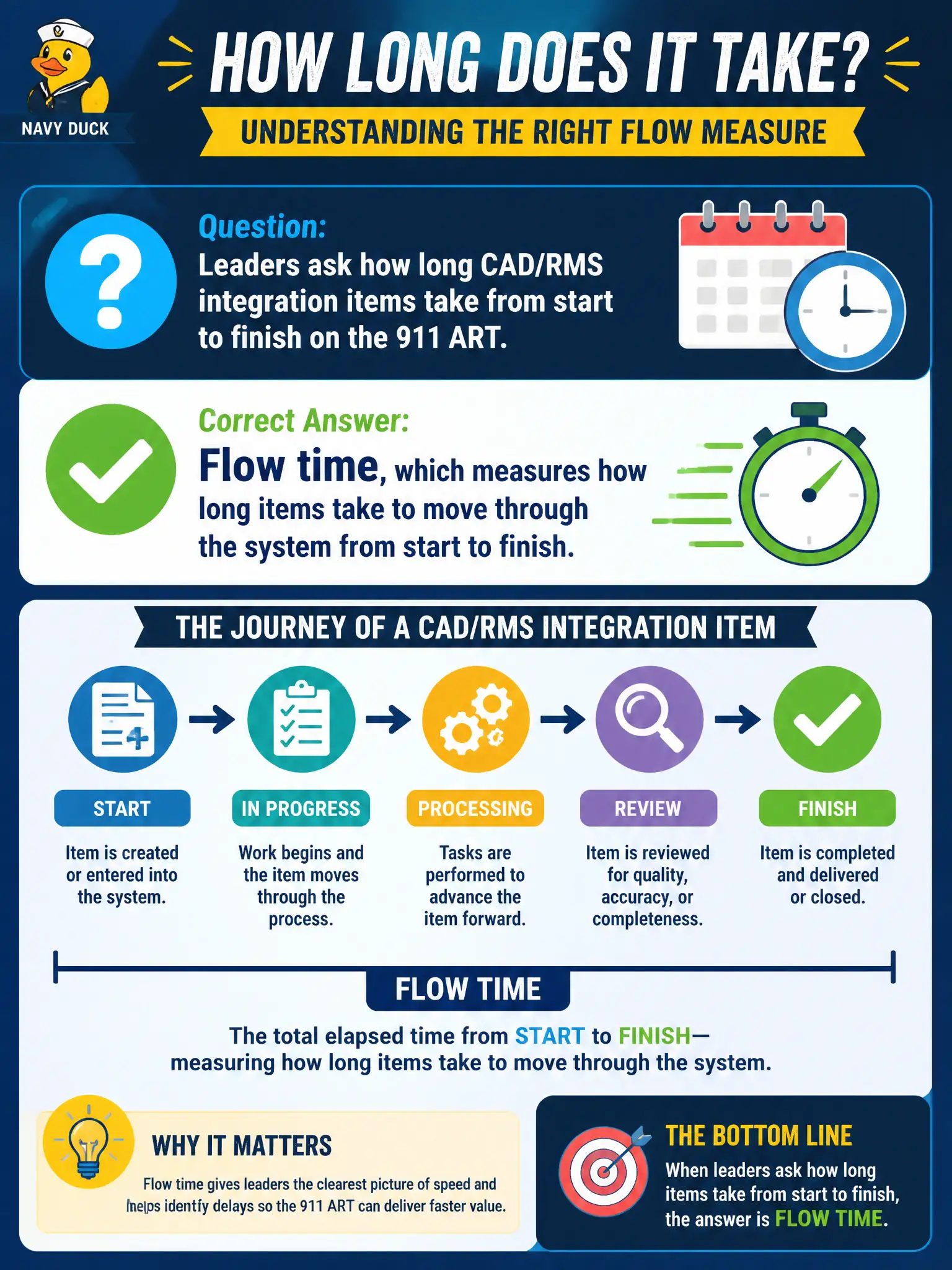
Leaders ask how long CAD/RMS integration items take from start to finish on the 911 ART. Which flow measure answers that question?
Select an answer to reveal the explanation.
Short Explanation
When the mayor asks how long a 911 integration item actually takes, that is a stopwatch question, not a pile-size question. Flow time is the start-to-finish clock, waits included. Mix, WIP, and finish-counts answer different questions.
Full Explanation
Flow time measures how long items take to move through the system from start to finish and answers how long CAD/RMS integration items take end to end. When 911 leaders ask that duration question, flow distribution is the wrong answer because it only lists the mix of work types, not duration. Flow load only counts how many items are in process and does not say how long any CAD/RMS item takes for dispatchers. Calling completions in a PI “flow velocity” still does not answer start-to-finish duration for an item public-safety staff depend on. Exam caveat: define start and finish boundaries consistently (for example, ready-for-implementation to production-ready) or comparisons across PIs will be misleading for public-safety sponsors. Operational check: instrument CAD/RMS item timestamps at agreed start and finish points and report median and percentile flow time in ART reviews with boundaries labeled. Public-safety leaders deserve comparable answers grounded in flow time, not a grab bag of unrelated charts that obscure how long integration work actually takes. Hold those definitions steady so civic speed conversations about 911 systems remain honest from PI to PI. Keep facilitation notes with the chosen start and finish rules so future coaches inherit the same public-safety measurement contract.